Short Answer
This guide provides a detailed exploration of the Moon 18 Weaver 21 and its associated number cards, covering their design, functionality, and applications. Readers will discover the unique features of these tools, how they differ from traditional card systems, and practical ways to integrate them into various activities. Whether you’re a board game enthusiast, a teacher, or someone interested in creative number-based systems, this guide will offer valuable insights.
Understanding the Moon 18 Weaver 21 System
The Moon 18 Weaver 21 is a specialized card system designed to facilitate structured decision-making, pattern recognition, and strategic planning. Unlike conventional number cards, this system incorporates a weaving mechanism that allows users to combine or separate cards based on specific rules, creating dynamic interactions between numbers. The “18 Weaver 21” designation refers to the core mechanics: the number 18 represents a foundational value, while the “Weaver” aspect highlights the system’s ability to interlink cards in a flexible manner. The “21” often symbolizes the total possible combinations or outcomes when using the full set.
At its core, the Moon 18 Weaver 21 system is built on modularity. Each card typically features a unique number, symbol, or color, which can be arranged in sequences or clusters to form meaningful patterns. This adaptability makes it suitable for a wide range of applications, from educational tools to recreational games. The system encourages users to think critically about numerical relationships and spatial arrangements, fostering both analytical and creative thinking.
Key Features of the Number Cards
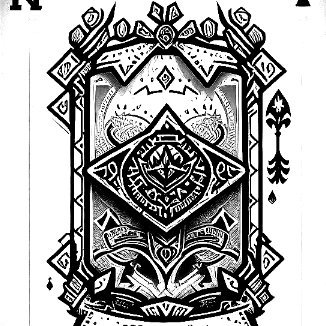
The number cards associated with the Moon 18 Weaver 21 system are designed with several distinct features that set them apart from standard playing cards or flashcards. First, the cards often include high-contrast colors and bold typography to enhance readability and visual appeal. This design choice not only makes the cards easier to distinguish but also adds an aesthetic dimension that can make learning or gaming more engaging.
Another notable feature is the inclusion of symbolic elements alongside numbers. For example, some cards may incorporate geometric shapes, abstract patterns, or thematic imagery (such as celestial motifs related to the “Moon” theme). These symbols serve as additional layers of meaning, allowing users to interpret the cards in multiple ways. For instance, a card with the number 7 might feature a crescent moon symbol, reinforcing the lunar theme while also providing a visual cue for memory or association.
The physical dimensions of the cards are also optimized for handling. They are typically larger than standard playing cards, making them easier to grip and manipulate during gameplay or study sessions. The edges may be rounded or textured to prevent slipping, and the material is often durable, ensuring longevity even with frequent use.

Applications in Education and Learning
The Moon 18 Weaver 21 system is particularly well-suited for educational settings, where it can be used to teach fundamental math concepts, improve cognitive skills, and enhance problem-solving abilities. One of the primary applications is in arithmetic and number theory. Teachers can use the cards to demonstrate addition, subtraction, multiplication, and division in a hands-on, visual manner. For example, arranging cards in sequences can help students visualize the concept of number bonds or the commutative property of addition.
Beyond basic arithmetic, the system can be adapted for more advanced topics such as algebra, geometry, and even introductory programming logic. For instance, users can create equations by combining cards with numbers and operators (if included in the set), then “weave” them together to solve for unknown variables. The modular nature of the cards allows for endless combinations, making it a versatile tool for differentiated instruction.
In language learning, the number cards can be repurposed to teach vocabulary or grammar rules. For example, each number could correspond to a specific word or grammatical structure, and users could arrange the cards to form sentences or solve linguistic puzzles. This approach leverages the system’s adaptability to create interactive and multisensory learning experiences.
Recreational and Creative Uses
While the Moon 18 Weaver 21 system has clear educational benefits, it is also a powerful tool for recreational activities and creative expression. Board game designers and hobbyists can incorporate the cards into custom games that emphasize strategy, chance, and player interaction. The weaving mechanism, in particular, adds a layer of complexity that can make games more engaging and replayable. For example, players might draw cards to build a path or network, with the goal of connecting specific numbers or symbols to score points.
Artists and designers can also use the cards as a medium for creative projects. The vibrant colors and symbolic designs make them ideal for collages, storytelling, or even as inspiration for larger artworks. Some users have repurposed the cards to create tarot-like spreads, where each card’s position and combination convey a unique narrative or message. This flexibility allows the system to transcend its original purpose and become a tool for artistic exploration.
For families and groups, the Moon 18 Weaver 21 system can serve as a foundation for collaborative games or challenges. Parents can design scavenger hunts where children must find and combine specific cards to unlock clues. Alternatively, the cards can be used for storytelling games, where players take turns drawing cards and incorporating them into a shared narrative. These activities not only provide entertainment but also foster teamwork and communication skills.
Comparing Moon 18 Weaver 21 to Other Number Card Systems
The Moon 18 Weaver 21 system distinguishes itself from other number card systems through its weaving mechanism and thematic design. Traditional number cards, such as those used in bingo or flashcard sets, typically focus on individual numbers or simple combinations. In contrast, the Moon 18 Weaver 21 system encourages users to explore the relationships between numbers, creating a more interactive and dynamic experience.
Another key difference is the inclusion of symbolic elements. While many number card systems rely solely on numerical values, the Moon 18 Weaver 21 system incorporates visual and thematic cues that add depth to the user experience. This makes it particularly appealing to visual learners and those who enjoy multi-sensory engagement. Additionally, the modular design allows for greater customization, enabling users to tailor the system to their specific needs or preferences.
Compared to systems like Uno or playing cards, the Moon 18 Weaver 21 system offers a more structured and strategic approach. While Uno focuses on matching colors and numbers, and playing cards emphasize suits and ranks, the Moon 18 Weaver 21 system prioritizes the exploration of numerical relationships and creative combinations. This makes it a valuable tool for users who are looking for something beyond traditional card games.
Tips for Getting Started with Moon 18 Weaver 21
If you’re new to the Moon 18 Weaver 21 system, starting with a few basic exercises can help you become familiar with its mechanics and potential. Begin by sorting the cards by number, color, or symbol to get a sense of the set’s composition. Then, try arranging them in simple sequences, such as ascending or descending order, to practice the weaving mechanism. You can also experiment with grouping cards based on shared attributes, such as even and odd numbers or specific color patterns.
Once you’re comfortable with the basics, challenge yourself by creating specific combinations or solving puzzles. For example, try to arrange the cards to form a sequence where each number is the sum of the two preceding numbers (a Fibonacci-like pattern). Alternatively, use the cards to represent variables in a simple equation and solve for an unknown. These exercises will help you develop a deeper understanding of the system’s flexibility and potential applications.
For those interested in using the system for educational purposes, consider integrating it into lesson plans or study routines. Start with simple activities, such as using the cards to teach counting or basic arithmetic, and gradually introduce more complex challenges as your confidence grows. You can also create custom sets of cards to align with specific learning objectives, such as adding operator symbols or thematic imagery related to a particular subject.
Conclusion
The Moon 18 Weaver 21 system is a versatile and innovative tool that bridges the gap between education, recreation, and creative expression. Its unique weaving mechanism and thematic design set it apart from traditional number card systems, offering users a dynamic way to explore numerical relationships and symbolic meanings. Whether used in classrooms to enhance learning, in board games to add strategic depth, or in artistic projects to spark creativity, the system provides endless possibilities for engagement and discovery.
By understanding the key features and applications of the Moon 18 Weaver 21, users can unlock its full potential and tailor it to their specific needs. Whether you’re a teacher, a parent, a game designer, or simply someone looking for a new way to interact with numbers, this system offers a fresh and exciting approach to learning and play. With practice and experimentation, the Moon 18 Weaver 21 can become a valuable addition to your toolkit, inspiring both intellectual growth and imaginative exploration.
FAQ
What is the Moon 18 Weaver 21 system?
The Moon 18 Weaver 21 is a specialized card system designed to facilitate structured decision-making, pattern recognition, and strategic planning through a modular and interactive approach.
How can the Moon 18 Weaver 21 cards be used in education?
These cards can teach fundamental math concepts, improve cognitive skills, and enhance problem-solving abilities through hands-on, visual learning experiences.
What differentiates the Moon 18 Weaver 21 from traditional card systems?
It incorporates a weaving mechanism and thematic design, allowing for dynamic interactions and deeper exploration of numerical relationships.
Leave a Reply