Short Answer
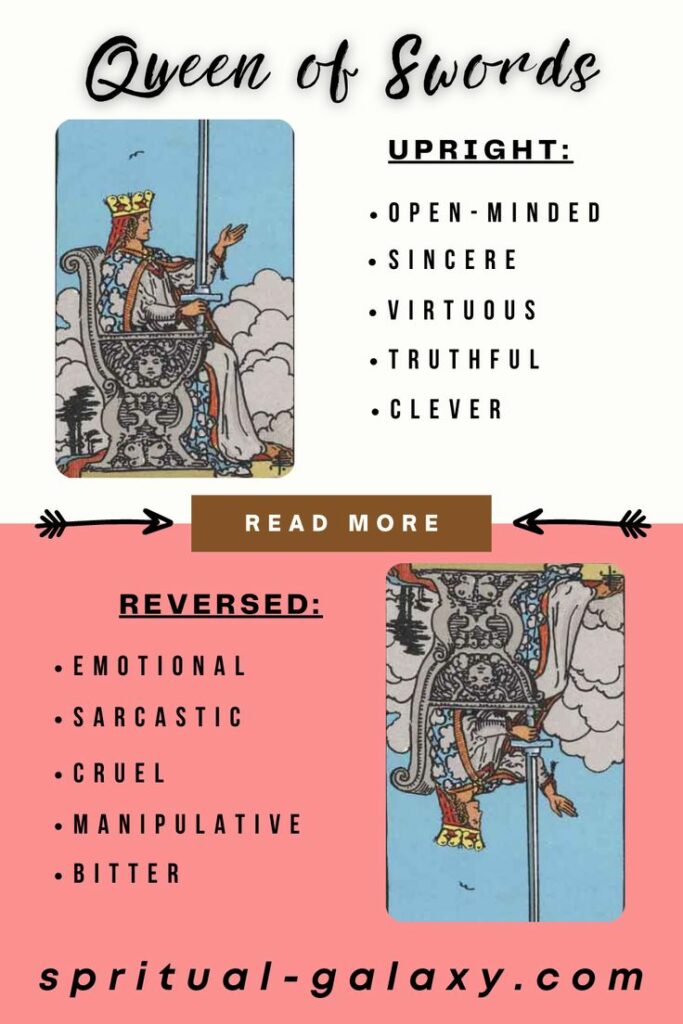
The Queen of Swords is a tarot card that embodies the dichotomy of intellect and emotion, a symbol of the sometimes treacherous balance between clarity and compassion. When reversed, this formidable figure reveals a perspective that can be particularly resonant within a Christian context. To explore the implications of the Queen of Swords reversed, one must delve into themes of miscommunication, emotional isolation, and the overarching necessity of compassion within faith.
In its upright position, the Queen of Swords signifies wisdom, independence, and a keen analytical mind. However, when reversed, the card transforms into a harbinger of potential pitfalls. This transition echoes the biblical narrative of discernment gone awry, where wisdom divorced from love can lead to isolation. The reversal suggests an errant use of intellect, reflecting a heart that struggles to merge reason with empathy, much like the Pharisees in the New Testament whose adherence to the law overshadowed the spirit of love and compassion.
The first and perhaps most striking aspect of the Queen of Swords reversed is the theme of miscommunication. The sword, as a metaphor, represents the power of words and thoughts. When the card appears reversed, it evokes a scenario fraught with misunderstandings and conflicts. In a Christian context, this can mirror the notion of the ‘tongue as a double-edged sword’—able to uplift or devastate. James 3:6 warns that “the tongue is a fire, a world of unrighteousness.” The Queen of Swords reversed thus urges believers to wield their words with prudence, reminding them of the impact that harmful language can have on relationships, and ultimately, on one’s spiritual path.
Another nuance of the reversed Queen of Swords is emotional isolation. The queen, in her inverted state, may embody a figure who is overly critical and detached, cutting off connections that once brought warmth and fellowship. This isolation can be paralleled with the story of the Prodigal Son, wherein the son, seeking independence, finds himself in a foreign land devoid of love and acceptance. The Queen of Swords reversed symbolizes this quest for autonomy that yields, paradoxically, a profound loneliness. Herein lies the crux of the matter: faith encourages community and the sharing of burdens, and yet the reversed queen seems to advocate for solitude rooted in cynicism.
As one navigates through life’s tumultuous emotions, the Queen of Swords reversed can also represent a betrayal of inner truth. In Christianity, it is often emphasized to act in accordance with one’s beliefs, yet the reversed card may herald a discord between one’s inner dialogue and outward expression. This dissonance can lead individuals away from the path of integrity, stifling personal growth and deeper spiritual insight. Similarly, Peter’s denial of Christ serves as a cautionary tale—a reminder of what it means to be swayed by fear rather than standing firm in one’s beliefs.
Yet, amid these warnings, the Queen of Swords reversed carries a unique appeal for those in a faith-based journey. It serves as a reflection—a tool for introspection that prompts believers to assess their personal connections and the authenticity of their words. The card encourages individuals to uncover layers of vulnerability, pushing against the temptation to fall back on cold logic devoid of heartfelt connection. This introspection can be cathartic, leading to genuine self-discovery and a renewed understanding of one’s role within a community of faith.
Moreover, confronting the Queen of Swords reversed can foster resilience. The challenges presented by this card challenge believers to transform negativity into a catalyst for change. Just as Job faced his trials with unwavering faith, overcoming despair, believers too can strive to rise above the chaos that the reversed queen presents. This aligns with the Christian concept of perseverance, encouraging an embrace of challenges as opportunities for spiritual and personal evolution.
This card also signifies the necessity of seeking forgiveness and cultivating humility. The Queen of Swords reversed highlights the importance of repair within relationships scarred by harsh words or misunderstandings. In this light, repentance becomes an illuminating path illuminated by the compassion of Christ, which beckons individuals to lay down their swords of judgment and embrace a spirit of reconciliation.
In conclusion, the Queen of Swords reversed is not merely a foreboding symbol but a profound call to action. It beckons believers to reconcile their understandings of intellect and compassion, to engage fully with the community of faith, and to wield their words with care. Her message is penetrating yet richly layered—a tapestry woven with lessons on humility, communication, and the complexity of human emotions. By embracing the teachings the reversed Queen of Swords offers, individuals can strive to embody a more holistic approach to living a life rooted in faith and love, ultimately emerging stronger in their spiritual journey.
FAQ
What does the Queen of Swords reversed mean?
The Queen of Swords reversed indicates miscommunication, emotional isolation, and the need for compassion, often warning against detachment and harshness.
How can the Queen of Swords reversed guide personal growth?
It encourages introspection and the merging of intellect with empathy, helping individuals navigate emotional challenges and relationships.
Leave a Reply