Short Answer
The Five of Cups tarot card is a profound symbol of regret, loss, and the weight of what might have been. In this guide, you’ll explore its deep metaphorical layers, emotional resonance, and how it speaks to the human experience of grief and reflection. Whether upright or reversed, this card invites you to confront your sorrows, learn from them, and ultimately find a path forward. By the end, you’ll understand its unique appeal as both a cautionary tale and a beacon of hope.
The Five of Cups: A Metaphor for Regret and Loss
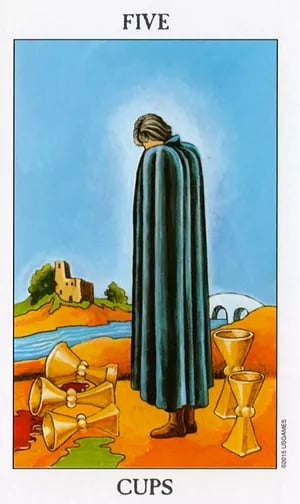
The Five of Cups is often depicted as a figure standing before three spilled cups, their contents pouring onto the ground, while two upright cups remain behind them. This imagery is a striking metaphor for focusing on what has been lost rather than what still remains. The card speaks to the universal human tendency to dwell on past mistakes, missed opportunities, or relationships that have faded. It’s not just about loss—it’s about the emotional paralysis that can accompany it.
In a reading, the Five of Cups asks you to acknowledge your pain without letting it define you. The spilled cups represent regret, but the two standing cups in the background symbolize hope, healing, and the blessings that still exist in your life. This duality is what makes the card so intriguing: it doesn’t shy away from sorrow but also points toward resilience. The figure’s back is turned to the future, emphasizing the struggle to move forward when weighed down by the past.

Emotional Depth: Why the Five of Cups Resonates So Deeply
The Five of Cups taps into some of the most raw and relatable emotions: grief, disappointment, and the “what ifs” that haunt us. Unlike other tarot cards that focus on action or clarity, this one is deeply introspective. It mirrors the moments when we replay conversations, second-guess decisions, or mourn the loss of a dream. The card’s power lies in its ability to validate these feelings while gently nudging you toward acceptance.
In relationships, the Five of Cups might appear when you’re fixating on a breakup, a betrayal, or a friendship that slipped away. In career readings, it could reflect regret over a missed promotion or a project that didn’t pan out. The card doesn’t judge these emotions; instead, it acknowledges their validity. However, it also serves as a reminder that while loss is a part of life, it doesn’t have to be the entire story.
What makes the Five of Cups uniquely appealing is its honesty. It doesn’t offer false comfort or quick fixes. Instead, it holds up a mirror to your pain, asking you to sit with it for a moment before deciding how to proceed. This authenticity is why so many people find solace in its message—it doesn’t sugarcoat the hard parts of life.
The Two Faces of the Five of Cups: Upright and Reversed
The Five of Cups carries different meanings depending on its orientation in a spread, each offering a distinct perspective on regret and healing.
Upright Five of Cups: The Weight of What’s Lost
When the Five of Cups appears upright, it’s a sign that you’re currently grappling with loss, disappointment, or a sense of failure. The card encourages you to fully process these emotions rather than suppressing them. It’s a call to sit with your grief, to mourn what’s gone, and to recognize that these feelings are a natural part of the healing process.
However, the upright position also serves as a warning: don’t let your focus on the spilled cups blind you to the two that remain standing. There are still blessings in your life—people, opportunities, or strengths—that you might be overlooking. The card asks you to shift your perspective, even if only slightly, to see the good that hasn’t been lost.
Reversed Five of Cups: Moving Beyond Regret
When the Five of Cups appears reversed, it signals a turning point. You’re beginning to release the grip of your regrets, or you’re refusing to let past disappointments define your present. This is a card of recovery, where the focus shifts from what was lost to what can still be gained. You might find yourself letting go of old grudges, forgiving yourself for past mistakes, or finally taking steps to rebuild after a setback.
The reversed Five of Cups is a powerful indicator of emotional growth. It suggests that you’re no longer willing to let sorrow hold you hostage. Instead, you’re reclaiming your power by acknowledging your pain but refusing to let it control your future. This version of the card is about resilience—it’s the moment you turn around to face the two standing cups, ready to embrace what’s still possible.
Practical Insights: How to Work with the Five of Cups
The Five of Cups isn’t just a card to be interpreted—it’s a tool for personal growth. Here’s how you can work with its energy in your life:
1. Acknowledge Your Grief Without Judgment
If the Five of Cups appears in your reading, allow yourself to feel the emotions it represents. Suppressing regret or disappointment only prolongs the pain. Journaling, meditation, or even talking to a trusted friend can help you process these feelings in a healthy way.
2. Shift Your Focus to What Remains
The card’s imagery is a powerful reminder to look for the blessings that haven’t been lost. Make a list of the things that are still going well in your life—whether it’s your health, a supportive relationship, or a skill you’ve developed. This exercise can help you regain balance and perspective.
3. Use Regret as a Teacher
Regret isn’t just a burden; it’s a teacher. The Five of Cups invites you to reflect on what your losses have taught you. Did a failed relationship teach you about your needs in a partnership? Did a missed opportunity push you toward a better path? Use these insights to make wiser choices in the future.
4. Practice Forgiveness
This card often appears when there’s a need to forgive—whether it’s yourself or someone else. Holding onto resentment only deepens your pain. The Five of Cups encourages you to release these negative emotions so you can move forward with a lighter heart.
Conclusion
The Five of Cups is more than just a tarot card—it’s a mirror held up to the human experience of loss and the journey toward healing. Its appeal lies in its raw honesty and its ability to resonate with anyone who has ever mourned what was or feared what could have been. Whether upright or reversed, it reminds you that while regret is a natural part of life, it doesn’t have to be its defining feature.
This card teaches that healing isn’t about forgetting what was lost but about learning to see what still remains. It’s a call to turn around, to face the future with open eyes, and to trust that even in your darkest moments, there is still light to be found. By embracing its message, you transform regret from a prison into a stepping stone—one that leads you toward growth, resilience, and ultimately, peace.
Leave a Reply