Short Answer
Embark on a journey into the shadowy depths of the Reversed Eight of Cups, where walking away feels less like liberation and more like a misstep into the unknown. This guide unravels the intricate layers of this card’s meaning, revealing why hesitation, regret, and unfinished business haunt those who turn their backs too soon. Discover how to recognize the signs of a reversed retreat, navigate the emotional turbulence it brings, and transform hesitation into wisdom. Whether you’re facing a personal crossroads or deciphering someone else’s actions, this exploration will illuminate the hidden truths behind walking away wrong.
The Reversed Eight of Cups: A Misguided Escape
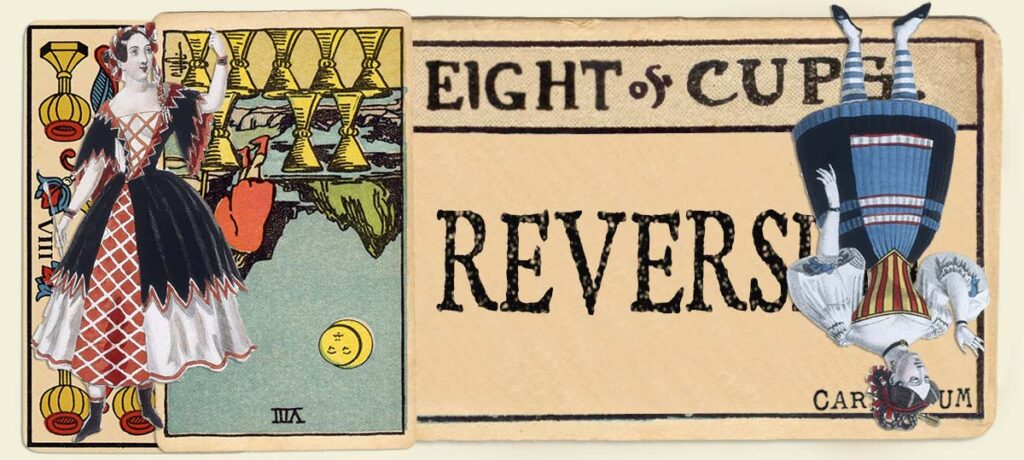
The Eight of Cups in its upright form speaks of walking away from the familiar to seek deeper meaning, often leaving behind emotional attachments or stagnant situations. But when reversed, this card flips the script—it becomes a tale of escape without purpose, a retreat that feels more like avoidance than growth. Imagine standing at the edge of a cliff, ready to leap into the unknown, only to realize too late that the ground beneath your feet was solid all along. The Reversed Eight of Cups warns against fleeing from challenges, relationships, or responsibilities without a clear destination or understanding of what you’re leaving behind.
This card often surfaces when you or someone else is running from discomfort rather than facing it. It’s the friend who ghosts you instead of resolving conflict, the partner who walks out without explanation, or the dreamer who abandons a project at the first sign of difficulty. The reversed energy here is not about bold transformation but about impulsive withdrawal—a decision made in haste, leaving behind unresolved emotions and unanswered questions. The key is to pause and ask: Am I leaving because I must, or because I’m afraid?
Signs You’re Walking Away Wrong
Recognizing the Reversed Eight of Cups in your life—or in the actions of others—requires tuning into subtle but telling signs. One of the most glaring indicators is a lack of closure. If you find yourself cutting ties abruptly without addressing the core issues, you’re likely experiencing this card’s energy. Another red flag is the absence of a plan. Walking away with purpose means having a destination in mind; walking away reversed often means fleeing into emptiness, with no clear vision of what comes next.
Emotional avoidance is another hallmark. Are you numbing yourself to pain rather than processing it? Are you replacing one distraction with another, hoping the void will fill itself? The Reversed Eight of Cups thrives in these moments of self-deception, where the mind tricks itself into believing that distance equals resolution. Pay attention to patterns of repetition—if you consistently abandon ship at the first sign of trouble, it’s time to ask whether you’re running toward growth or away from fear.
The Emotional Landscape: Regret and Unfinished Business
At its core, the Reversed Eight of Cups is a card of emotional residue. It leaves behind a trail of “what ifs” and lingering doubts, as if the universe is whispering, You left too soon. This card often appears when you’re haunted by the past, replaying conversations or scenarios where you wish you’d stayed, spoken up, or fought harder. The regret isn’t just about the decision to leave; it’s about the lack of intention behind it. Without a clear why, walking away becomes a source of torment rather than liberation.
Unfinished business is another heavy burden this card carries. Whether it’s an ended relationship, an abandoned creative project, or a career path left unexplored, the Reversed Eight of Cups forces you to confront the pieces of your life that feel incomplete. It’s not enough to simply walk away; this card demands that you return—if not physically, then mentally—to tie up loose ends. Ask yourself: What did I leave behind that still calls to me? What conversations did I avoid that now echo in my mind? The answers may reveal that your escape wasn’t as clean as you thought.
Navigating the Reversed Energy: When to Stay and When to Go
The Reversed Eight of Cups isn’t just a warning against leaving; it’s also a guide for discerning when to stay and when to walk away with intention. The first step is to pause and reflect. Before making any major decision, ask: Am I leaving because I’m avoiding pain, or because I’m honoring my truth? If the answer is the former, it’s time to dig deeper. Sometimes, staying and facing the discomfort is the bravest choice of all.
If you’ve already walked away and now feel the weight of regret, this card offers a path to redemption. Reconnect with what you left behind—not out of obligation, but with a renewed sense of purpose. Reach out to mend fences, revisit old passions, or simply sit with the emotions you’ve been running from. The Reversed Eight of Cups teaches that growth isn’t always about forward motion; sometimes, it’s about circling back to heal what was broken. And if you’re on the receiving end of someone else’s reversed retreat, recognize that their departure may not be about you—it’s about their inability to stay and face their own shadows.
The Reversed Eight of Cups in Relationships: Ghosting and Emotional Withdrawal
In the context of relationships, the Reversed Eight of Cups manifests as ghosting, emotional withdrawal, or sudden detachment. It’s the friend who vanishes without explanation, the partner who checks out of a conversation mid-sentence, or the family member who cuts ties without discussing the reasons. This card exposes the cowardice of avoidance, where silence becomes a weapon and distance a shield. The pain of being left in the dark is often worse than the conflict itself, leaving the abandoned party drowning in questions and self-doubt.
If you’re the one withdrawing, this card asks you to examine your motives. Are you protecting yourself, or are you punishing someone else for your own unresolved pain? If you’re on the receiving end, it’s important to set boundaries. You deserve clarity, even if the other person can’t provide it. The Reversed Eight of Cups in relationships is a reminder that love isn’t about disappearing—it’s about showing up, even when it’s hard.
Career and Creativity: Abandoning Projects Prematurely
In career and creative pursuits, the Reversed Eight of Cups reveals itself as the habit of abandoning projects at the first sign of difficulty. It’s the writer who shelves a manuscript after one rejection, the entrepreneur who quits a business idea after a minor setback, or the artist who destroys their work because it doesn’t meet their impossible standards. This card shines a light on the fear of failure disguised as practicality. The truth is, walking away from a dream without giving it a real chance is a form of self-sabotage.
If you find yourself in this cycle, ask: What am I truly afraid of? Is it failure, or is it the vulnerability of putting your heart into something and having it not work out? The Reversed Eight of Cups thrives in these moments of doubt, but it also offers a way forward. Instead of quitting entirely, take a step back. Adjust your approach, seek feedback, or give yourself permission to create something imperfect. Growth rarely happens in the comfort zone—it happens when you push through the resistance, even when the path isn’t clear.
Transforming the Reversed Eight of Cups: Turning Regret into Wisdom
The Reversed Eight of Cups isn’t a life sentence—it’s an invitation to rewrite your story. The regret it brings can be a powerful teacher, showing you where you’ve been avoiding your truth. Instead of burying the past, use it as fuel for growth. If you’ve walked away from something important, ask yourself what you can learn from the experience. Did you leave because you were afraid of commitment? Did you abandon a path because it felt too hard? The answers may reveal patterns you’re ready to change.
This card also encourages you to reclaim your power. If you’ve been the one walking away without closure, take responsibility for your actions. Reach out, apologize if needed, and offer the closure you denied others. If you’ve been left in the dark, use this as an opportunity to strengthen your boundaries and trust your intuition. The Reversed Eight of Cups teaches that walking away wrong doesn’t have to define you—it can be the catalyst for a wiser, more intentional path forward.
Conclusion
The Reversed Eight of Cups is a card of paradox: it shows us the pain of walking away without purpose, yet it also holds the key to transformation. By recognizing the signs of a misguided retreat—regret, avoidance, and unfinished business—you can begin to course-correct. Whether you’re the one leaving or the one left behind, this card asks you to confront the shadows of your decisions and find the courage to either return with intention or move forward with clarity. Walking away wrong isn’t the end of the story; it’s the beginning of a deeper understanding of what truly matters. The next time you feel the pull to flee, pause. Ask yourself: Am I running toward something, or just running? The answer may change everything.
FAQ
What does the Reversed Eight of Cups mean in tarot?
The Reversed Eight of Cups signifies avoidance, emotional withdrawal, and a retreat that feels purposeless, often leading to regret and unfinished business.
How can I recognize when I'm walking away wrong?
Signs include a lack of closure, absence of a plan, and emotional avoidance—such as numbing pain instead of processing it.
What should I do if I feel regret after walking away?
Reconnect with what you left behind and reflect on the lessons learned to transform regret into wisdom.
Leave a Reply