Short Answer
Unlock the hidden layers of your tarot deck with this comprehensive guide to secret tarot meanings. Whether you’re a seasoned reader or just beginning your journey with the cards, this article will reveal the deeper, often overlooked messages your deck holds. Beyond the traditional interpretations, you’ll discover how to interpret subtle nuances, contextual clues, and overlooked symbols that can transform your readings. Prepare to see your tarot in a whole new light.
The Hidden Language of Tarot Symbols
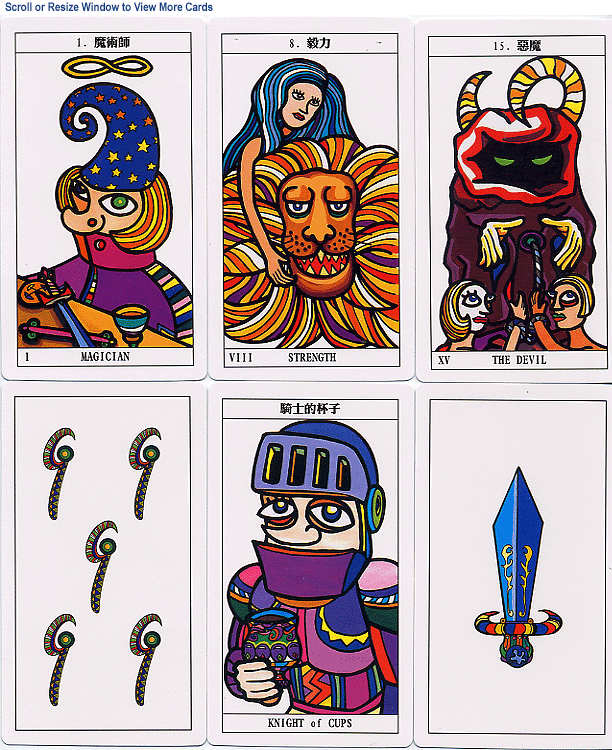
Tarot cards are rich with symbolism, but many readers stop at the surface-level meanings. To truly understand the messages your deck conveys, you must delve into the hidden language of its symbols. Each card is a tapestry of imagery, colors, and archetypes that work together to convey deeper truths. For example, the Secret Tarot Cards from The Tarot Garden feature intricate designs that blend traditional tarot motifs with modern artistic twists. Pay attention to recurring symbols like animals, celestial bodies, or mythological figures—they often hold keys to personal or universal messages.
Colors play a crucial role in tarot symbolism. A card dominated by red may signify passion or urgency, while blue could indicate calmness or intuition. The placement of these colors, their intensity, and even their absence can alter the card’s meaning. For instance, a card with a stark white background might suggest purity or a blank slate, whereas a dark, shadowy backdrop could hint at hidden fears or subconscious influences.
Unconventional Card Combinations and Their Meanings
While traditional tarot interpretations provide a solid foundation, the magic often lies in the combinations of cards drawn together. Two or more cards placed side by side can create entirely new narratives that transcend individual meanings. For example, pairing The Fool with The Tower might suggest a sudden, unexpected change that requires courage and adaptability. Conversely, The High Priestess alongside The Star could indicate a period of deep intuition and spiritual guidance.
To master unconventional combinations, start by examining the cards’ elemental associations. Fire, water, air, and earth elements interact in predictable ways—fire and air may accelerate change, while water and earth can ground or stabilize situations. Additionally, consider the cards’ positions in a spread. A Major Arcana card in a past position followed by a Minor Arcana card in the present might indicate a transition from a significant life lesson to a more practical, everyday challenge.
Don’t overlook reversed cards in your interpretations. While they often represent blocked energy or internal struggles, they can also signal a need for introspection or a hidden opportunity. For instance, a reversed Three of Cups might suggest loneliness or unacknowledged grief, while upright, it celebrates friendship and joy. The contrast between upright and reversed meanings adds depth to your readings and helps you tailor messages to the querent’s unique circumstances.
Tarot and Numerology: The Secret Language of Numbers
Numbers are the backbone of tarot, and understanding their numerological significance can unlock profound insights. Each number from 1 to 22 (in the Major Arcana) carries its own vibration and meaning. For example, the number 1, associated with The Magician, represents new beginnings, willpower, and manifestation. In contrast, the number 10, linked to The Wheel of Fortune, symbolizes cycles, fate, and the inevitability of change.
Numerology can also help you interpret sequences or patterns in your readings. A row of cards with the same number, such as multiple 7s, might indicate a theme of introspection, patience, or spiritual growth. Similarly, a spread with ascending or descending numbers could reflect progression or regression in the querent’s life. For instance, a sequence like 3-4-5 might suggest a journey from creativity (3 of Cups) to stability (4 of Pentacles) to change (5 of Wands).
To incorporate numerology into your tarot practice, keep a reference guide handy. Note how numbers interact with the cards’ suits and elements. For example, a 2 of Swords (balance, indecision) paired with a 2 of Cups (partnership, connection) could highlight a relationship dilemma requiring careful consideration. By blending tarot and numerology, you’ll uncover layers of meaning that traditional interpretations often miss.
The Role of Context: How Surrounding Cards Shape Meaning
Tarot cards never exist in isolation—they are part of a larger narrative shaped by the surrounding cards, the reader’s intuition, and the querent’s circumstances. Context is everything. For example, The Death card is often misunderstood as a harbinger of literal death, but in most readings, it signifies transformation, endings, and rebirth. Its meaning shifts dramatically depending on the cards around it. If Death appears alongside The Tower, it may indicate a sudden, disruptive change. If it’s paired with The Sun, it could suggest a joyful renewal or a breakthrough after a challenging period.
Consider the position of the cards in a spread as well. In a three-card spread representing past, present, and future, a card in the future position might take on a different meaning if it appears in the present position. For example, The Chariot in the past position could indicate a past victory or determination, while The Chariot in the future position might suggest a need for control or forward momentum in the coming months.
Don’t forget to factor in the querent’s energy and the reading’s purpose. A card like The Devil can represent toxic attachments or unhealthy patterns, but if the querent is asking about a creative project, it might symbolize the raw, unfiltered passion needed to bring their vision to life. Always tailor your interpretations to the individual and the specific question at hand.
Advanced Techniques for Revealing Secret Meanings
To take your tarot practice to the next level, experiment with advanced techniques that go beyond traditional card layouts. One powerful method is the “card stacking” technique, where you pull additional cards to clarify or expand on the meaning of a single card. For example, if The Empress appears in a reading, pulling a clarifier card like The High Priestess could reveal whether the querent’s current situation is more about nurturing (Empress) or intuition (High Priestess).
Another technique is the “elemental dignities” approach, which examines how the elements of the cards interact. Fire (Wands) and water (Cups) are opposing elements, so a reading with multiple Wands and Cups might indicate a struggle between passion and emotion. Conversely, earth (Pentacles) and air (Swords) can complement each other, suggesting a balance between practicality and intellect. By analyzing these interactions, you can uncover hidden tensions or harmonies in the querent’s life.
For those interested in storytelling, try the “narrative spread,” where you arrange the cards in a sequence that tells a story. This method is particularly effective for readings about life paths, relationships, or major decisions. Start with a card representing the beginning of the story, followed by cards that build tension, climax, and resolution. This approach not only deepens your understanding of the cards but also helps the querent visualize their journey in a more tangible way.
Common Misconceptions About Tarot Meanings
Many tarot readers fall into the trap of rigidly adhering to traditional interpretations, missing out on the nuanced messages their decks hold. One common misconception is that reversed cards always indicate negativity. While reversals can signify blocked energy or internal struggles, they can also highlight hidden strengths or untapped potential. For example, a reversed Six of Pentacles might suggest financial independence or a need to set boundaries, rather than a lack of generosity.
Another misconception is that Minor Arcana cards are less significant than Major Arcana cards. In reality, the Minor Arcana often provides the most practical and actionable insights. Cards like The Ten of Swords or The Five of Cups can reveal deep emotional truths or challenges that are just as impactful as a Major Arcana card like The Hanged Man. The Minor Arcana is where the “everyday magic” of tarot unfolds, offering guidance on relationships, career, and personal growth.
Finally, many readers assume that tarot cards have fixed meanings that never change. While traditional guidebooks provide a solid starting point, the true power of tarot lies in its adaptability. A card’s meaning can evolve based on the reader’s intuition, the querent’s energy, and the cultural or historical context. For example, The Empress might traditionally represent motherhood, but in a modern reading, she could symbolize self-care, abundance, or creative expression. Stay open to new interpretations and trust your instincts.
Conclusion
Tarot is a dynamic and deeply personal tool, and the secret meanings within your deck are waiting to be uncovered. By exploring the hidden language of symbols, experimenting with unconventional combinations, and incorporating numerology and context into your readings, you’ll transform your tarot practice from surface-level interpretations to profound, insightful revelations. Remember that the true magic of tarot lies in its ability to adapt to the querent’s unique journey—so stay curious, trust your intuition, and let the cards guide you to deeper understanding.
FAQ
What are secret tarot meanings?
Secret tarot meanings refer to the deeper interpretations and nuances of tarot cards that go beyond traditional meanings, often revealed through symbolism, context, and advanced techniques.
How do I interpret card combinations?
Card combinations can create new narratives that transcend individual meanings. Consider elemental associations and the context of the spread for accurate interpretations.
What role does numerology play in tarot?
Numerology in tarot helps interpret the significance of numbers associated with cards, revealing deeper insights into themes and patterns in readings.
Leave a Reply