Short Answer
In this guide, you’ll explore the Smith-Waite Borderless Tarot deck—its unique design, why it captivates users, and the deeper reasons behind its growing popularity. Whether you’re a seasoned tarot reader or a curious newcomer, you’ll discover how the absence of borders transforms the reading experience and what this reveals about our relationship with symbolism and interpretation.
The Smith-Waite Borderless Tarot: A Modern Twist on a Classic
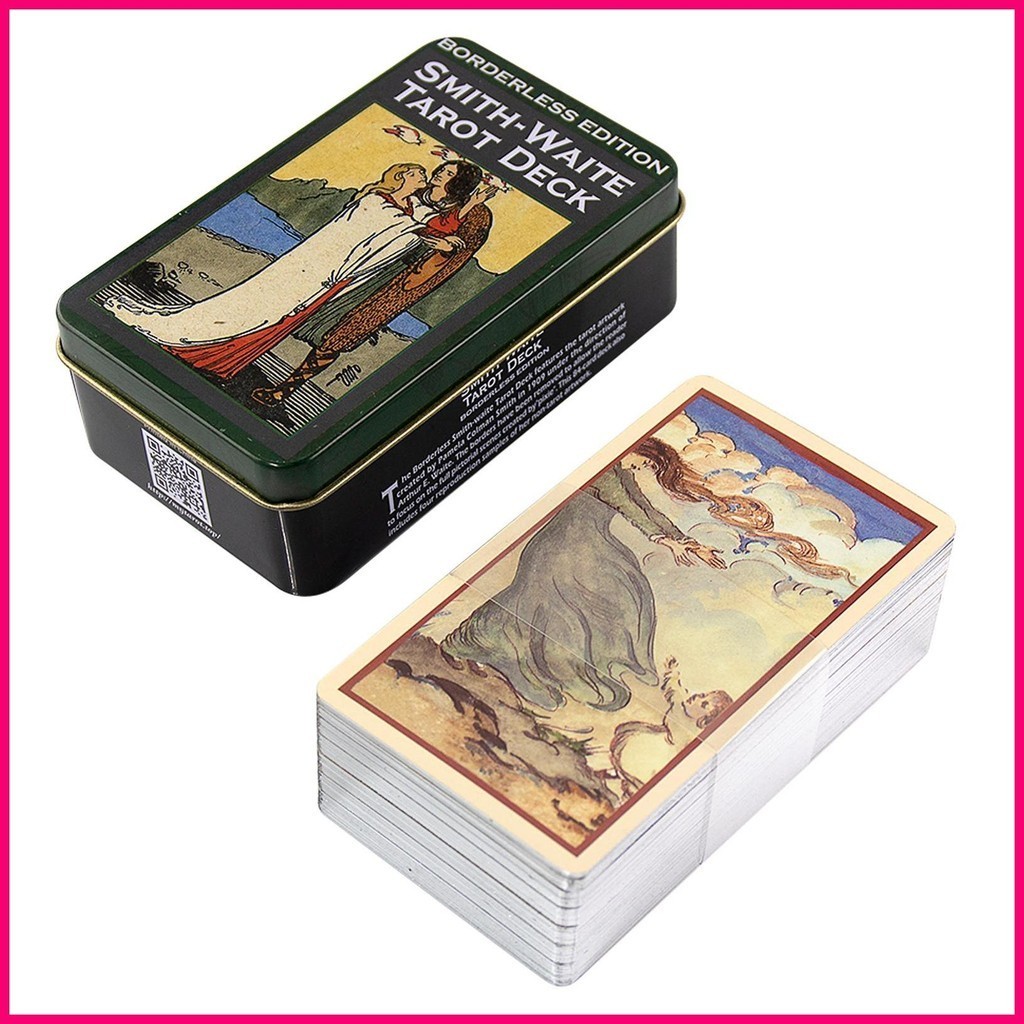
The Smith-Waite Borderless Tarot deck is a contemporary reinterpretation of the iconic Rider-Waite-Smith (RWS) deck, one of the most widely used and influential tarot systems in the world. Unlike traditional decks, which feature borders around each card to separate the image from the card’s edge, the borderless version removes these confines entirely. This subtle yet profound change invites a more immersive and fluid interaction with the imagery, allowing the symbols to extend beyond the card’s frame and into the reader’s space.
The original RWS deck, first published in 1909, was designed by A. E. Waite and illustrated by Pamela Colman Smith. Its rich symbolism and accessibility made it a staple for both beginners and experienced practitioners. The borderless edition maintains the same artwork and meanings but presents them in a way that feels more dynamic and less constrained. This shift aligns with modern preferences for minimalist design while preserving the deck’s traditional roots.
Why Do People Love the Borderless Design?
A common observation among users is that the borderless format feels more “alive” and connected to the energy of the reading. Without the rigid frame of a border, the images appear to spill into the surrounding space, creating a sense of continuity between the cards and the reader’s environment. This can enhance the intuitive flow of a reading, as the symbols seem to merge seamlessly with the reader’s thoughts and interpretations.
Another reason for the deck’s appeal is its aesthetic simplicity. Many tarot enthusiasts appreciate the clean, uncluttered look of the borderless cards, which allows the artwork to take center stage. This minimalist approach also makes the deck more versatile—it can be used in settings where traditional bordered decks might feel too formal or rigid, such as casual readings, meditation practices, or even as decorative art.
Additionally, the borderless design can evoke a deeper emotional response. The absence of borders may subconsciously symbolize a lack of limitations, reinforcing the idea that tarot readings are fluid and open to interpretation. This aligns with the modern spiritual movement’s emphasis on personal empowerment and breaking free from rigid structures.
The Psychological and Symbolic Impact of Going Borderless
The removal of borders in the Smith-Waite Borderless Tarot isn’t just a stylistic choice—it carries psychological and symbolic weight. Borders often represent boundaries, containment, and structure. By eliminating them, the deck challenges the reader to engage with the cards in a more expansive way. This can lead to a greater sense of freedom in interpretation, as the symbols are no longer confined to a single, isolated space.
From a psychological perspective, the borderless format may reduce the cognitive load of “framing” the card’s meaning within a predefined structure. Instead of mentally separating the card from its surroundings, the reader can focus on the interplay between the symbols and their own intuition. This can foster a deeper connection to the subconscious mind, where tarot readings often derive their power.
Symbolically, the absence of borders can represent the breaking down of barriers—whether in personal growth, spiritual exploration, or creative expression. It suggests that the messages of the tarot are not confined to a single moment or interpretation but are part of a continuous, evolving dialogue between the reader and the cards.
How the Borderless Design Enhances Readings
For tarot readers, the borderless format can transform the way a spread is perceived. In a traditional bordered deck, each card is treated as a distinct entity, with its own space and meaning. While this can be useful for clarity, it may also create a sense of separation between the cards. The borderless design, on the other hand, encourages a more holistic view of the spread, where the cards flow into one another like a continuous narrative.
This can be particularly beneficial in complex spreads, such as the Celtic Cross, where the relationships between cards are as important as the individual meanings. The borderless format visually reinforces these connections, making it easier to see how the cards interact and influence one another. It also allows for more fluid transitions between positions, reducing the mental effort required to “switch” between different aspects of the reading.
Another advantage is the deck’s versatility in different reading environments. Because the cards lack borders, they can be placed closer together without feeling cramped, making them ideal for group readings or collaborative interpretations. The lack of a physical barrier also makes the deck more portable and less prone to damage, as there are no raised edges to wear down over time.
The Deeper Fascination: Why Borders Matter (and Why Their Absence Doesn’t)
At first glance, the absence of borders might seem like a minor detail, but it touches on a fundamental human fascination with boundaries and their transcendence. Throughout history, humans have used borders—whether physical, psychological, or symbolic—to define, protect, and organize their world. The tarot, as a tool for divination and self-reflection, has long been a space where these boundaries are both reinforced and challenged.
The Smith-Waite Borderless Tarot taps into this duality. While the original RWS deck provided a structured framework for interpretation, the borderless version invites the reader to step beyond those structures. This reflects a broader cultural shift toward valuing fluidity, adaptability, and personal agency in spiritual practices. It suggests that meaning is not fixed but is co-created between the reader and the cards, the present moment and the subconscious mind.
This fascination with breaking boundaries also extends to the deck’s aesthetic. The clean, uncluttered look of the borderless cards appeals to modern sensibilities, which often favor minimalism and functionality. It’s a visual representation of the idea that less can be more—whether in design, interpretation, or personal growth. The deck doesn’t just remove borders; it removes distractions, allowing the user to focus on what truly matters: the symbols, the intuition, and the connection to something greater.
Conclusion
The Smith-Waite Borderless Tarot deck is more than just a stylistic variation of a classic—it’s a reflection of how we engage with symbolism, structure, and meaning in the modern world. By removing the borders, the deck invites a more immersive, intuitive, and fluid reading experience, where the cards feel less like isolated fragments and more like part of a continuous dialogue. Whether you’re drawn to its aesthetic simplicity, its psychological depth, or its symbolic resonance, the borderless design offers a fresh perspective on a timeless tool.
For those who have felt constrained by traditional tarot formats, the Smith-Waite Borderless Tarot provides an opportunity to explore new dimensions of interpretation. It reminds us that sometimes, the most profound insights come not from rigid structures, but from the freedom to see beyond them. In a world where boundaries are constantly being redefined, this deck stands as a testament to the power of going borderless—no limits, no boundaries, just endless possibility.
FAQ
What is the Smith-Waite Borderless Tarot?
It is a contemporary version of the classic Rider-Waite-Smith tarot deck, designed without borders to enhance the reading experience.
Why do people prefer the borderless design?
The borderless design creates a sense of continuity, allowing symbols to merge with the reader's space, enhancing intuitive flow.
How does the borderless design affect tarot readings?
It encourages a more holistic view of card spreads, making connections between cards more visible and reducing cognitive load.

Leave a Reply