Short Answer
Welcome to a deep dive into the dynamic interplay between the Swords suit and the Temperance card in tarot. This guide will explore how these two elements interact, revealing insights into strategy, balance, and transformation. You’ll uncover the symbolic language of Swords—sharp, decisive, and intellectual—and Temperance’s gentle, harmonizing energy. By the end, you’ll understand how to harness their combined wisdom for clarity, decision-making, and inner equilibrium.
The Swords Suit: A Realm of Intellect and Precision
The Swords suit in tarot is often associated with the mind, thoughts, and communication. Represented by the element of air, Swords govern logic, truth, and the power of words. This suit delves into the duality of human intellect—its ability to cut through illusion with razor-sharp clarity, but also its potential to wound when wielded without compassion. Each card in the Swords suit, from the Ace to the King, carries a narrative of mental agility, conflict, or revelation.

Metaphorically, Swords are like the blades of a knight’s armor—essential for defense and strategy, yet requiring careful handling to avoid harm. They symbolize the battles of the mind: overthinking, indecision, or the pursuit of truth at all costs. When Swords appear in a reading, they often signal a need for mental focus, a call to confront harsh realities, or a reminder to communicate with precision.
Temperance: The Alchemy of Balance and Moderation
Temperance, the XIV card of the Major Arcana, is a masterclass in equilibrium. Depicted as an angel pouring water between two cups, it embodies the fusion of opposites—hot and cold, action and restraint, the conscious and subconscious. This card is a beacon of patience, adaptability, and spiritual alignment, urging us to find harmony in chaos. Unlike the Swords’ directness, Temperance thrives in subtlety, teaching that true strength lies in moderation and flow.
Temperance’s energy is akin to a bridge between extremes. It doesn’t demand the Swords’ relentless pursuit of truth but instead asks for a measured approach. Where Swords cut, Temperance blends. Where Swords dissect, Temperance unites. This card is a reminder that wisdom isn’t just about knowing—it’s about applying knowledge with grace and timing.
The Dance of Swords and Temperance: When Strategy Meets Serenity
The fusion of Swords and Temperance creates a powerful synergy. Imagine a chess game where one player (Swords) calculates every move with precision, while the other (Temperance) adapts to the board’s shifting dynamics. Together, they represent the ideal balance between intellect and intuition, action and reflection. When these energies align, decisions become clearer, conflicts resolve with diplomacy, and mental clarity emerges without the burden of over-analysis.
In a reading, the Swords may highlight a situation requiring sharp analysis—perhaps a difficult conversation or a strategic choice. Temperance then steps in to temper the approach, suggesting patience, compromise, or a middle path. For example, the Seven of Swords (a card of cunning and strategy) paired with Temperance could indicate the need to balance cleverness with ethical considerations, ensuring that one’s plans don’t come at the cost of integrity.
Metaphors and Symbolism: The Sword’s Edge and the Angel’s Pour
Visualize the Swords as a double-edged sword—capable of both protection and destruction. Its sharpness is necessary for cutting through deception, but it must be wielded with care. Temperance, on the other hand, is the whetstone that sharpens the blade without causing damage. It refines the Swords’ energy, ensuring that intellect serves harmony rather than discord.
Another metaphor is the storm and the calm. The Swords suit can feel like a tempest of thoughts, emotions, or external pressures. Temperance is the eye of the storm—a place of stillness where clarity emerges. Together, they teach that even in the most turbulent mental landscapes, balance is possible. The Three of Swords reversed alongside Temperance, for instance, might suggest healing from heartbreak not through avoidance, but through a balanced integration of pain and peace.
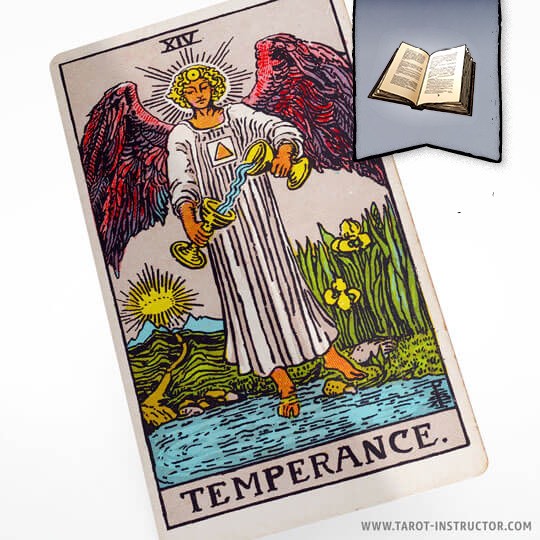
This image captures Temperance’s essence: the angel’s wings symbolize spiritual guidance, while the flowing water represents adaptability. The two cups signify the merging of opposites, a core theme when Temperance interacts with the Swords’ duality.
Practical Applications: Using Swords and Temperance in Readings
To apply this dynamic in readings, start by identifying the Swords cards present. Are they Ace of Swords (a breakthrough in clarity), Three of Swords (heartbreak), or perhaps the Knight of Swords (a fast-moving, impulsive energy)? Then, observe how Temperance appears—is it upright (harmony) or reversed (imbalance)? The interaction between these cards can reveal where mental energy needs tempering or where balance is already present.
For example, if someone draws the Two of Swords (indecision) alongside Temperance, the message might be to trust the process of weighing options without forcing a choice. Temperance advises that clarity will come with time and patience, rather than through forced resolution. Conversely, if the Ten of Swords (a painful ending) appears with Temperance reversed, it could signal a need to avoid dwelling in bitterness and instead seek a path of reconciliation or forgiveness.
Conclusion
The interplay between Swords and Temperance is a dance of opposites that, when mastered, becomes a symphony of wisdom. The Swords bring the fire of intellect and the courage to face truth, while Temperance offers the cool water of moderation and healing. Together, they remind us that life’s greatest challenges—whether mental, emotional, or strategic—can be navigated with both precision and grace.
Next time you encounter these energies in a reading, pause to ask: Where is my mind too sharp? Where do I need to pour more patience? The answer lies in the balance between the blade and the angel’s pour—a harmony that transforms insight into action and conflict into peace.
FAQ
What does the Swords suit represent in tarot?
The Swords suit represents the mind, thoughts, and communication, focusing on logic, truth, and the power of words.
How does Temperance interact with the Swords?
Temperance teaches balance and moderation, complementing the directness of the Swords by suggesting a more measured approach.
Leave a Reply