Short Answer
Ever found yourself tangled in the intricate web of tarot meanings, wishing for a quick, reliable guide to untangle the knots? Whether you’re a seasoned reader or a curious beginner, a Table of Tarot Meanings – Cheat Sheet can be your secret weapon. This guide will walk you through everything you need to know about using a tarot cheat sheet effectively, from understanding its structure to leveraging it for deeper insights. Ready to turn confusion into clarity? Let’s dive in!
Why You Need a Tarot Cheat Sheet
A tarot cheat sheet is more than just a quick reference—it’s a bridge between intuition and knowledge. Imagine you’re in the middle of a reading, and the cards start piling up. The Major Arcana feels like a foreign language, and even the Minor Arcana’s suits blur together. A cheat sheet acts as your personal translator, helping you recall meanings, symbols, and keywords at a glance. It’s especially useful for:
- Beginners: Builds confidence by providing a structured foundation.
- Intermediate Readers: Refreshes memory and highlights nuances.
- Advanced Practitioners: Offers new perspectives or forgotten details.
Without one, you might spend more time second-guessing than interpreting. Why waste time flipping through books when a cheat sheet puts everything in one place?
What to Look for in a Tarot Cheat Sheet
Not all cheat sheets are created equal. A good one should be:
- Comprehensive: Covers all 78 cards (Major and Minor Arcana) with clear keywords.
- Visual: Uses colors, symbols, or icons to make recall easier.
- Organized: Groups cards by suit, number, or theme for quick navigation.
- Customizable: Leaves space for your own notes or interpretations.
Some cheat sheets even include reversed card meanings or elemental associations. The best ones balance brevity with depth, so you’re not overwhelmed but still informed.
How to Use a Tarot Cheat Sheet Effectively
Having a cheat sheet is one thing—using it wisely is another. Here’s how to make the most of yours:
Step 1: Familiarize Yourself First
Before a reading, spend 10 minutes reviewing the cheat sheet. Pay attention to cards that confuse you or feel counterintuitive. Highlight or note the ones you struggle with.
Step 2: Keep It Handy
Place your cheat sheet next to your deck during readings. Glance at it when a card’s meaning escapes you, but avoid relying on it entirely. The goal is to internalize the knowledge over time.
Step 3: Create Your Own
Customize your cheat sheet by adding personal interpretations or mnemonic devices. For example, link the Three of Cups to a memory of a joyful celebration in your life. This personal touch makes the sheet uniquely yours.
Step 4: Test Your Knowledge
Cover the meanings on your cheat sheet and quiz yourself. Can you recall the Death card’s message without peeking? This active recall strengthens your memory.
Common Pitfalls to Avoid
Even with a cheat sheet, it’s easy to fall into traps. Here’s what to watch out for:
- Over-Reliance: Don’t let the cheat sheet replace your intuition. Use it as a tool, not a crutch.
- Ignoring Context: A card’s meaning changes based on its position in a spread. Always consider the surrounding cards.
- Skimming the Surface: Some cheat sheets only list keywords. Dig deeper—explore the card’s imagery, numerology, or astrological ties.
- Sticking to One Style: If your cheat sheet feels too rigid, switch it up. Try a different layout or add your own flair.
Sample Cheat Sheet Layouts
Cheat sheets come in all shapes and sizes. Here are a few popular formats to inspire you:
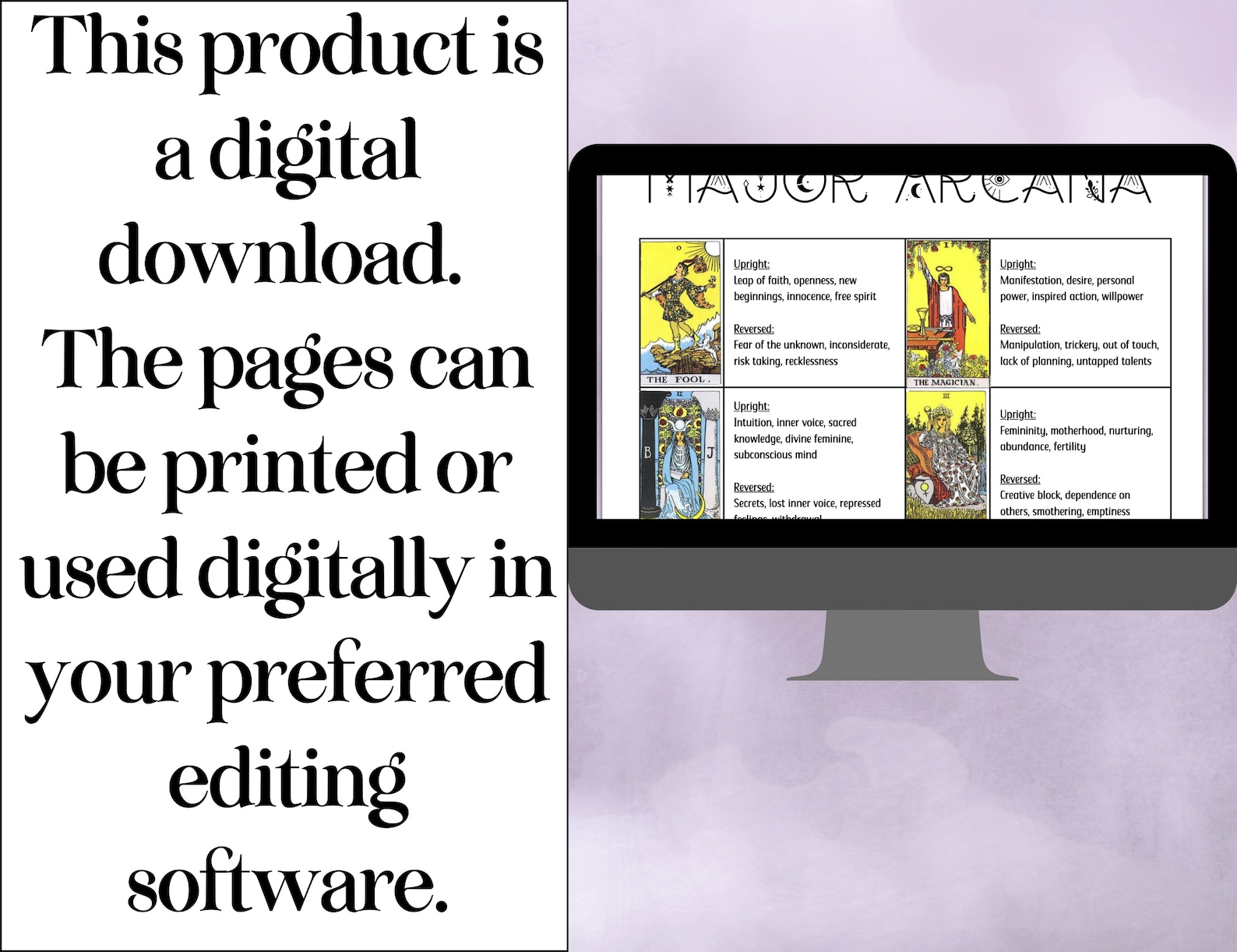
Grid Layout: Cards are arranged in rows by suit (Wands, Cups, Swords, Pentacles) and columns by number. Reversed cards are often color-coded.

Elemental Spread: Cards are grouped by their elemental associations (Fire for Wands, Water for Cups, etc.), with Major Arcana cards highlighted separately.

Minimalist Design: Focuses on keywords and symbols without extra fluff. Ideal for quick reference during live readings.
DIY: Create Your Own Tarot Cheat Sheet
Ready to craft a cheat sheet tailored to your needs? Follow these steps:
- Gather Materials: Use a blank sheet of paper, a notebook, or a digital tool like Canva or Excel.
- List the Cards: Write down all 78 cards in order. For Major Arcana, number them (0–21). For Minor Arcana, group by suit and number (Ace–10, Page–King).
- Add Keywords: Include traditional meanings, but add your own interpretations too. For example, the Ten of Swords might remind you of “rock bottom before rebirth.”
- Incorporate Visuals: Sketch symbols, add colors, or paste images from your deck. Visual cues boost memory.
- Include Reversed Meanings: Note how reversed cards differ from their upright counterparts.
- Test It Out: Use your cheat sheet in a few readings and refine it based on what works (or doesn’t).
Digital vs. Printed Cheat Sheets
Both digital and printed cheat sheets have their pros and cons:
| Feature | Printed | Digital |
|---|---|---|
| Portability | Easy to carry anywhere | Accessible on devices |
| Customization | Limited to handwriting or stickers | Endless with apps or digital tools |
| Durability | Can tear or smudge | No wear and tear |
| Sharing | Hard to share | Easy to email or print |
Consider your lifestyle: If you’re always on the go, a digital cheat sheet might suit you better. If you prefer tactile learning, a printed version could be ideal.
Conclusion
A Table of Tarot Meanings – Cheat Sheet is your fast track to confident readings. Whether you’re a beginner drowning in card meanings or an advanced reader seeking a refresher, it’s an invaluable tool. The key is to use it as a stepping stone—not a crutch—while gradually internalizing the wisdom of the cards. So, grab a cheat sheet, trust your intuition, and let the tarot unfold its magic. Your journey to mastery starts with a single card (and a well-organized cheat sheet).
FAQ
What is a Tarot cheat sheet?
A Tarot cheat sheet is a quick reference guide that summarizes the meanings of all Tarot cards, helping users recall details during readings.
How can I create my own Tarot cheat sheet?
You can create your own Tarot cheat sheet by listing all 78 cards, adding keywords, incorporating visuals, and personal interpretations.
What are common pitfalls when using a Tarot cheat sheet?
Common pitfalls include over-reliance on the cheat sheet, ignoring the context of the cards, and sticking to a rigid format.
FAQ
What is a Tarot cheat sheet?
A Tarot cheat sheet is a quick reference guide that summarizes the meanings of all Tarot cards, helping users recall details during readings.
How can I create my own Tarot cheat sheet?
You can create your own Tarot cheat sheet by listing all 78 cards, adding keywords, incorporating visuals, and personal interpretations.
What are common pitfalls when using a Tarot cheat sheet?
Common pitfalls include over-reliance on the cheat sheet, ignoring the context of the cards, and sticking to a rigid format.
Leave a Reply