Short Answer
Welcome to your comprehensive guide on the Tarot card Five of Cups – Grief Spilled. In this article, you’ll explore the deep emotional layers of this card, uncover its symbolic meanings, and learn how to interpret it in different contexts. Whether you’re a seasoned reader or a curious beginner, this guide will help you understand the challenges and opportunities that the Five of Cups presents. By the end, you’ll be able to pose playful questions and recognize potential obstacles that arise when this card appears in a reading.
The Five of Cups: A Card of Loss and Reflection
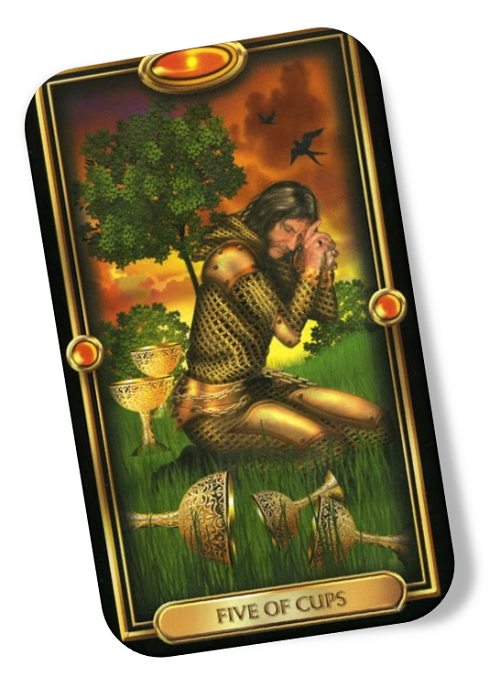
The Five of Cups is often associated with grief, loss, and disappointment. It depicts a figure standing before three spilled cups, their head bowed in sorrow, while two full cups remain untouched behind them. This imagery suggests a focus on what has been lost rather than what still remains. The card invites you to acknowledge your pain but also to recognize the blessings that may still be present.
When this card appears, it may indicate a time of mourning—whether for a lost relationship, a missed opportunity, or an unfulfilled dream. The Five of Cups encourages you to sit with your emotions rather than suppress them. However, it also serves as a reminder that healing is possible, and the two upright cups in the background symbolize hope and renewal.
Key Themes: What the Five of Cups Reveals
The Five of Cups carries several important themes that can provide clarity in a reading. First, it highlights the importance of facing disappointment head-on. Ignoring pain or pretending it doesn’t exist can prolong suffering. Second, it suggests that while loss is a natural part of life, it doesn’t have to define your future. The two remaining cups represent the potential for new beginnings, even in the aftermath of heartbreak.
Another key theme is self-reflection. The figure in the card is turned away from the two full cups, symbolizing a tendency to fixate on what’s missing rather than what’s still available. This card asks you to shift your perspective and consider what you can still salvage from a difficult situation. It may also point to feelings of regret or guilt, urging you to release what no longer serves you.
Posing a Playful Question: How to Engage with the Five of Cups
While the Five of Cups is often seen as a heavy card, you can approach it with curiosity and even a touch of playfulness. Instead of asking, “Why did this happen to me?” try framing your question in a way that opens up possibilities. For example:
- “What lesson is hidden in this loss?” – This shifts the focus from despair to growth.
- “What unexpected blessings might emerge from this situation?” – Encourages optimism.
- “How can I honor my grief while still moving forward?” – Balances emotion with action.
By asking open-ended questions, you allow the card to reveal deeper insights rather than trapping yourself in a cycle of sorrow. The Five of Cups can then become a guide rather than just a symbol of pain.

Potential Challenges: When the Five of Cups Appears
While the Five of Cups offers valuable lessons, it can also present challenges. One of the biggest is the risk of wallowing in sadness. If you find yourself stuck in a loop of regret, the card may be urging you to take small steps toward healing. Another challenge is the tendency to compare your losses to others’, which can amplify feelings of isolation. Remember, everyone’s grief is unique, and your journey is valid.
The Five of Cups may also highlight avoidance. If you’re ignoring a problem or pretending it doesn’t exist, this card could be a wake-up call. It asks you to confront your emotions rather than distract yourself with temporary fixes. Additionally, it might reveal a fear of change—holding onto what’s familiar, even if it’s painful, because the unknown feels scarier.
Practical Steps: Moving Beyond the Five of Cups
If the Five of Cups appears in a reading, consider these actionable steps to navigate its energy:
- Acknowledge your feelings. Suppressing grief only makes it stronger. Allow yourself to feel what you feel without judgment.
- Reframe your narrative. Instead of saying, “I lost everything,” try, “I’m learning to appreciate what remains.”
- Take small actions. Healing doesn’t happen overnight. Celebrate tiny victories, like reaching out to a friend or trying something new.
- Seek support. Whether through therapy, spiritual practices, or loved ones, don’t go through it alone.
- Trust the process. The two upright cups remind you that better days are ahead—even if they’re not visible yet.
Conclusion
The Five of Cups is a card that doesn’t shy away from pain but also doesn’t let you stay there forever. It teaches you to honor your losses while keeping an eye on the future. By posing thoughtful questions and recognizing the challenges it presents, you can transform this card from a symbol of despair into a catalyst for growth. Remember, grief is a natural part of life, but it doesn’t have to be the end of your story. The cups may be spilled, but they’re not empty—and neither are you.
FAQ
What does the Five of Cups symbolize?
The Five of Cups symbolizes grief, loss, and the importance of recognizing both the pain and the potential for healing.
How can I interpret the Five of Cups in a reading?
In a reading, the Five of Cups invites you to acknowledge your feelings of loss while also considering what remains and the opportunities for new beginnings.
What questions can I ask when the Five of Cups appears?
Consider asking open-ended questions like ‘What lesson is hidden in this loss?’ or ‘How can I honor my grief while moving forward?’
Leave a Reply