Short Answer
Embark on a journey into the mystical realms where ancient symbolism converges with modern esoteric thought. This guide unravels the hidden connections between Tarot and Sacred Geometry, revealing how these two systems of knowledge intertwine to form a cohesive language of the universe. You’ll explore the foundational principles of each, discover their shared metaphors, and learn how to apply these insights to personal growth, spiritual practice, and creative expression. By the end, you’ll see how geometry and divination are not just tools for insight but gateways to understanding the very fabric of reality.
The Foundations of Tarot: A System of Symbolic Language
The Tarot is far more than a deck of cards used for divination—it is a visual and symbolic language that encodes universal truths. Comprising 78 cards divided into the Major Arcana (22 cards representing life’s grand themes) and the Minor Arcana (56 cards reflecting everyday experiences), the Tarot operates on layers of meaning. Each card is a microcosm of archetypal energy, from the Fool’s boundless potential to the Tower’s sudden upheaval. The imagery on these cards is rich with allegory, often drawing from mythology, astrology, and alchemy. For instance, the High Priestess embodies intuition and hidden knowledge, while the Wheel of Fortune symbolizes the cyclical nature of fate. These symbols act as mirrors, reflecting the seeker’s inner landscape and the external forces shaping their journey.
Sacred Geometry: The Blueprint of Creation
Sacred Geometry is the study of mathematical patterns and shapes that are believed to underlie the structure of the universe. From the spiral of a nautilus shell to the hexagonal cells of a beehive, these forms recur across nature, art, and spiritual traditions. Key shapes include the Flower of Life (a complex pattern of overlapping circles), the Seed of Life (a six-petaled flower), and the Metatron’s Cube (a 3D projection of the Flower of Life). These geometries are not merely decorative; they are thought to hold vibrational frequencies that resonate with the fabric of reality. In esoteric traditions, Sacred Geometry is seen as the language of creation itself, a visual representation of how energy organizes into matter. The golden ratio, for example, appears in the proportions of the Parthenon, the spiral of galaxies, and even the human body, suggesting a divine order underlying existence.
Shared Metaphors: How Tarot and Sacred Geometry Speak the Same Language
The connection between Tarot and Sacred Geometry lies in their shared use of archetypal symbols and numerical patterns. Both systems operate on the principle that reality is structured through recurring motifs and mathematical harmony. For instance:
- The Number Three: In Tarot, the number three appears in cards like The Empress (creation), The Hierophant (tradition), and The Three of Cups (celebration). In Sacred Geometry, the triangle and the triquetra (a three-pointed knot) symbolize balance, mind-body-spirit unity, and the trinity of past-present-future.
- The Spiral: The spiral is a motif in both systems. In Tarot, it’s seen in the infinity symbol of The Magician’s wand or the coiled serpent of The Devil. In Sacred Geometry, the spiral represents evolution, growth, and the journey of the soul. It’s a reminder that life is a continuous cycle of expansion and contraction.
- The Circle: The circle embodies wholeness and eternity. In Tarot, it’s reflected in the circular wreath of The World card or the halo of The Sun. In Sacred Geometry, the circle is the foundation of the Flower of Life, symbolizing unity, infinity, and the cyclical nature of time.
These shared metaphors suggest that both Tarot and Sacred Geometry are maps of consciousness, offering different perspectives on the same underlying truths. The Tarot provides a narrative framework for understanding these truths, while Sacred Geometry offers a visual and mathematical language to decode them.
The Role of Numerology in Both Systems
Numerology acts as a bridge between Tarot and Sacred Geometry, reinforcing their interconnectedness. Each Tarot card is associated with a number (e.g., The Magician is 1, Strength is 8), and these numbers carry specific vibrational meanings. Similarly, Sacred Geometry assigns significance to numbers based on their geometric properties. For example:
- Number 1 (The Point): Represents unity, potential, and the divine spark. In Tarot, it’s The Magician, the card of manifestation and willpower. In Sacred Geometry, the point is the origin of all forms.
- Number 2 (The Line): Symbolizes duality, balance, and choice. In Tarot, it’s The High Priestess, the card of intuition and hidden knowledge. In Sacred Geometry, the line divides space and creates the foundation for all shapes.
- Number 4 (The Square): Embodies stability, structure, and the material world. In Tarot, it’s The Emperor, the card of authority and order. In Sacred Geometry, the square is the basis for three-dimensional forms like the cube.
By studying numerology, you can deepen your understanding of how Tarot and Sacred Geometry interact, revealing patterns that are both personal and universal.

Practical Applications: Using Tarot and Sacred Geometry Together
Integrating Tarot and Sacred Geometry into your practice can enhance your spiritual toolkit in profound ways. Here’s how to combine them:
- Meditation and Visualization: Use a Tarot card as a focal point for meditation, then overlay its imagery with Sacred Geometry shapes. For example, meditate on The Star card while visualizing the Flower of Life, allowing the symbols to amplify your intention.
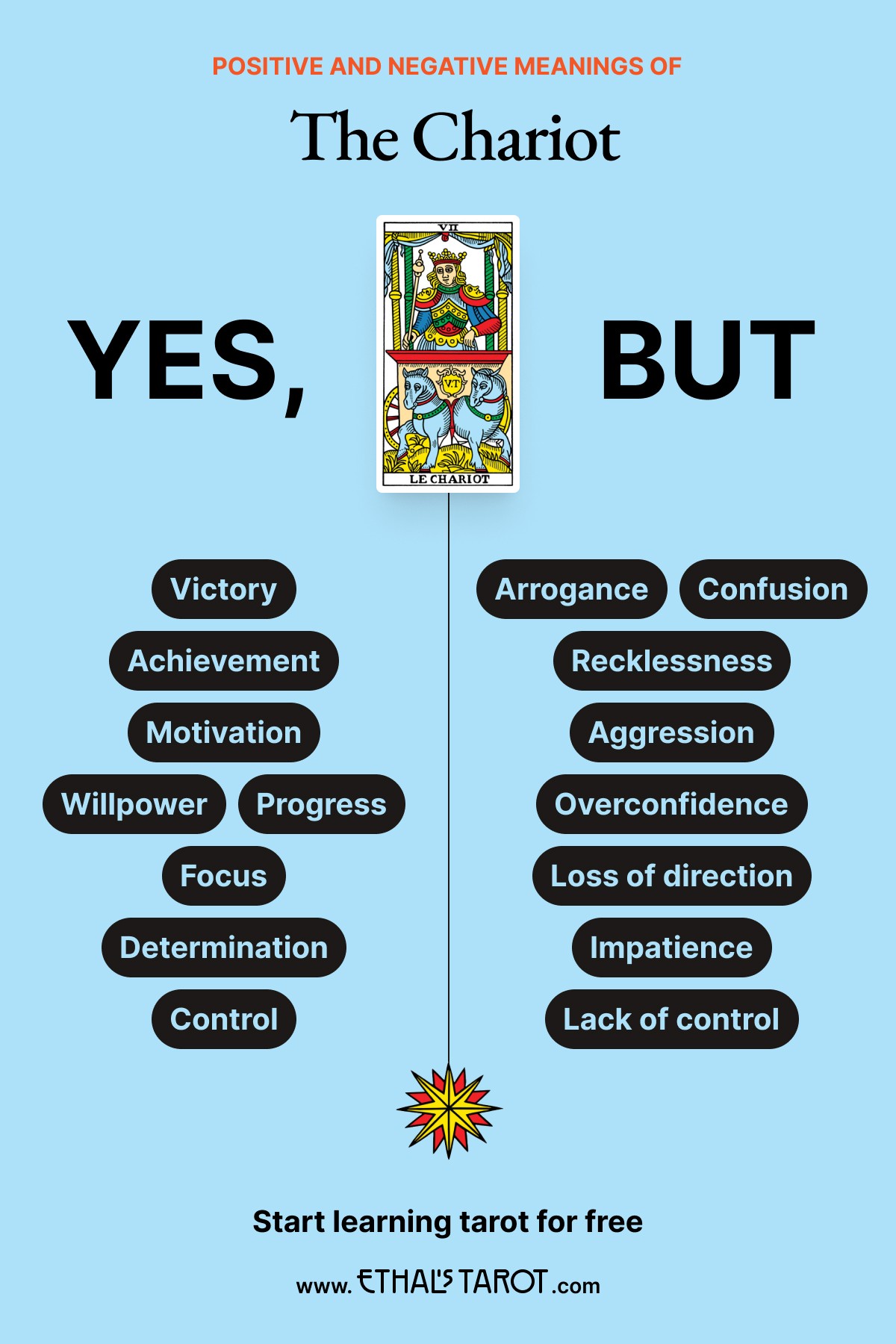
- Divination with Geometric Insight: When pulling a Tarot card, note its numerical value and draw the corresponding Sacred Geometry shape. For instance, if you draw The Chariot (7), meditate on the heptagon, a seven-sided figure associated with spiritual completion.
- Art and Creativity: Create a fusion of Tarot and Sacred Geometry by designing your own cards or artwork. Incorporate geometric patterns into the borders or backgrounds of your Tarot spreads to deepen their symbolic resonance.
- Sacred Space Creation: Use Sacred Geometry grids (like the Flower of Life) to charge your Tarot deck or altar. Place your cards within the grid during readings to amplify their energy and clarity.
The Esoteric Significance: Why These Connections Matter
The interplay between Tarot and Sacred Geometry is more than a fascinating intellectual exercise—it’s a path to awakening. Both systems suggest that reality is not random but structured by invisible laws of energy and symbolism. By recognizing these patterns, you tap into a deeper understanding of your place in the cosmos. For instance, the concept of fractals—self-repeating patterns at different scales—appears in both Tarot (e.g., the repeating motifs in the Minor Arcana) and Sacred Geometry (e.g., the recursive nature of the Sierpinski triangle). This fractal nature implies that the same truths manifest at every level of existence, from the microcosm to the macrocosm.
Moreover, these systems offer tools for conscious evolution. The Tarot’s archetypes provide a roadmap for personal transformation, while Sacred Geometry’s shapes act as energetic blueprints for manifestation. Together, they form a holistic system for aligning with your highest potential. Whether you’re a seeker, an artist, or a spiritual practitioner, the fusion of these two traditions can unlock new dimensions of insight and creativity.
Conclusion
The hidden connections between Tarot and Sacred Geometry reveal a universe that is both orderly and mysterious. Through their shared language of symbols, numbers, and shapes, these systems offer a gateway to understanding the invisible threads that weave through existence. Whether you’re drawn to the Tarot’s storytelling power or the geometric precision of Sacred Geometry, exploring their intersections can lead to profound revelations about yourself and the world around you. As you delve deeper into these traditions, remember that their true magic lies not just in the symbols themselves, but in the awareness they cultivate—an awareness that you, too, are a living expression of the same sacred patterns.
FAQ
What is the relationship between Tarot and Sacred Geometry?
Tarot and Sacred Geometry share symbolic and numerical patterns that reveal deeper insights into personal and spiritual growth.
How can I use Tarot and Sacred Geometry together?
You can integrate them through meditation, divination, and creative practices by overlaying Tarot imagery with Sacred Geometry shapes.
Leave a Reply