Short Answer
Unlock the mysteries of the tarot with this comprehensive guide to the Tarot Card Meanings Chart. Whether you’re a seasoned reader or a curious beginner, this resource promises to shift your perspective and ignite your curiosity about the symbolic language of the cards. Discover how each card reflects life’s journey, challenges, and opportunities, and learn how to interpret them with clarity and confidence. Below, you’ll find a detailed breakdown of the Major and Minor Arcana, practical tips for reading, and a printable chart to keep for quick reference.
What Is a Tarot Card Meanings Chart?
A Tarot Card Meanings Chart is a visual or textual guide that outlines the significance of each card in the tarot deck. It serves as a roadmap for understanding the imagery, symbolism, and potential interpretations of the 78 cards—22 Major Arcana and 56 Minor Arcana. These charts often include keywords, traditional meanings, and reversed interpretations to help readers navigate the nuances of each card. Whether you’re drawing a single card for daily guidance or performing a full spread, a meanings chart acts as a reliable companion, ensuring you don’t miss subtle details that could shift the reading’s depth. Print this chart and keep it handy to deepen your connection with the tarot and enhance your intuitive insights.
The Major Arcana: Life’s Grand Journey
The Major Arcana represents the major themes and life lessons we encounter on our spiritual and personal journeys. These 22 cards—from The Fool to The World—symbolize pivotal moments, karmic influences, and archetypal energies. Each card carries a profound message, often reflecting stages of growth, transformation, or awakening. For example, The Magician embodies manifestation and resourcefulness, while The High Priestess invites you to trust your intuition and inner wisdom. The Major Arcana acts as a narrative arc, guiding you through the hero’s journey of self-discovery. By studying these cards, you’ll recognize patterns in your life and gain clarity on how to navigate challenges with purpose and awareness.
The Minor Arcana: Everyday Experiences and Details
While the Major Arcana deals with grand themes, the Minor Arcana focuses on the everyday experiences that shape our daily lives. Divided into four suits—Wands, Cups, Swords, and Pentacles—each suit corresponds to an element (fire, water, air, earth) and governs specific areas of life. Wands relate to creativity and passion, Cups to emotions and relationships, Swords to intellect and conflict, and Pentacles to material wealth and practicality. Each suit contains numbered cards from Ace to 10, plus four court cards (Page, Knight, Queen, King) that represent people or personality traits. Understanding the Minor Arcana allows you to interpret the finer details of a reading, such as a burst of inspiration (Ace of Wands) or a financial setback (Five of Pentacles). Together with the Major Arcana, they create a complete picture of your current circumstances and potential outcomes.
How to Use a Tarot Card Meanings Chart for Readings
A Tarot Card Meanings Chart is most effective when used as a foundation for your intuitive interpretations. Start by familiarizing yourself with the traditional meanings of each card, then observe how they resonate with your personal experiences. When conducting a reading, pull a card and refer to the chart for its core message. Ask yourself: Does this interpretation align with the card’s imagery? How does it reflect my current situation? Don’t be afraid to trust your gut—sometimes the most powerful insights come from blending traditional meanings with your own intuition. For reversed cards, consult the chart for alternative perspectives, such as blocked energy or internal struggles. Over time, you’ll develop a unique relationship with the cards, using the chart as a springboard for deeper exploration.
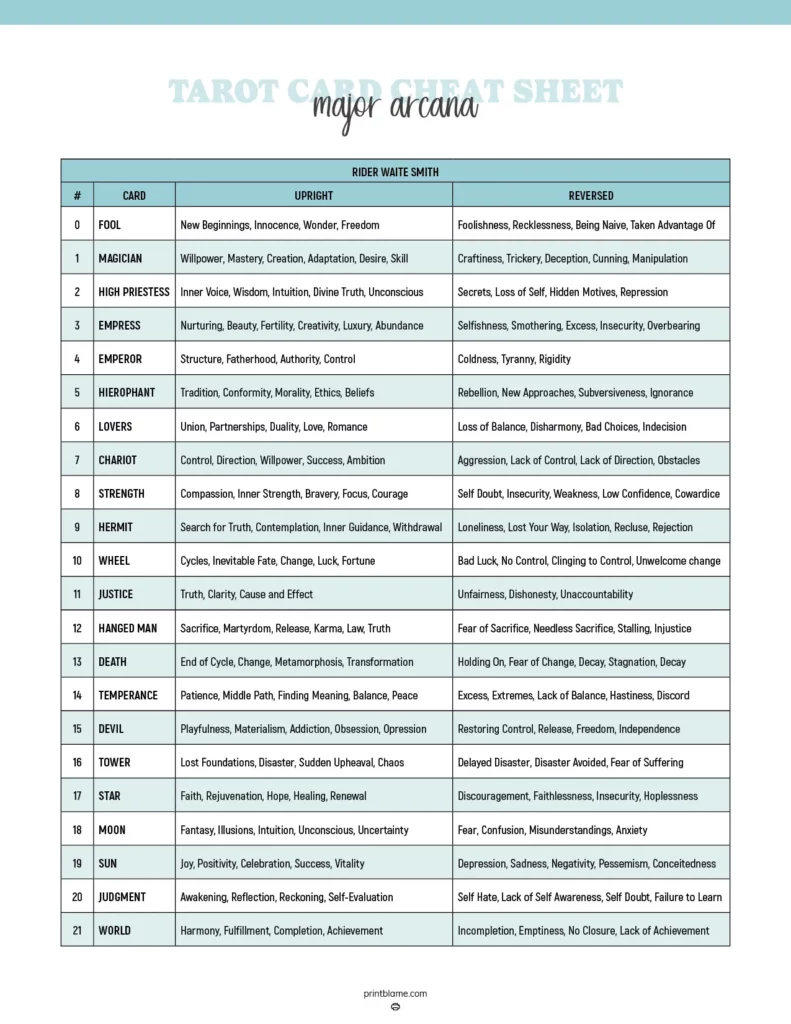
Printable Tarot Card Meanings: Customize and Keep It Handy
One of the greatest advantages of a Tarot Card Meanings Chart is its portability. Print a copy and keep it in your tarot journal, on your altar, or in your reading space for quick reference. Many charts are designed to be visually appealing, with vibrant colors and clear layouts that make memorization easier. Some even include blank spaces for you to add your own notes or personal interpretations. To make the most of your printable chart, laminate it or place it in a protective sleeve to ensure durability. You can also customize it by highlighting cards that resonate with you or adding stickers for quick visual cues. Having a physical chart on hand ensures you’re always prepared, whether you’re reading for yourself or guiding others through their tarot journey.

Common Misconceptions About Tarot Card Meanings
Tarot is often shrouded in mystery, leading to several misconceptions about card meanings. One common myth is that the tarot predicts the future with absolute certainty. In reality, tarot offers guidance and potential outcomes based on current energies and choices. Another misconception is that reversed cards always indicate negativity. While reversals can signify blocked energy or internal struggles, they also present opportunities for growth and self-reflection. Additionally, some believe that memorizing every card’s meaning is essential for a successful reading. While knowledge is valuable, the true magic of tarot lies in your intuition. Let the chart serve as a guide, but don’t let it limit your interpretations. The more you practice, the more you’ll trust your own insights and develop a deeper connection with the cards.
Enhancing Your Tarot Practice with the Meanings Chart
To deepen your tarot practice, use the meanings chart as a tool for continuous learning. Start by studying one card at a time, meditating on its imagery and symbolism. Journal about how it relates to your life or the lives of those you read for. Experiment with different spreads, such as the Celtic Cross or a simple three-card layout, to see how the cards interact with one another. Pay attention to recurring themes or cards in your readings—they often highlight areas that require your focus. Over time, you’ll notice patterns and develop a more nuanced understanding of the tarot’s language. The meanings chart will become less of a crutch and more of a trusted resource, allowing you to read with confidence and creativity.
Conclusion
The Tarot Card Meanings Chart is more than just a reference guide—it’s a gateway to deeper self-awareness and intuitive growth. By understanding the Major and Minor Arcana, you’ll gain insight into life’s grand themes and everyday details alike. Use the chart to spark curiosity, challenge your perspectives, and uncover hidden truths in your readings. Whether you print it out, customize it, or study it digitally, this resource will serve as a constant companion on your tarot journey. Embrace the wisdom of the cards, trust your intuition, and let the tarot guide you toward clarity, empowerment, and transformation. Print this chart now and take the first step toward mastering the art of tarot interpretation.
FAQ
What is a Tarot Card Meanings Chart?
A Tarot Card Meanings Chart is a guide that outlines the significance of each card in the tarot deck, helping readers interpret imagery, symbolism, and potential meanings.
How can I use a Tarot Card Meanings Chart in my readings?
Use the chart as a foundation for your intuitive interpretations by familiarizing yourself with card meanings and referencing the chart during readings.
What are common misconceptions about Tarot card meanings?
Many believe Tarot predicts the future with certainty, that reversed cards always mean negativity, or that memorizing all meanings is essential. In reality, Tarot offers guidance based on energies and choices.
Leave a Reply