Short Answer
Embark on a journey through the mystical world of tarot, where each card serves as a mirror to the soul, a whisper from the universe, or a guide through life’s labyrinth. Whether you’re a seasoned seeker or a curious newcomer, understanding the tarot’s structure—from the grand, archetypal Major Arcana to the nuanced, everyday Minor Arcana—can unlock profound insights and a deeper connection to the unseen forces shaping your path. In this guide, we’ll explore the rich symbolism, historical roots, and practical applications of tarot cards, revealing why they continue to captivate hearts and minds across centuries. By the end, you’ll not only grasp the differences between the two arcana but also learn how to interpret their messages in your own life.
The Soul’s Journey: Understanding the Major Arcana
The Major Arcana consists of 22 cards, each representing a pivotal moment or archetype in the human experience. These cards are often seen as the “trump” cards, overshadowing the Minor Arcana with their universal themes. From the innocent Fool’s leap into the unknown to the transformative Death card’s rebirth, the Major Arcana tells a story—a hero’s journey that mirrors our own lives. These cards don’t just predict the future; they illuminate the present, offering clarity on life’s biggest questions.
Take the Magician, for example. This card embodies resourcefulness, skill, and the power to manifest dreams into reality. Its imagery—often a figure with one hand pointing to the heavens and the other to the earth—symbolizes the bridge between the spiritual and material worlds. When this card appears, it’s a sign to harness your talents and take action. Contrast this with the Hermit, who represents introspection and soul-searching. Clad in a hooded cloak and holding a lantern, the Hermit invites you to pause, reflect, and seek inner wisdom. Together, these cards highlight the duality of human existence: the need for both action and contemplation.
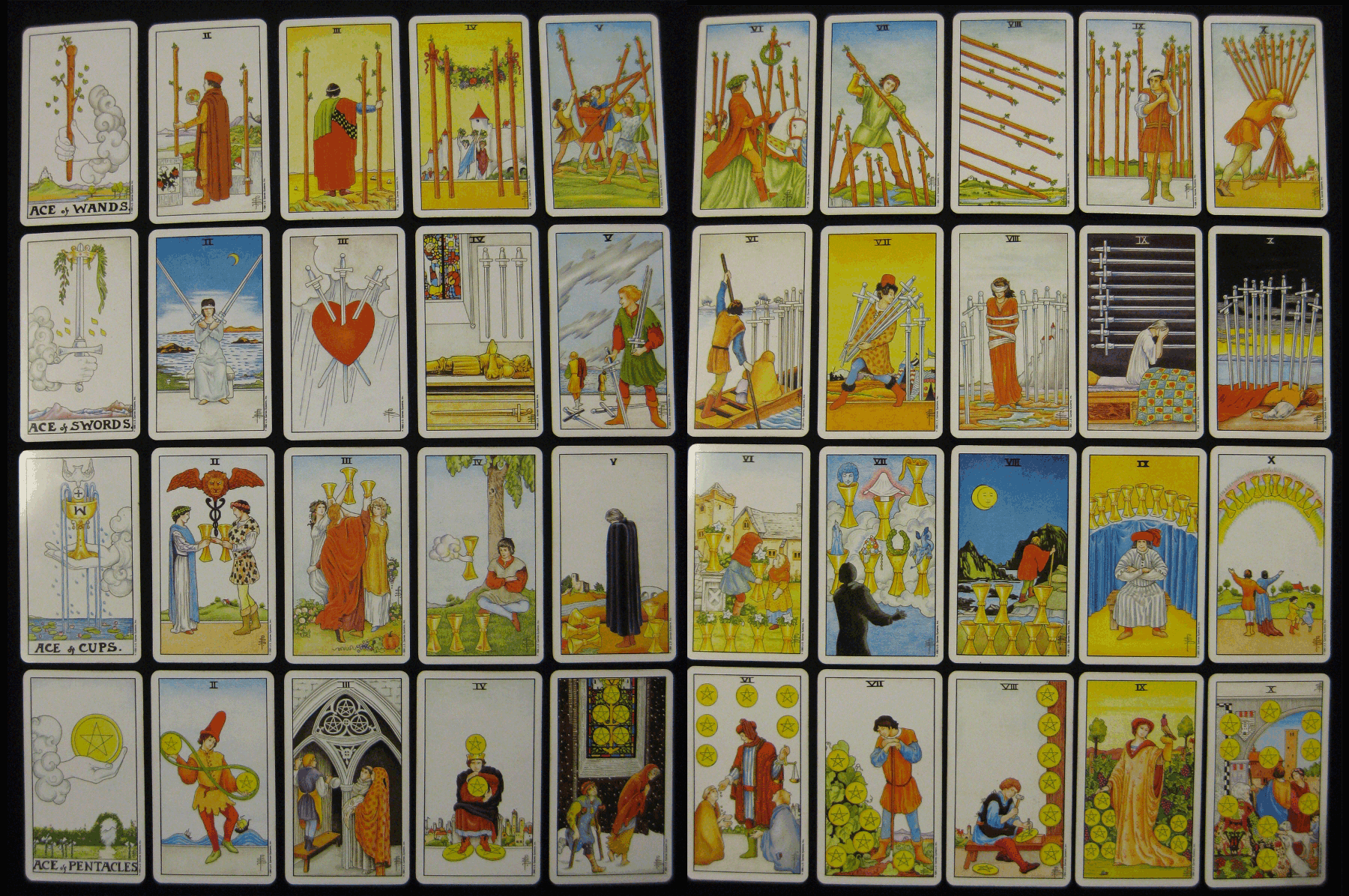
The Fabric of Daily Life: Decoding the Minor Arcana
While the Major Arcana charts the grand narrative of life, the Minor Arcana—comprising 56 cards—focuses on the everyday ebb and flow of existence. Divided into four suits—Wands, Cups, Swords, and Pentacles—each suit corresponds to an element (fire, water, air, and earth, respectively) and governs different aspects of human experience. The Minor Arcana is where the tarot becomes deeply personal, reflecting the joys, challenges, and mundane moments that shape our daily lives.
The Wands suit, associated with fire, embodies passion, creativity, and ambition. Cards like the Ace of Wands herald new beginnings, while the Ten of Wands warns of burnout from carrying too much. The Cups suit, tied to water, delves into emotions, relationships, and intuition. The Queen of Cups radiates empathy and emotional balance, while the Three of Cups celebrates friendship and joy. Meanwhile, the Swords, linked to air, cut through illusions with their sharp intellect. The King of Swords represents authority and clarity, while the Five of Swords may signal conflict or betrayal. Finally, the Pentacles, grounded in earth, ground us in matters of money, health, and stability. The Ace of Pentacles promises new opportunities, while the Nine of Pentacles reflects abundance and self-sufficiency.

The Alchemy of Interpretation: Blending Major and Minor Arcana
The true magic of tarot lies in the interplay between the Major and Minor Arcana. While the Major Arcana sets the stage for life’s grand themes, the Minor Arcana fills in the details, offering practical guidance tailored to your current circumstances. For instance, if the Chariot (Major Arcana) appears in a reading, it signals determination and victory, but the surrounding Minor Arcana cards—perhaps the Three of Pentacles (teamwork) or the Eight of Wands (fast progress)—will reveal how to achieve that success.
Consider a reading where the Lovers (Major Arcana) suggests a significant relationship decision. The Minor Arcana cards could clarify whether this is a romantic partnership (e.g., the Two of Cups), a choice between duty and desire (e.g., the Five of Swords), or a union of minds (e.g., the King of Swords). This layered approach allows the tarot to speak to you on multiple levels, blending cosmic wisdom with earthly realities.
The Language of Symbols: Why Tarot Speaks to Us
Tarot cards are more than ink on paper; they are a visual language that transcends words. Each symbol—a rose on the Strength card, a tower crumbling in the Tower card, or a rainbow in the Temperance card—carries centuries of meaning. These symbols tap into the collective unconscious, resonating with universal human experiences. For example, the Hanged Man isn’t just a card about sacrifice; it’s a reminder that sometimes, in stillness, we gain the greatest clarity. The Moon card, with its eerie imagery of a crayfish emerging from water, speaks to intuition, illusion, and the subconscious mind.
This symbolic language is why tarot feels so personal yet universally relatable. It doesn’t impose answers but instead invites you to explore your own interpretations. A card like the Page of Cups might mean a creative message for one person and a new emotional connection for another. The tarot’s ambiguity is its strength, allowing it to adapt to the seeker’s unique journey.

Practical Magic: Using Tarot in Everyday Life
Tarot isn’t just for fortune-telling; it’s a tool for self-reflection, decision-making, and spiritual growth. To incorporate tarot into your daily life, start with a simple daily draw—a single card to set the tone for your day. Ask yourself: What lesson does this card hold for me? How can I apply its energy today? For deeper insights, try a three-card spread: past, present, and future, or mind, body, and spirit. Over time, you’ll develop a intuitive connection to the cards, allowing their messages to guide you with greater precision.
Keep a tarot journal to track your readings and note recurring themes or cards. This practice not only sharpens your interpretive skills but also deepens your relationship with the deck. Remember, tarot is a conversation, not a monologue. The more you engage with it, the more it will reveal about your inner world and the world around you.
Conclusion
Tarot cards are a gateway to self-discovery, offering a blend of ancient wisdom and modern relevance. The Major Arcana maps out the soul’s journey, while the Minor Arcana grounds us in the realities of daily life. Together, they create a dynamic language that speaks to the heart, mind, and spirit. Whether you’re drawn to tarot for guidance, inspiration, or sheer curiosity, its power lies in its ability to reflect back to you the truths you already hold within. So, shuffle the deck, draw a card, and let the journey begin.
FAQ
What are the Major Arcana cards?
The Major Arcana consists of 22 cards that represent significant life themes and archetypal moments.
What do the Minor Arcana cards signify?
The Minor Arcana includes 56 cards that reflect everyday experiences and situations.
How can I use tarot cards in daily life?
You can use tarot cards for self-reflection or decision-making by drawing cards to gain insights into your current situation.
Leave a Reply