Short Answer
Welcome to a no-nonsense, metaphor-free guide to understanding tarot card meanings. Whether you’re a skeptic, a curious beginner, or someone looking to demystify the world of tarot, this guide breaks down each card’s core significance in clear, direct terms. You’ll discover the foundational meanings behind the Major and Minor Arcana, learn how to interpret suits and numbers, and gain practical insights into using tarot for self-reflection and decision-making. By the end, you’ll have a practical toolkit to read tarot with confidence—no poetic fluff, just the essentials.
The Major Arcana: The Big Life Lessons
The Major Arcana consists of 22 cards that represent significant life events, spiritual lessons, and karmic influences. These cards are the backbone of any tarot reading, often indicating major turning points or deep personal growth. Unlike the Minor Arcana, which deals with everyday situations, the Major Arcana focuses on the bigger picture—your journey, challenges, and ultimate purpose.
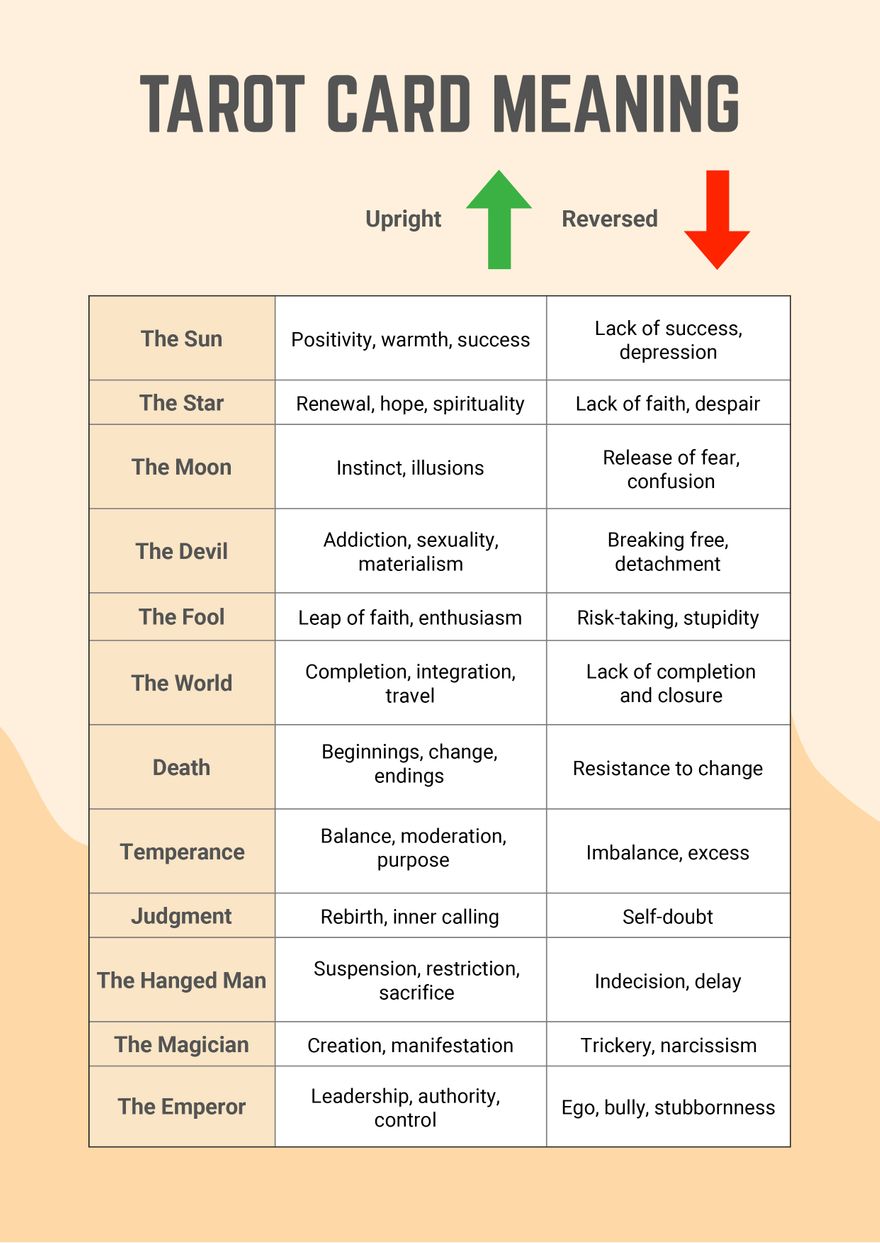
For example, The Fool symbolizes new beginnings, spontaneity, and a leap of faith. It’s the card of potential and adventure, urging you to embrace the unknown without overthinking. On the other hand, The Tower represents sudden upheaval, revelation, or breakdowns that force you to confront harsh truths. It’s a wake-up call, signaling that what you thought was stable is about to crumble—often for your own good.

The Minor Arcana: Everyday Energies and Situations
The Minor Arcana is divided into four suits—Cups, Pentacles, Swords, and Wands—each corresponding to different aspects of life. These 56 cards deal with the nuances of daily existence, from emotions and relationships to work and challenges. Understanding these suits helps you interpret the finer details of a reading.
Cups represent emotions, intuition, and relationships. They’re tied to the heart—love, joy, sorrow, and connection. A card like Three of Cups often indicates celebration, friendship, or emotional fulfillment, while Five of Cups reflects loss or regret, urging you to acknowledge pain before moving forward.
Pentacles are all about the material world—money, career, health, and stability. They ground the reading in practical realities. For instance, Ace of Pentacles signals new financial opportunities or a solid investment, while Ten of Pentacles suggests legacy, family wealth, or long-term security.
Swords cut through illusion, dealing with intellect, conflict, and communication. They’re the suit of the mind—thoughts, decisions, and sometimes harsh truths. Two of Swords shows indecision, with a figure blindfolded and holding two swords, while Seven of Swords hints at deception or strategic maneuvering, often in a work or personal context.
Wands embody passion, creativity, and ambition. They’re the suit of fire—energy, inspiration, and action. The Ace of Wands is a burst of creative potential, while Three of Wands suggests expansion, foresight, and planning for the future.
Court Cards: The Personalities and Roles in Your Life
Court cards—Page, Knight, Queen, and King—represent people, energies, or aspects of yourself. They add depth to a reading by highlighting personalities or behaviors. For example, a Queen of Cups might indicate a nurturing, empathetic person in your life or a need to embrace your own emotional intelligence. Meanwhile, a Knight of Swords could signal someone who acts impulsively or a situation requiring quick, decisive action.
These cards can also reflect your own traits. Drawing a Page of Pentacles might suggest you’re in a phase of learning or practical growth, while a King of Wands could indicate leadership, charisma, or a need to take charge of a project.
Numbers and Their Meanings
Numbers in tarot carry symbolic weight, adding another layer to a card’s meaning. Here’s a quick breakdown:
- 1 (Ace): New beginnings, potential, or a spark of inspiration.
- 2: Balance, choices, or partnerships.
- 3: Growth, collaboration, or celebration.
- 4: Stability, structure, or foundation.
- 5: Conflict, change, or challenge.
- 6: Harmony, progress, or cooperation.
- 7: Reflection, assessment, or a pause for thought.
- 8: Movement, progress, or mastery.
- 9: Completion, fulfillment, or near-end of a cycle.
- 10: Culmination, wholeness, or a return to the beginning.
For example, Eight of Swords (a card of restriction) paired with the number 8 suggests feeling trapped, while Eight of Wands (a card of swift movement) implies fast progress or communication.
Reversed Cards: Blocked or Internalized Energy
Reversed cards flip the upright meaning, indicating blocked energy, internal struggles, or delays. They’re not necessarily “bad”—they highlight areas needing attention or growth. For instance, The Lovers reversed might suggest disharmony in a relationship or a need to make a tough choice, while Justice reversed could point to unfairness or a lack of accountability.
However, reversed cards can also mean the energy is internalized. Strength reversed might reflect self-doubt or struggling to control emotions, rather than external challenges.
Reading Tarot: Practical Tips
To read tarot effectively, start with a clear question or intention. Shuffle the deck while focusing on your query, then lay out the cards in a spread (e.g., a 3-card spread for past-present-future). Pay attention to:
- Card positions: Where a card lands in a spread can shift its meaning (e.g., a challenge in the past vs. a lesson in the future).
- Card combinations: Nearby cards can modify each other’s meanings. For example, The Magician next to Five of Cups might suggest using skills to recover from loss.
- Your intuition: While guidebooks are helpful, your gut reaction to a card often reveals its personal significance.
Common Misconceptions Debunked
Tarot is often misunderstood as fortune-telling, but it’s really a tool for reflection and guidance. Here are a few myths clarified:
- Tarot predicts the future: It offers insights into potential outcomes based on current energies, but free will plays a huge role.
- You need psychic abilities: Intuition helps, but tarot is accessible to anyone willing to learn its symbolism.
- Reversed cards are “negative”: They highlight internal or blocked energy, not just bad luck.
- Only certain decks work: While Rider-Waite is classic, any deck can be meaningful if you connect with its imagery.
Conclusion
Tarot is a mirror—it reflects your subconscious, highlights patterns, and offers clarity without the fluff. By understanding the Major and Minor Arcana, court cards, numbers, and reversals, you can decode the messages in each spread. Remember, tarot isn’t about predicting a fixed future; it’s about empowering you to navigate life’s uncertainties with intention. Start with simple spreads, trust your intuition, and let the cards guide your self-discovery. The more you practice, the more the symbols will resonate, turning tarot into a trusted ally in your journey.
FAQ
What is the difference between Major and Minor Arcana cards?
Major Arcana cards represent significant life events and spiritual lessons, while Minor Arcana cards focus on everyday situations and energies.
What do reversed tarot cards mean?
Reversed cards indicate blocked or internalized energy, delays, or areas needing growth, rather than just negative outcomes.
Do you need psychic abilities to read tarot?
No, tarot reading is accessible to anyone willing to learn the symbolism and use their intuition.
Can tarot predict the future?
Tarot offers insights into potential outcomes based on current energies, but free will influences final results.
Leave a Reply