Short Answer
Have you ever wondered why tarot cards hold such a powerful allure across cultures and generations? Whether you’re a curious beginner or a seasoned enthusiast, understanding the meanings behind each card can unlock profound insights into life’s mysteries. This guide will decode every tarot card instantly, revealing the hidden symbolism, intuitive messages, and practical applications that make tarot a timeless tool for self-discovery and guidance. By the end, you’ll not only grasp the essence of each card but also appreciate why tarot continues to captivate millions worldwide.
The Foundation of Tarot: Structure and Symbolism
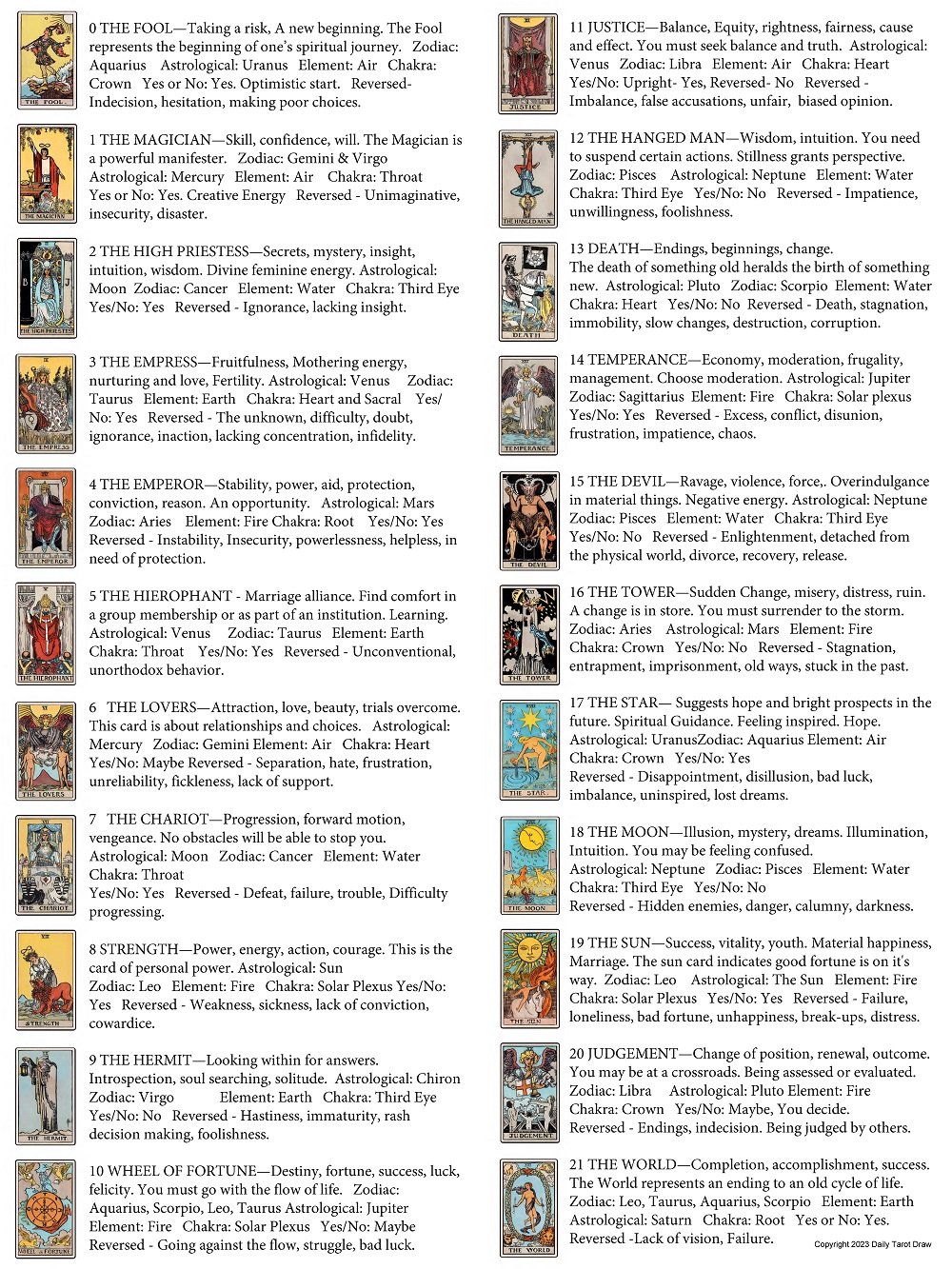
Tarot is more than just a deck of illustrated cards—it’s a visual language that speaks to the subconscious. A standard tarot deck consists of 78 cards divided into two main groups: the Major Arcana and the Minor Arcana. The Major Arcana, comprising 22 cards (e.g., The Fool, The Magician, The Lovers), represents life’s grand themes, spiritual journeys, and karmic lessons. Each card in this group carries a number and a title, symbolizing stages of personal growth or universal archetypes.
The Minor Arcana, with 56 cards, mirrors a traditional deck of playing cards and is organized into four suits: Wands, Cups, Swords, and Pentacles. These suits correspond to different aspects of human experience—creativity and passion (Wands), emotions and relationships (Cups), intellect and conflict (Swords), and material world and practicality (Pentacles). Each suit contains 14 cards: Ace through 10, plus four court cards (Page, Knight, Queen, King). Understanding this structure is key to interpreting tarot readings accurately.
Decoding the Major Arcana: Your Spiritual Roadmap
The Major Arcana cards act as a narrative, guiding you through life’s pivotal moments. For instance, The Fool (Card 0) embodies spontaneity, new beginnings, and a leap of faith, often appearing when you’re about to embark on an uncharted path. In contrast, The Tower (Card 16) signifies sudden upheaval or revelation, urging you to confront harsh truths and rebuild from the ground up. Each card’s imagery—whether it’s The High Priestess’s veil of mystery or The Chariot’s triumphant journey—serves as a visual cue to deeper meanings.
To decode these cards instantly, focus on the central symbols and emotions they evoke. For example, The Hanged Man (Card 12) shows a figure suspended upside down, suggesting surrender, new perspectives, or a pause in action. The card’s message isn’t about literal sacrifice but about seeing situations from a different angle. Similarly, Death (Card 13) rarely signifies physical death; instead, it represents transformation, endings that pave the way for renewal. By associating each card with its core theme, you can quickly interpret its message in any reading.
Navigating the Minor Arcana: Everyday Insights and Practical Guidance
The Minor Arcana cards provide clarity on daily challenges, relationships, and decisions. For example, the Ace of Cups heralds new emotional beginnings, such as love or creative inspiration, while the Five of Swords warns of conflict or betrayal, urging you to choose your battles wisely. The court cards add another layer of nuance—The Queen of Pentacles might represent a nurturing, prosperous woman in your life, or an aspect of yourself that embodies practical care and abundance.
To master the Minor Arcana, study the elemental associations of each suit. Wands (Fire) ignite passion and ambition, Cups (Water) reflect emotions and intuition, Swords (Air) cut through illusions with logic, and Pentacles (Earth) ground you in reality and resources. A card like the Three of Wands suggests foresight and expansion, while the Eight of Cups signals a journey of emotional withdrawal or seeking deeper meaning. Pairing suits with elemental energies helps you predict the card’s influence in a spread.

Reading Tarot Cards: Intuition Meets Structure
While memorizing card meanings is essential, true tarot mastery blends intuition with structure. Start by shuffling the deck while focusing on a question or intention. As you draw cards, observe your immediate reactions—does a card feel uplifting, ominous, or confusing? This gut feeling often reveals subconscious insights. For example, pulling the Ten of Swords might initially evoke dread, but its message is about recovery and acceptance after a painful ending.
Spreads, or layouts, provide a framework for interpretation. A simple three-card spread (Past, Present, Future) offers a linear narrative, while a Celtic Cross spread delves into complex dynamics. Position matters: in a spread, the upright card amplifies its traditional meaning, while a reversed card (drawn upside down) suggests internalized or blocked energy. For instance, the Lovers upright may indicate harmony or a significant choice, while reversed, it could point to disharmony or indecision.
Common Misconceptions and Why They Persist
One of the most pervasive myths about tarot is that it predicts the future with absolute certainty. In reality, tarot offers guidance, highlighting potential outcomes based on current energies. It’s a tool for reflection, not a crystal ball. Another misconception is that tarot is tied to the occult or requires supernatural abilities. While tarot has roots in mysticism, it’s fundamentally a psychological tool that encourages self-awareness and decision-making. Its fascination lies in its ability to mirror the human experience—our fears, desires, and growth—through universal symbols.
The language of tarot is also often misunderstood. Terms like “negative” or “positive” cards can be misleading; even cards traditionally labeled as challenging (e.g., The Devil, Ten of Swords) serve as wake-up calls or catalysts for change. The key is to approach each card with curiosity rather than judgment, asking, “What is this card trying to teach me?” rather than “Is this good or bad?”
Practical Tips for Instant Card Decoding
To decode tarot cards instantly, create a personal cheat sheet with keywords for each card. For example:
- Major Arcana: The Fool (new beginnings), The Hermit (solitude), Judgment (awakening)
- Wands: Ace (inspiration), Eight (speed), King (charisma)
- Cups: Two (partnership), Seven (choices), Knight (idealism)
- Swords: Three (heartbreak), Nine (anxiety), Queen (clarity)
- Pentacles: Four (security), Six (generosity), Page (opportunity)
Pair these keywords with the card’s imagery. Notice recurring themes, such as water in Cups cards or swords in Swords cards, to reinforce your understanding. Over time, your brain will associate symbols with meanings automatically, allowing for quicker interpretations.
Tarot in Modern Life: Beyond Divination
Tarot’s relevance extends far beyond fortune-telling. It’s a powerful tool for therapy, creativity, and problem-solving. Therapists use tarot to help clients explore emotions and subconscious blocks, while artists and writers draw inspiration from its rich symbolism. In decision-making, tarot can clarify priorities—for example, pulling the Two of Pentacles might highlight the need to balance work and personal life.
The rise of digital tarot apps and online communities has also democratized access to the practice. Beginners can now consult virtual decks or join forums to discuss interpretations, making tarot more inclusive than ever. However, the core appeal remains unchanged: tarot connects us to something greater than ourselves, whether you view it as a spiritual guide, a psychological mirror, or simply a creative exercise.
Conclusion
Tarot is a mirror that reflects the human experience in all its complexity—joy, struggle, transformation, and wisdom. By understanding the structure of the deck, the symbolism of each card, and the interplay between intuition and structure, you can decode tarot meanings instantly and apply them to your life with confidence. Whether you’re seeking guidance, inspiration, or self-discovery, tarot offers a timeless language to navigate life’s journey. Embrace the cards not as a prediction of fate, but as a compass pointing toward deeper understanding and growth. The magic of tarot lies in its ability to reveal what’s already within you—you just need to listen.
FAQ
What is tarot?
Tarot is a deck of cards used for divination, self-reflection, and guidance, consisting of 78 cards divided into Major and Minor Arcana.
How many cards are in a tarot deck?
A standard tarot deck contains 78 cards.
What do the Major Arcana cards represent?
Major Arcana cards symbolize significant life themes and spiritual lessons.
What are the suits in the Minor Arcana?
The Minor Arcana consists of four suits: Wands, Cups, Swords, and Pentacles, each representing different aspects of life.
Leave a Reply