Short Answer
Welcome to your ultimate guide to tarot card names and meanings! Whether you’re a curious beginner or a seasoned reader looking to deepen your understanding, this article will walk you through the names of each tarot card and what they symbolize. You’ll discover how each card tells a unique story, poses a playful question, and even introduces a challenge to reflect upon. By the end, you’ll feel more confident interpreting the cards and connecting their messages to your life.
Understanding the Structure of Tarot Cards
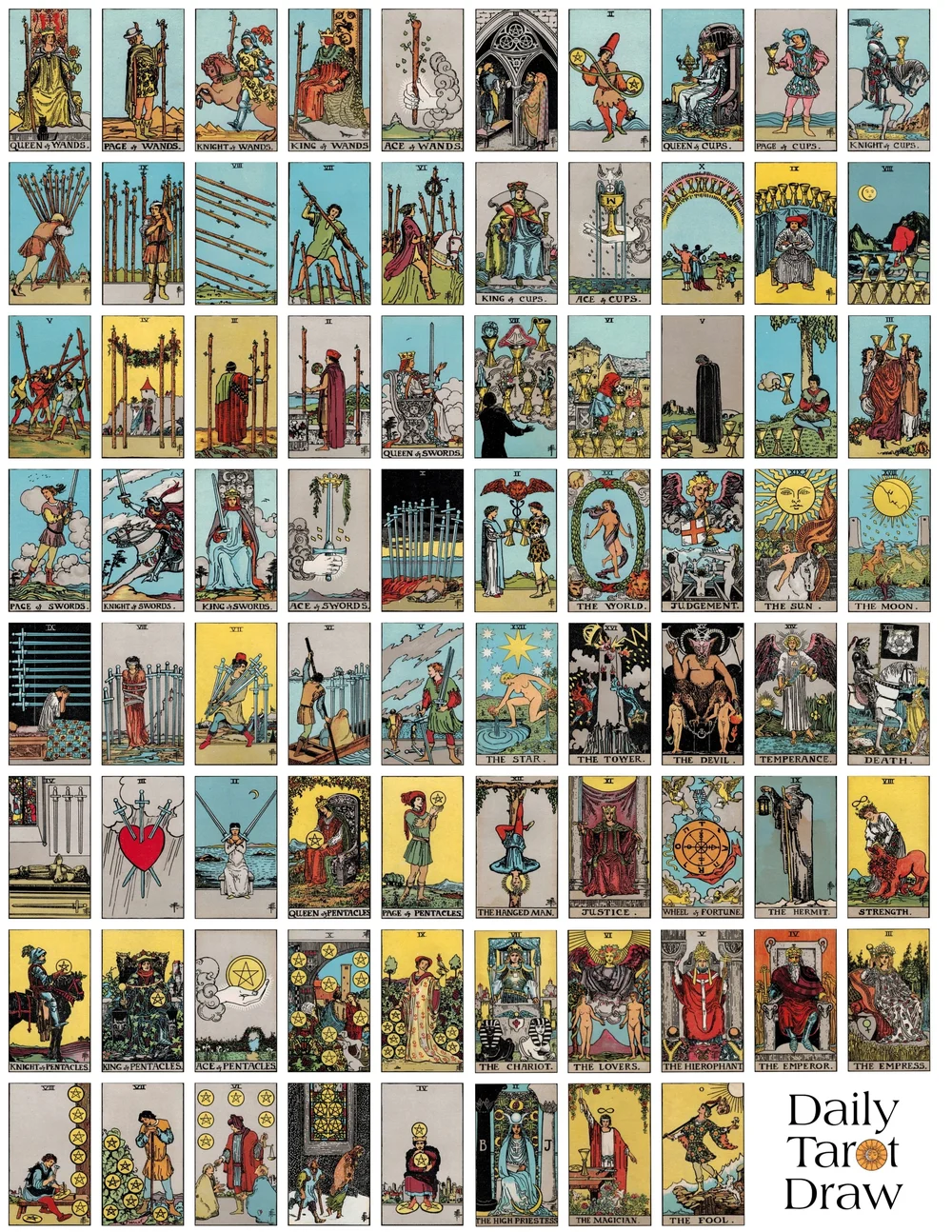
Tarot decks consist of 78 cards divided into two main groups: the Major Arcana and the Minor Arcana. The Major Arcana contains 22 cards, each representing significant life events or spiritual lessons. These cards are often numbered from 0 (The Fool) to XXI (The World). The Minor Arcana includes 56 cards divided into four suits—Cups, Pentacles, Swords, and Wands—each with 14 cards: Ace through 10, plus four court cards (Page, Knight, Queen, King). Understanding this structure helps you navigate the deck with ease and recognize the themes each card embodies.
The Major Arcana: The Hero’s Journey
The Major Arcana cards tell a grand story, often called the Fool’s Journey. Each card represents a stage in this journey, from innocence and new beginnings (The Fool) to completion and fulfillment (The World). For example, The Magician (I) symbolizes manifestation and resourcefulness, while The High Priestess (II) represents intuition and hidden knowledge. These cards often appear in readings to highlight major themes or turning points in your life. Pay attention when several Major Arcana cards appear together—they’re likely pointing to a significant life chapter.
The Minor Arcana: Everyday Experiences and Challenges
While the Major Arcana focuses on life’s big moments, the Minor Arcana reflects daily experiences, emotions, and challenges. Each suit corresponds to an element: Cups (water, emotions), Pentacles (earth, material world), Swords (air, intellect), and Wands (fire, creativity). For instance, the Three of Cups celebrates friendship and joy, while the Five of Swords may indicate conflict or tension. Court cards add another layer, representing people or personality traits—such as the Page of Wands, a creative and enthusiastic individual, or the Queen of Pentacles, a nurturing and practical figure.
Exploring the Suits: A Deeper Dive
Each suit in the Minor Arcana offers unique insights. Cups deal with emotions, relationships, and intuition. Pentacles focus on finances, career, and stability. Swords explore thoughts, decisions, and communication. Wands ignite passion, ambition, and personal growth. For example, the Ace of Pentacles promises new opportunities in wealth or career, while the Ten of Swords may signal an ending or betrayal. Understanding these suits helps you interpret the cards in the context of your question or situation.
Court Cards: Personalities and Energies
Court cards can be tricky to interpret because they often represent people in your life or aspects of your own personality. For example, the Knight of Cups may suggest a romantic or idealistic person entering your life, while the Queen of Swords could represent a sharp-witted, independent woman. Sometimes, these cards reflect your own traits—like the Page of Wands showing your creative spark or the King of Pentacles embodying your leadership skills. Don’t be afraid to ask the deck for clarification if a court card feels ambiguous.
How to Use Tarot Card Names and Meanings in Readings
Start by shuffling the deck while focusing on your question or situation. Pull a card and observe its name and imagery. Ask yourself: What emotions does this card evoke? Does it feel positive or challenging? For example, drawing The Lovers might suggest harmony or a relationship decision, while The Tower could indicate sudden change or upheaval. Use guidebooks or your intuition to deepen your understanding. Over time, you’ll develop a personal connection to the cards and their meanings.
Common Challenges and How to Interpret Them
Some cards naturally pose challenges or questions. For instance, The Devil (XV) may represent temptation or unhealthy attachments, while The Ten of Swords (Minor Arcana) could signal a painful ending. These cards aren’t meant to discourage you but to highlight areas for growth. Ask yourself: What lesson is this card trying to teach me? How can I transform this challenge into an opportunity? Reflecting on these questions can turn a seemingly negative card into a source of empowerment.
Creating Your Own Tarot Card Reference Guide
To deepen your practice, create a personal tarot journal. Write down each card’s name, its traditional meaning, and your own interpretations based on past readings. Include sketches or printouts of the cards for visual reference. Over time, your journal will become a valuable tool for tracking patterns and refining your intuition. You can also use online resources or apps to supplement your learning, but trust your inner guidance above all.

Conclusion
Tarot cards are more than just symbols—they’re gateways to self-discovery, guidance, and reflection. By familiarizing yourself with the names and meanings of each card, you unlock a deeper understanding of their messages. Whether you’re drawn to the Major Arcana’s epic journey or the Minor Arcana’s everyday lessons, each card offers a unique perspective on life’s challenges and opportunities. Embrace the playful questions and challenges the cards present, and let them inspire you to explore your inner world with curiosity and confidence. With practice, you’ll find that tarot becomes not just a tool for divination, but a companion on your journey to self-awareness.
FAQ
What are the Major Arcana cards?
The Major Arcana consists of 22 cards that represent significant life events and spiritual lessons, such as The Fool, The Magician, and The World.
How do I interpret Minor Arcana cards?
Minor Arcana cards reflect daily experiences and challenges, grouped into four suits: Cups, Pentacles, Swords, and Wands.
What is the significance of court cards in tarot?
Court cards often represent people in your life or aspects of your own personality, providing insight into personal traits and dynamics.
Leave a Reply