Short Answer
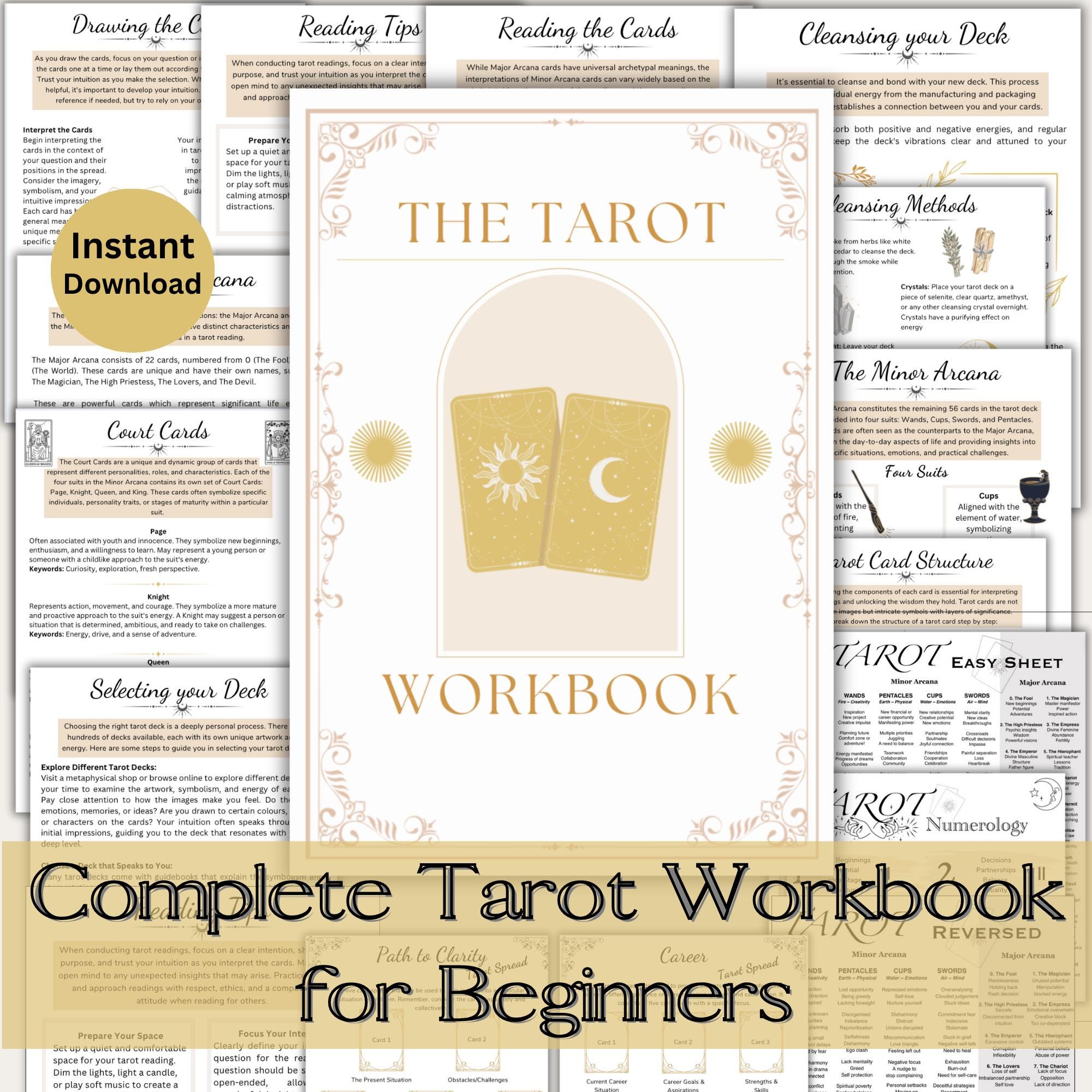
Have you ever felt like your tarot readings are stuck on repeat, with the same old interpretations echoing in your mind? Or perhaps you’re eager to deepen your connection with the cards but aren’t sure where to start? If so, a Tarot Workbook might be your secret weapon. Designed to guide you through the intricate world of tarot meanings, this interactive tool transforms passive learning into an engaging, hands-on experience. By blending creativity with structure, it helps you move beyond memorization and into true fluency—where the cards feel like old friends rather than strangers. In this guide, we’ll explore how a tarot workbook can revolutionize your practice, turning confusion into clarity and hesitation into confidence.
Why a Tarot Workbook? The Power of Active Learning
Passive learning—like reading a book or watching a video—has its place, but tarot demands more. A workbook invites you to participate in your own education, turning abstract symbols into tangible insights. Instead of passively absorbing meanings, you’re prompted to write, draw, and reflect, which reinforces memory and deepens understanding. Studies in cognitive science show that active engagement boosts retention by up to 75% compared to passive methods. Imagine flipping through your deck and not just recalling a card’s meaning, but feeling it in your bones because you’ve journaled about it, sketched its imagery, or connected it to your life.
Workbooks also provide a structured path through the tarot’s complexity. The Major Arcana alone has 22 cards, each packed with layers of symbolism. Without guidance, it’s easy to feel overwhelmed. A well-designed workbook breaks this down into manageable chunks, often grouping cards by themes (e.g., “Shadow Work” or “Relationships”) or pairing them with exercises that challenge you to apply their meanings in real-life scenarios. Whether you’re a beginner or a seasoned reader, this scaffolding ensures you don’t miss critical connections.
Key Features to Look for in a Tarot Workbook
Not all workbooks are created equal. To get the most out of yours, prioritize these features:
1. Clear, Concise Card Meanings
A great workbook starts with accurate, accessible interpretations of each card. Look for explanations that balance traditional meanings with modern applications. For example, The Fool isn’t just about spontaneity—it might also represent a leap of faith in your career or a new relationship. The best workbooks include:
- Upright and reversed meanings: Clarity on how a card’s energy shifts in different contexts.
- Symbolism breakdowns: Highlights key imagery (e.g., the lion in Strength, the scales in Justice) to help you decode the card’s message.
- Astrological or numerological ties: Optional but valuable for readers who incorporate these systems.
2. Interactive Exercises
The magic of a workbook lies in its interactive elements. These might include:
- Journal prompts: Questions like, “When have you embodied the energy of the Magician?” or “What lesson does the Three of Cups hold for your friendships?”
- Drawing or collage tasks: Visual learners can sketch a card’s energy or create a mood board inspired by its colors and symbols.
- Spreads for practice: Pre-designed layouts (e.g., a 3-card “Past-Present-Future” spread) to apply what you’ve learned.
- Affirmations or mantras: Short phrases to embody a card’s energy daily, like “I trust my intuition” for The High Priestess.
3. Progress Tracking
Learning tarot is a journey, not a sprint. A workbook with trackers helps you monitor your growth. Look for:
- Checklists for completed cards or exercises.
- Reflection sections at the end of each chapter to note insights, challenges, and “aha!” moments.
- Space for revisiting old entries: Compare your early interpretations of a card (e.g., The Tower) to your current understanding after a year of practice.
4. Bonus Materials
Some workbooks go the extra mile with:
- Printable worksheets for on-the-go practice.
- Audio or video guides to supplement written content.
- Community challenges (e.g., “Draw one card daily for 30 days and journal about it”).

How to Use Your Tarot Workbook for Maximum Impact
Even the best workbook won’t work if you don’t engage with it actively. Here’s a step-by-step approach to make it your tarot ally:
Step 1: Set an Intention
Before diving in, ask yourself: What do I want to achieve? Are you focusing on a specific deck (e.g., Rider-Waite vs. Thoth)? Do you want to master the Minor Arcana first? Or are you preparing for a professional certification? Write your goal at the beginning of your workbook to stay motivated.
Step 2: Establish a Routine
Consistency beats intensity. Dedicate 10–15 minutes daily to your workbook, even if it’s just flipping through a card and jotting down a few thoughts. Over time, this builds a habit that ingrains the cards into your subconscious. Try pairing it with a morning coffee or evening wind-down ritual.
Step 3: Engage All Your Senses
Tarot is a multi-sensory experience. Enhance your learning by:
- Touch: Use tactile tools like crystals, candles, or fabric swatches that resonate with a card’s energy (e.g., a blue candle for The Moon).
- Sound: Play music or ambient sounds that match a card’s vibe (e.g., ocean waves for The Star).
- Movement: Act out a card’s energy (e.g., The Chariot’s determination with a power pose).
Step 4: Embrace the “Messy Middle”
It’s normal to feel stuck or confused—especially with cards like The Hermit or The Hanged Man. Instead of skipping ahead, lean into the discomfort. Ask: What part of this card feels unclear? Is it the symbolism? The reversed meaning? The workbook’s exercises are designed to guide you through these rough patches. Remember, tarot is about exploration, not perfection.
Step 5: Review and Reflect
Every month, revisit your workbook and compare your early entries to your current ones. Highlight patterns in your interpretations. Have your perspectives shifted? For example, did The Devil once represent toxic relationships to you, but now you see it as a call to reclaim your power? This reflection is where real growth happens.
Common Challenges—and How to Overcome Them
Even with a workbook, roadblocks can arise. Here’s how to tackle them:
Challenge 1: “I Keep Forgetting the Meanings”
Solution: Turn memorization into a game. Use flashcards (physical or digital) for quick reviews. Or, assign each card a personal keyword that resonates with you (e.g., “The Empress = Nurturing”). Repeat it aloud while shuffling your deck.
Challenge 2: “I Don’t Know How to Apply the Cards to Real Life”
Solution: The workbook’s exercises are your bridge. For example, if you’re working with The Lovers, the prompt might ask, “What choices in your life require a balance of heart and logic?” Use this to explore decisions in your career, relationships, or personal growth.
Challenge 3: “I Feel Overwhelmed by the Number of Cards”
Solution: Focus on one suit or arcana at a time. Master the Cups (emotions) before moving to Swords (intellect). Alternatively, pick a “Card of the Week” and live with it for 7 days, noticing its presence in your daily life.
Challenge 4: “My Interpretations Feel Generic”
Solution: Inject your unique perspective. Ask, “How would this card describe my best friend’s personality?” or “What advice would this card give my 10-year-old self?” The more personal your connection, the more vivid the meaning becomes.
Conclusion: Your Tarot Journey Starts Now
A tarot workbook is more than a book—it’s a companion, a teacher, and a mirror. It holds space for your questions, your doubts, and your breakthroughs. By committing to its exercises, you’re not just learning the cards; you’re learning to speak their language. Whether you’re drawing The Tower and feeling the ground shake beneath you or pulling The Sun and basking in its warmth, the workbook becomes a tool for transformation.
So, grab your favorite deck, a pen, and a cozy corner. Let the workbook guide you through the shadows and into the light, one card at a time. The path to tarot fluency isn’t about speed—it’s about showing up, again and again, with curiosity and courage. Your journey starts with a single page.
FAQ
What is a Tarot workbook?
A Tarot workbook is an interactive tool designed to enhance your understanding and fluency in tarot reading through writing, drawing, and reflection.
How can I use a Tarot workbook effectively?
To use a Tarot workbook effectively, set a clear intention for your learning, establish a routine, and engage all your senses while working through the exercises.
What features should I look for in a Tarot workbook?
Look for clear card meanings, interactive exercises, progress tracking options, and bonus materials like printable worksheets or audio guides.
Leave a Reply