Short Answer
Dive into the mystical world of Tarot and uncover the secrets behind the cards that whisper “yes,” “no,” or “maybe” to your burning questions. This guide will illuminate the ancient symbolism, intuitive interpretations, and practical applications of Yes or No Tarot readings. Whether you’re a seasoned seeker or a curious beginner, you’ll discover how these cards act as cosmic mirrors, reflecting the hidden currents of your life’s journey. Prepare to decode the language of fate and intuition as we explore the cards that hold the power to guide your decisions with clarity and intrigue.
The Language of Tarot: How Yes and No Cards Speak
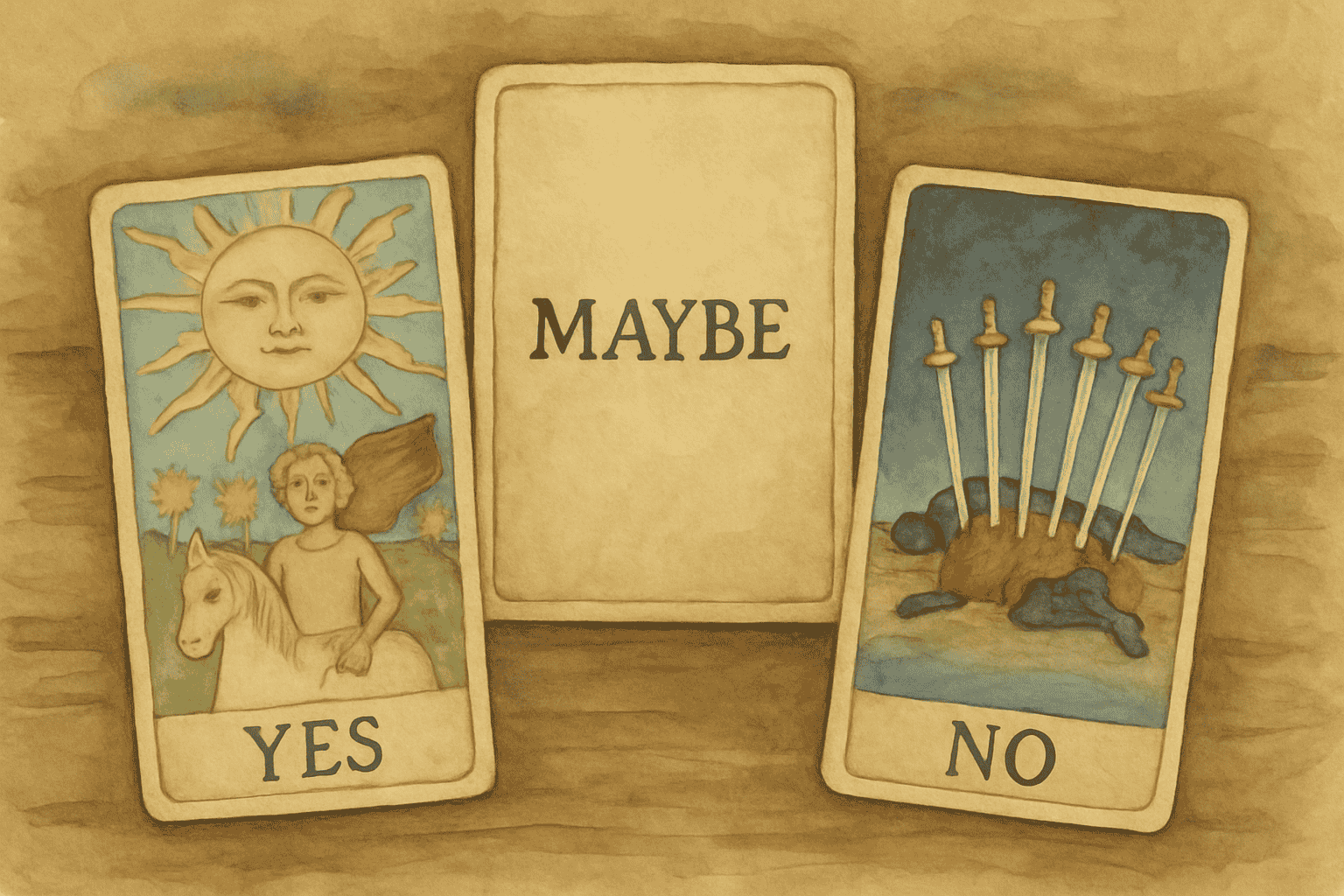
Tarot is not just a deck of cards—it’s a living language of symbols, archetypes, and universal truths. When it comes to Yes or No readings, the cards communicate through their imagery, numerology, and elemental associations. Unlike traditional Tarot spreads that offer elaborate narratives, these simplified readings distill the essence of a question into a single, potent answer. The cards that say “yes” often radiate warmth, balance, and forward momentum, while those that say “no” may carry warnings of stagnation or misalignment. Meanwhile, the “maybe” cards act as cosmic negotiators, urging patience or deeper reflection.
Imagine the Tarot as a wise old storyteller, using metaphors to nudge you toward self-awareness. A “yes” card might appear as a radiant Sun, its golden rays symbolizing clarity and success, while a “no” card could be the Tower, its lightning strike a stark reminder to pause and reconsider. The language of Tarot is poetic, layered, and deeply personal—each card a brushstroke in the grand painting of your life.
The Majestic “Yes” Cards: Where Fate Aligns
The cards that say “yes” are like beacons of light in the Tarot deck, guiding you toward opportunities, growth, and alignment with your highest path. The Ace of Wands, for instance, crackles with creative energy, its torch igniting new beginnings and passionate pursuits. The Empress, draped in lush greenery, embodies nurturing abundance, signaling a “yes” to fertility, creativity, or emotional fulfillment. Even the Wheel of Fortune spins in your favor, reminding you that luck and destiny are on your side.
But not all “yes” cards are overtly positive. The Three of Cups, with its trio of dancing figures, may indicate a “yes” to celebration and joy—but also a caution to avoid overindulgence. The Ten of Pentacles, meanwhile, whispers of legacy and prosperity, a “yes” to long-term stability. These cards don’t just give permission; they affirm that the universe is conspiring in your favor, if only you’re willing to take the leap.

The Stark “No” Cards: When the Universe Says Pause
Receiving a “no” from the Tarot can feel like a cosmic door slamming shut, but it’s rarely a rejection—it’s a redirection. The cards that say “no” often carry hard truths, urging you to reassess your path or confront obstacles before proceeding. The Five of Swords, with its figures locked in battle, may signal a “no” to conflict or disharmony, warning against forcing a situation. The Hermit, cloaked in shadow, could indicate a “no” to haste, urging solitude and introspection instead.
Even the dreaded Ten of Swords, often misinterpreted as a sign of total failure, is a “no” to toxic cycles. It’s the universe’s way of saying, “This path is no longer serving you.” The Eight of Cups, too, delivers a “no” to emotional stagnation, encouraging you to walk away from what no longer nourishes your soul. These cards aren’t failures; they’re guardians, protecting you from paths that would lead to unnecessary struggle.
The Elusive “Maybe” Cards: The Art of Divine Negotiation
When the Tarot offers a “maybe,” it’s not indecision—it’s an invitation to dig deeper. These cards act as cosmic negotiators, urging you to examine the nuances of your question or the timing of your actions. The Two of Cups, for example, may say “maybe” to a relationship, suggesting that while the connection is strong, both parties must invest equally. The Six of Pentacles, meanwhile, could indicate a “maybe” to financial decisions, hinting that generosity or balance is needed before proceeding.
The “maybe” cards often appear when the answer is contingent on your actions or the energy you bring to the situation. The Page of Swords, with its restless energy, might say “maybe” to a new idea, encouraging you to gather more information before committing. The Hanged Man, suspended in stillness, could be a “maybe” to surrender—reminding you that sometimes, the best course is to wait and observe. These cards don’t close doors; they ask you to open them slowly, with intention.
Reading the Cards: A Step-by-Step Ritual
Performing a Yes or No Tarot reading is a sacred act of divination, blending intuition with structure. Start by grounding yourself—light a candle, take deep breaths, or hold the deck to your heart. Formulate your question clearly, ensuring it’s specific and open-ended (avoid yes/no questions that are too vague). Shuffle the cards while focusing on your query, then draw a single card as your answer.
Interpret the card’s imagery first—what symbols stand out? Then consider its traditional meanings and elemental associations. For example, a fiery card like the Knight of Wands might say “yes” to bold action, while a watery card like the Moon could say “maybe,” urging caution. Trust your gut; if the card resonates with a strong emotional pull, that’s your answer. For added clarity, draw a clarifying card or ask the deck to reveal the “why” behind the answer.
Remember, the Tarot is a tool for reflection, not a dictator of fate. The cards don’t control your destiny—they illuminate the possibilities, helping you navigate your choices with wisdom and grace.
Conclusion
The Tarot’s Yes and No cards are more than simple answers—they’re gateways to deeper understanding. Whether a card says “yes,” “no,” or “maybe,” it’s an invitation to pause, reflect, and realign with your highest truth. The Ace of Pentacles may affirm a new financial opportunity, while the Four of Swords could gently nudge you to rest before making a decision. These cards speak in metaphors, in shadows, and in light, guiding you toward clarity without stripping away your free will.
As you continue your Tarot journey, let the cards be your companions, not your masters. Each reading is a conversation—a dance between intuition and symbolism, fate and choice. The next time you ask the Tarot a question, listen closely. The answer is already within you; the cards are simply the mirror.
FAQ
What are 'Yes' cards in Tarot?
Yes cards in Tarot are those that signify positive outcomes, opportunities, and alignment with your goals.
What do 'No' cards represent?
No cards signal a need for pause or reconsideration, often pointing out obstacles or misalignment.
What does a 'Maybe' card indicate?
Maybe cards suggest that the answer depends on further actions or reflections, inviting deeper introspection.
How do I perform a Yes or No Tarot reading?
To perform a Yes or No Tarot reading, formulate your question clearly, shuffle the cards, and draw one card for your answer.
Leave a Reply