Short Answer
The Devil tarot card is one of the most enigmatic and misunderstood cards in the Major Arcana. Often associated with darkness, temptation, and bondage, it frequently evokes fear or curiosity. In this guide, you’ll explore the true meaning behind The Devil, its symbolism, interpretations in readings, and why it continues to captivate people across cultures and centuries. By the end, you’ll understand not just what The Devil represents, but why its presence in a spread can be a powerful invitation to examine your own attachments and illusions.
The Devil Tarot Card: An Overview
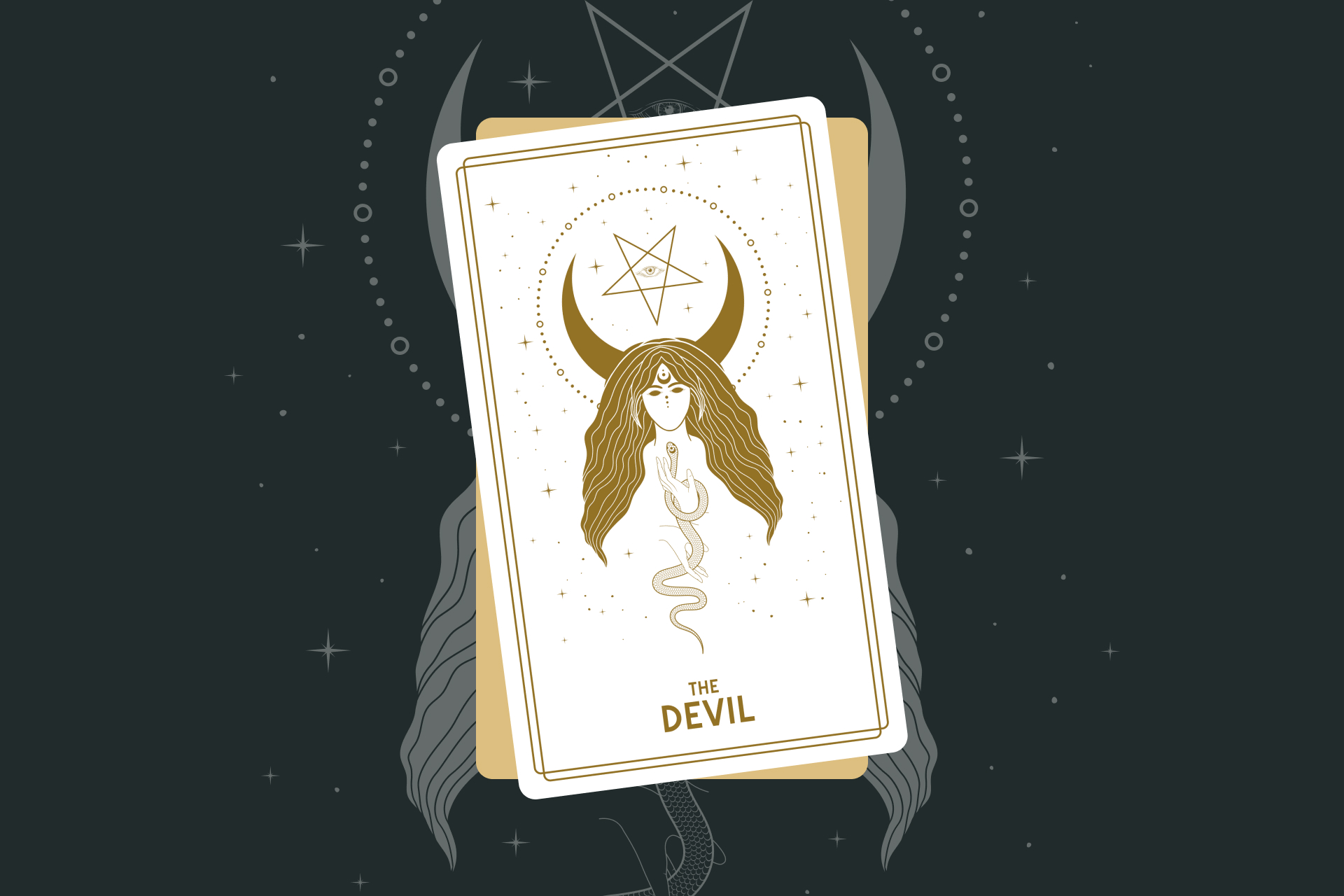
The Devil is the fifteenth card in the Major Arcana, following Temperance and preceding The Tower. Despite its ominous name, The Devil does not represent evil in the traditional sense. Instead, it symbolizes bondage, materialism, unhealthy attachments, and self-imposed limitations. The card often depicts a horned figure—sometimes resembling Baphomet—flanked by two chained figures, usually a man and a woman. These figures are not being held captive by force; rather, they are bound by their own desires, fears, or habits. Their chains are loose and could be removed at any time, suggesting that the real prison is internal.
This imagery underscores a key theme: The Devil is not an external force of corruption, but a reflection of our own choices. It asks us to look inward and question what we are allowing to control us—whether it’s addiction, toxic relationships, societal expectations, or the relentless pursuit of wealth and status. The card serves as a mirror, revealing how easily we can become enslaved by our own minds.
Symbolism and Imagery in The Devil Card
The symbolism in The Devil card is rich and layered, drawing from mythology, alchemy, and occult traditions. The horned figure at the center is often interpreted as a symbol of primal energy, instinct, or the shadow self—those aspects of ourselves we may suppress or deny. The horns can represent wisdom and connection to nature, but in this context, they also signify unchecked desire or aggression.
The two figures chained at the base of the card are typically human-like but with animalistic features, such as tails or hooves. This suggests a regression to base instincts, where rationality and higher consciousness are overshadowed by base urges. Their posture—often kneeling or crouching—implies submission, not to an external tyrant, but to their own impulses. The inverted pentagram above The Devil’s head is another key symbol, often misinterpreted as a sign of evil. In reality, it represents the material world turned upside down, where values are distorted and spirit is sacrificed for earthly gain.
Other common symbols include the torch held by The Devil, which may represent enlightenment that has been misused or distorted, and the inverted cross or broken chains, which suggest that liberation is possible if one chooses to see the illusion for what it is.
Upright Meaning: Recognizing Your Chains
When The Devil appears upright in a tarot reading, it signals a period of bondage or unhealthy attachment. This could manifest as an addiction—whether to substances, social media, work, or even a toxic relationship. It may also indicate financial dependency, codependency, or a situation where you feel trapped by circumstances you believe you cannot change.
On a deeper level, The Devil upright can point to a crisis of values. You may be prioritizing material success over emotional or spiritual well-being, or allowing fear to dictate your decisions. This card often arises when you are ignoring red flags in a situation or person, convincing yourself that the status quo is acceptable when it is not. It’s a call to examine what you are willing to sacrifice for comfort, security, or approval—and whether those sacrifices are truly worth it.
In matters of love, The Devil can indicate an intense but unhealthy dynamic—perhaps a relationship built on obsession rather than mutual respect. It may also suggest that you are staying in a situation out of fear of being alone or losing what you have, even if it drains you.
Reversed Meaning: Breaking Free from Illusions
When The Devil appears reversed, it signals liberation, self-awareness, and the breaking of chains. This is a powerful card of release, indicating that you are recognizing your patterns and choosing to step away from toxic influences. You may finally be seeing a situation—or yourself—clearly for the first time in a long time. This card reversed often appears when you’ve hit rock bottom or experienced a wake-up call that forces you to confront reality.
In a career context, The Devil reversed suggests that you are no longer willing to tolerate exploitation or unfulfilling work. You might be setting boundaries, negotiating better terms, or even leaving a job that no longer serves you. In relationships, it can mean ending a cycle of codependency or recognizing that you deserve better. Spiritually, this card reversed is a sign of awakening—you are shedding illusions and reclaiming your power.
It’s important to note that The Devil reversed doesn’t mean the absence of challenges, but rather the presence of clarity and the courage to act on it. You are no longer willing to be a prisoner of your own making.
 The Devil in Love and Relationships
The Devil in a love reading often points to an intense but potentially destructive dynamic. This could be a passionate affair that feels all-consuming, a relationship built on control or manipulation, or a situation where one partner is emotionally or financially dependent on the other. The card warns against idealizing a partner or ignoring red flags in the name of love or security.
If you’re single, The Devil may suggest that you are avoiding commitment out of fear or that you’re drawn to partners who are emotionally unavailable or even harmful. It can also indicate a tendency to repeat unhealthy relationship patterns, such as choosing partners who mirror past wounds. The key message here is to ask yourself: Am I staying because I want to, or because I’m afraid of what comes next?
When The Devil appears reversed in a love context, it signals a turning point. You may be ending a toxic relationship, setting firm boundaries, or finally seeing a partner—or yourself—with clear eyes. This is a card of empowerment, where you reclaim your autonomy and refuse to be defined by someone else’s expectations or demands.
 Cultural and Historical Perspectives on The Devil
The Devil card’s imagery and meaning have evolved over centuries, shaped by religious, mythological, and cultural influences. In medieval Europe, the horned figure was often conflated with the Christian devil, a symbol of sin and temptation. This association persists in popular culture, where The Devil is frequently depicted as a malevolent force. However, in tarot, the card’s origins are more nuanced.
The earliest tarot decks, such as the 15th-century Visconti-Sforza, depicted The Devil as a more neutral or even benevolent figure, representing earthly desires and the material world. Over time, as tarot became associated with occult traditions, The Devil took on darker connotations, reflecting humanity’s struggle with its lower nature. In modern interpretations, particularly within psychological and spiritual frameworks, The Devil is less about evil and more about the human capacity for self-deception and attachment to illusions.
In some traditions, The Devil is linked to the Greek god Pan, a symbol of untamed nature and primal instincts. Others see it as a representation of the shadow self, a concept popularized by psychologist Carl Jung. This perspective aligns with the idea that The Devil is not an external enemy, but a part of ourselves that we must acknowledge and integrate in order to grow.
Common Misconceptions About The Devil Card
One of the most pervasive misconceptions about The Devil is that it predicts doom, bad luck, or supernatural interference. In reality, the card is rarely about external forces acting upon you. Instead, it’s about the choices you make and the illusions you choose to believe. The chains in the card are loose for a reason—you have the power to remove them, but you must first recognize that you’re wearing them.
Another myth is that The Devil always indicates a negative outcome. While it can certainly highlight toxic situations or unhealthy patterns, it also serves as a catalyst for change. The discomfort it brings is often necessary for growth. The Devil can be a wake-up call, urging you to confront what you’ve been avoiding and to take responsibility for your life.
Some people also associate The Devil with literal evil or demonic forces. In tarot, however, the card is more about the human experience—our fears, desires, and the stories we tell ourselves to justify our actions. It’s a reminder that darkness is not something to fear, but something to understand.
How to Work with The Devil Energy in Your Life
If The Devil appears in your reading, it’s an invitation to examine your attachments. Start by identifying what—or who—you feel is controlling you. Is it a habit, a relationship, a job, or a belief system? Write down the ways this influence is limiting you and ask yourself: What would my life look like if I let go?
Practical steps might include setting boundaries, seeking therapy, practicing mindfulness, or simply taking a step back to observe your patterns. The goal isn’t to eliminate desire or ambition, but to ensure they are aligned with your true values rather than external pressures or fears.
In meditation or journaling, you might visualize yourself breaking the chains or burning the illusions that have held you back. The Devil’s energy can be harnessed for transformation—once you see the truth, you can no longer be enslaved by it.
Conclusion
The Devil tarot card is far more than a symbol of evil or misfortune. It is a mirror, reflecting the parts of ourselves we’d rather ignore—the attachments, fears, and illusions that keep us from living fully. Whether it appears upright or reversed, The Devil challenges us to confront our shadows and reclaim our power. It reminds us that liberation is always within reach, even when the chains feel heaviest.
Rather than fearing this card, we can learn to work with its energy. By recognizing our own patterns and making conscious choices, we transform The Devil from a symbol of bondage into a catalyst for growth. In the end, the greatest prison is not the one we imagine around us, but the one we build in our minds. The Devil asks us to tear it down.
FAQ
What does The Devil tarot card symbolize?
The Devil tarot card symbolizes bondage, materialism, unhealthy attachments, and self-imposed limitations, encouraging introspection on personal choices.
What does the Devil card mean in love readings?
In love readings, the Devil card often indicates intense but potentially destructive dynamics, highlighting issues of control, obsession, or unhealthy dependencies.
Leave a Reply