Short Answer
Welcome to your in-depth exploration of The Hermit (IX) — the tarot card that stands as a beacon for solitude, introspection, and the quiet wisdom that comes from stepping away from the noise of the world. Whether you’re a seasoned tarot reader or a curious newcomer, this guide will illuminate the deeper meanings of The Hermit, its symbolism, how it appears in readings, and how you can work with its energy in your life. By the end, you’ll not only understand the card’s message but also be invited to ask a playful yet profound question: What if the answers you seek are waiting not in the crowd, but in the stillness?
The Hermit (IX): A Card of Solitude and Inner Light
The Hermit is the ninth card in the Major Arcana of the tarot deck, positioned between The Chariot (VIII) and Wheel of Fortune (X). This placement is no accident — it signals a pivotal moment of transition from external action to internal reflection. The Hermit represents a deliberate withdrawal from the hustle of daily life, a journey inward to seek truth, wisdom, and clarity. Unlike isolation, which can feel forced or lonely, The Hermit’s solitude is a choice — a sacred pause to recharge, reflect, and reconnect with one’s inner voice.
In many decks, The Hermit is depicted as an elderly figure cloaked in grey, standing alone on a mountain peak. He holds a lantern in one hand, its light glowing with a six-pointed star (often the Seal of Solomon), and a staff in the other. The lantern illuminates the path ahead, but only just — suggesting that wisdom is not about seeing everything at once, but trusting the journey one step at a time. The mountain symbolizes elevation — not just physically, but spiritually. To reach the summit, one must climb, endure, and persist. The Hermit reminds us that growth often happens in the quiet, not in the spotlight.
Symbolism in The Hermit: Decoding the Imagery
The Hermit’s imagery is rich with meaning, each element offering clues to its deeper message. Let’s break down the key symbols:
- The Lantern and the Star: The glowing lantern represents inner wisdom, intuition, and the light of self-knowledge. The six-pointed star within it is a symbol of balance, harmony, and the union of opposites — fire and water, spirit and matter. It suggests that true insight comes from integrating all parts of ourselves.
- The Staff: The Hermit leans on a staff, a symbol of support, endurance, and guidance. It represents the strength we draw from within and the tools we carry on our journey. In some interpretations, the staff is also a walking stick — a reminder that the path of wisdom is a journey, not a destination.
- The Grey Cloak: The Hermit is often draped in grey, a color of neutrality, wisdom, and transition. Grey is neither black nor white — it’s the space between, where clarity begins to emerge. It also reflects the wisdom of age and experience.
- The Mountain: The high, barren peak symbolizes solitude, challenge, and spiritual elevation. To reach the top, one must leave behind the familiar valleys of distraction and noise. The mountain is both a physical and metaphorical climb — a test of patience and perseverance.
- The Lantern’s Limited Light: The Hermit’s light doesn’t illuminate the entire path. This teaches us that we don’t need to see the whole journey to take the next step. Trust in the process, even when the destination is unclear.
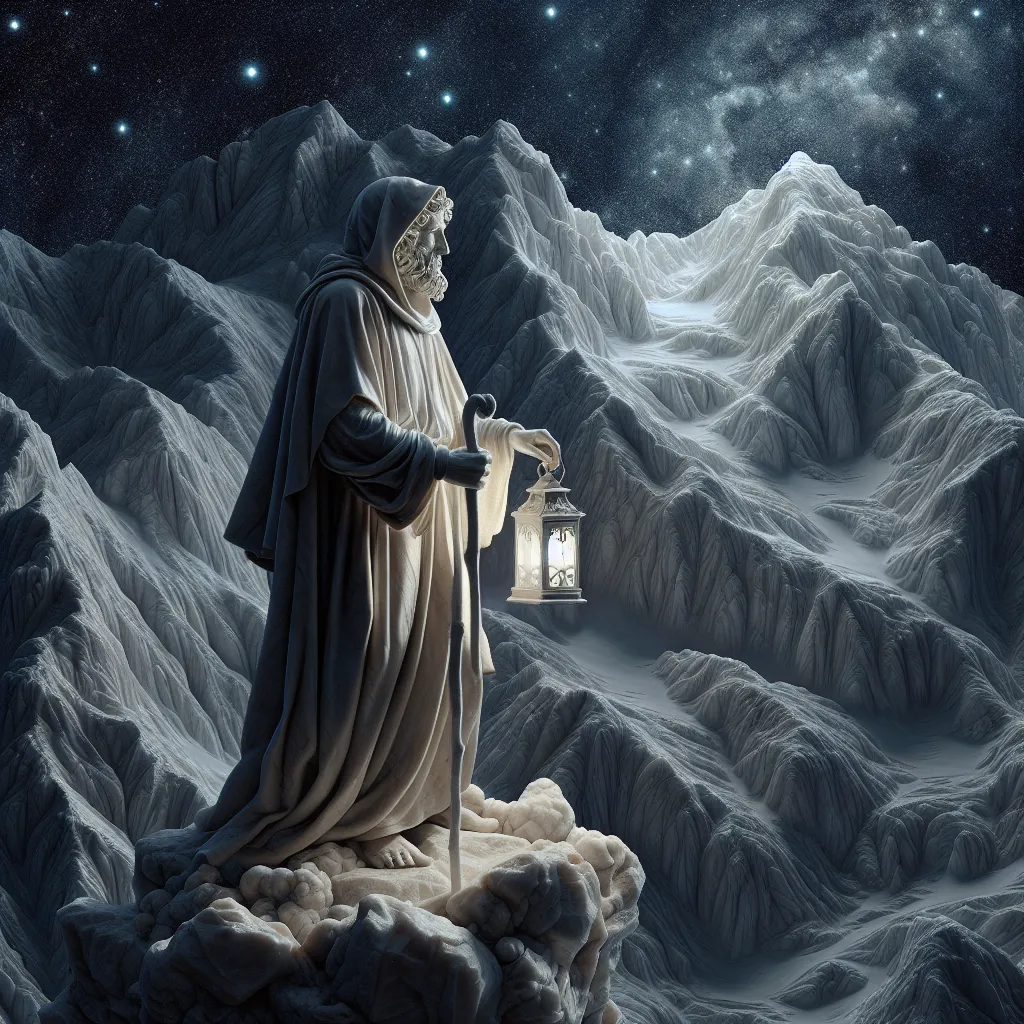
This card’s imagery varies across decks, but the core message remains: solitude is not emptiness — it’s a fertile ground for wisdom.
Interpreting The Hermit in a Reading
When The Hermit appears in a tarot reading, it signals a time of introspection, withdrawal, or a need to pause and reflect. Its meaning shifts depending on its position and surrounding cards, but here are some common interpretations:
- Upright (Positive): You may be called to step back from a situation to gain perspective. This is a time to listen to your inner voice, trust your intuition, and seek answers within. The Hermit encourages self-reflection, spiritual growth, and personal development. It can also indicate a mentor or guide entering your life — someone who offers wisdom without judgment.
- Reversed (Challenging): In reverse, The Hermit may suggest isolation that feels forced or unhealthy — loneliness, withdrawal from responsibilities, or avoidance of necessary action. It can warn against overthinking, self-imposed exile, or refusing to seek help when needed. The reversed Hermit asks: Are you hiding in solitude to avoid facing reality?
In relationship readings, The Hermit can indicate a need for space or a period of emotional withdrawal. In career readings, it may suggest taking a sabbatical, pursuing further education, or stepping into a role that requires deep focus and independence. In health readings, it might point to the need for rest, detox, or mental recovery.
The Challenge of The Hermit: Embracing Solitude Without Fear
While The Hermit celebrates the gifts of solitude, it also presents a challenge — one that many of us struggle with in a hyper-connected world. The challenge is this: Can you sit with yourself, without distraction, and truly listen?
Modern life is designed to keep us busy, stimulated, and connected — often to the point of exhaustion. We fill silence with podcasts, scroll endlessly through feeds, and surround ourselves with noise to avoid facing our own thoughts. The Hermit flips this script. It asks us to embrace the stillness, even when it feels uncomfortable. Solitude, in this context, is not loneliness — it’s a sacred space where clarity is born.
But here’s the playful twist: What if solitude isn’t about deprivation, but discovery? What if the quiet moments are where your most creative ideas, deepest insights, and truest self emerge? The Hermit invites you to reframe solitude as a gift — a chance to recharge, reconnect, and rediscover what truly matters to you.
Try this: Set aside 10 minutes each day to sit in silence. No phone, no music, no distractions. Just you and your thoughts. Notice what arises. You might be surprised by what you find.
Working with The Hermit’s Energy in Daily Life
The Hermit isn’t just a card to be interpreted — it’s a practice to be lived. Here are ways to embody its energy:
- Create a Ritual of Solitude: Light a candle, brew a cup of tea, and spend time journaling or meditating. Let this be a daily or weekly practice to check in with your inner self.
- Seek Mentorship: The Hermit often represents a wise guide. Don’t hesitate to reach out to someone whose wisdom you admire — a teacher, therapist, or elder. Ask for guidance and be open to receiving it.
- Take a Digital Detox: Spend a day (or even an hour) without screens. Notice how it feels to disconnect from the constant stream of information.
- Embrace the Unknown: The Hermit’s light doesn’t show the whole path. Trust that you don’t need to have everything figured out. Take one step at a time.
- Reflect on Your Journey: Use The Hermit’s energy to assess where you’ve been and where you’re going. What lessons have you learned? What wisdom do you carry?
.jpg/revision/latest?cb=20230830064626)
Remember, The Hermit isn’t about disappearing from the world — it’s about returning to it with greater clarity and purpose.
Conclusion: The Light in the Dark
The Hermit (IX) is more than a tarot card — it’s a mirror, a teacher, and a guide. It reminds us that wisdom often comes not from the outside world, but from the quiet spaces within. In a culture that glorifies busyness and constant connection, The Hermit offers a radical alternative: the power of solitude, the strength of introspection, and the courage to trust your inner light.
So the next time you feel the pull to withdraw, don’t fear it. Embrace it. Step onto your own mountain peak, lantern in hand, and trust that the answers you seek are already within you. The world may be loud, but your wisdom is louder. And sometimes, the most profound conversations happen in silence.
What will you discover when you pause to listen?
FAQ
What does The Hermit tarot card symbolize?
The Hermit symbolizes solitude, introspection, and the search for inner wisdom.
How should I interpret The Hermit in a tarot reading?
In a reading, The Hermit suggests a time for reflection, personal growth, or the presence of a mentor.
What does The Hermit mean when reversed?
Reversed, The Hermit can indicate forced isolation or avoidance of reality.
FAQ
What does The Hermit tarot card symbolize?
The Hermit symbolizes solitude, introspection, and the search for inner wisdom.
How should I interpret The Hermit in a tarot reading?
In a reading, The Hermit suggests a time for reflection, personal growth, or the presence of a mentor.
What does The Hermit mean when reversed?
Reversed, The Hermit can indicate forced isolation or avoidance of reality.
Leave a Reply