Short Answer
Welcome to a journey into the mystical realm of The Magician Zohar—a cornerstone of Kabbalistic magic that bridges ancient wisdom with transformative power. In this guide, you’ll uncover the secrets of this enigmatic figure, explore its symbolic depth, and learn how to harness its energy for personal and spiritual growth. Whether you’re a seasoned practitioner or a curious seeker, this exploration will illuminate the path to mastering Kabbalistic magic through the lens of The Magician. Prepare to pose playful questions, confront challenges, and ultimately, awaken the magician within.
The Magician in Kabbalistic Tradition: A Symbol of Manifestation
The Magician, known in Hebrew as HaKadmoni (הכדמוני), is the first card in the Kabbalistic Tarot and represents the primal force of creation. In the Zohar, The Magician is not merely a card but a living archetype—an embodiment of divine will and the power to shape reality. This figure is often depicted holding tools: a wand, a cup, a sword, and a coin, each symbolizing the four elements (fire, water, air, and earth) and the four worlds of Kabbalah (Atzilut, Beriah, Yetzirah, and Assiah). These tools are not just props; they are extensions of the magician’s ability to channel cosmic energies and manifest intentions.
At its core, The Magician teaches that you are the creator of your reality. The Zohar emphasizes that the magician’s power lies in the union of opposites—spirit and matter, heaven and earth. By aligning these forces, the magician becomes a conduit for divine energy, transforming abstract desires into tangible outcomes. This concept is rooted in the Kabbalistic principle of Tzimtzum (צמצום), where God contracts to allow space for creation, mirroring the magician’s role in narrowing infinite potential into focused action.
Ask yourself: What tools do I wield in my own life to manifest my deepest desires? The Magician challenges you to recognize the power already within your hands—whether it’s your voice, your actions, or your unwavering focus.
Decoding the Zohar’s Teachings on Kabbalistic Magic
The Zohar, the foundational text of Kabbalah, weaves The Magician into its mystical narrative as a symbol of divine intervention and human co-creation. In the Zohar’s commentary on the Torah, The Magician appears as a figure who bridges the gap between the infinite and the finite. This is exemplified in the story of Rabbi Shimon bar Yochai, who, through Kabbalistic practices, accessed the hidden dimensions of reality—much like The Magician accesses the unseen forces of the universe.
One of the most profound teachings from the Zohar is that magic is not about controlling nature but aligning with it. The Magician does not force outcomes; instead, it harmonizes with the natural flow of divine energy. This aligns with the Kabbalistic concept of Devekut (דבקות), or cleaving to the divine, where the magician’s actions become an extension of cosmic will. The Zohar states: “The magician is the one who knows the secret names of God and uses them to draw down light into the world.”
To apply this in practice, consider the following steps inspired by the Zohar:
- Invoke the Divine Name: Use sacred names (like the 72 Names of God) to focus your intention. Write them on paper or visualize them as you meditate.
- Create a Sacred Space: Cleanse your environment with incense, salt, or sound (such as a bell or chanting). This mirrors the Zohar’s emphasis on purity and preparation.
- Channel Energy Through Ritual: Light a candle, hold an object that represents your goal (a coin for wealth, a cup for emotions), and speak your desire aloud. The Zohar teaches that words carry creative power.
Pose this challenge to yourself: Can you spend a week observing how your words and actions shape your reality? The Magician’s lesson is that magic begins with awareness.
The Four Tools of The Magician: A Kabbalistic Breakdown
The Magician’s tools are not arbitrary; they are a microcosm of the Kabbalistic Tree of Life and the four worlds. Each tool corresponds to a sefirah (divine emanation) and a realm of existence, offering a roadmap for spiritual and practical mastery.
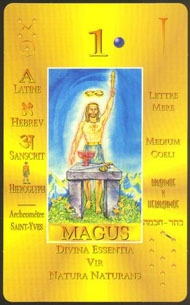
Figure 1: The Magician’s tools represent the four elements and Kabbalistic worlds.
1. The Wand (Fire / Atzilut – World of Emanation): The wand symbolizes willpower and divine inspiration. In Kabbalah, fire represents the sefirah of Chokmah (wisdom), the initial spark of creation. To wield the wand, focus on your highest vision. Ask: What is the one desire that burns within me? Use the wand in rituals to ignite your intentions, such as pointing it at a candle flame while visualizing your goal.
2. The Cup (Water / Beriah – World of Creation): The cup holds emotions, intuition, and the subconscious. Water corresponds to Binah (understanding), the womb of creation. Fill your cup with water during rituals to represent receptivity. Drink it afterward to symbolize internalizing your intention. The Zohar teaches that water is the medium through which divine abundance flows—so keep your cup (and your heart) open.
3. The Sword (Air / Yetzirah – World of Formation): The sword cuts through illusion, representing the sefirah of Da’at (knowledge), the hidden dimension where thought becomes form. Use the sword to banish doubts or negative patterns. Draw a sword in the air to “cut” away obstacles, or write your fears on paper and burn them as an offering to the element of air.
4. The Coin (Earth / Assiah – World of Action): The coin grounds your magic in the physical realm, corresponding to Malchut (kingdom), the manifestation of divine energy. Place a coin on your altar or carry one in your pocket as a reminder of your power to create tangible results. The Zohar emphasizes that earthly actions—like planting a seed or saving money—are acts of magic when infused with intention.
Practical Kabbalistic Magic: Rituals for The Magician
To embody The Magician’s energy, integrate these rituals into your practice. Remember, the Zohar teaches that consistency and intention are key—magic is not a one-time event but a daily practice.
Ritual of the Seven-Day Manifestation
For seven days, perform this simple yet potent ritual to align with The Magician’s power:
- Prepare Your Space: Light a white candle (for purity) and arrange your four tools (wand, cup, sword, coin) on a clean surface. Place a mirror in front of you to reflect your intention back to you.
- Invoke the Divine: Recite the 42-Letter Name of God (found in the Zohar) or a personal invocation that resonates with you. Example: “By the power of the Magician, I call forth my highest potential.”
- Focus Your Intention: Hold the wand in your dominant hand and speak your desire aloud three times. Visualize it as already accomplished.
- Charge Your Tools: Pass each tool through the candle flame (wand), water (cup), air (sword), and touch it to the coin (earth). Feel the energy of each element merging with your intention.
- Close the Ritual: Thank the divine (or your higher self) and extinguish the candle. Keep the tools on your altar or in a sacred space until your desire manifests.
Pose this challenge: What would change in your life if you performed this ritual for 30 days? The Magician rewards persistence.
Divination with The Magician
The Magician can also serve as a guide in divination. Draw a single card daily and reflect on its message. Ask: Where in my life do I need to take bold action? The card may reveal hidden opportunities or warn against hesitation. The Zohar’s approach to divination is not about predicting the future but about awakening to the present moment’s potential.
Common Challenges and How The Magician Overcomes Them
Even the most seasoned magicians face obstacles. The Zohar acknowledges these challenges and offers wisdom to transcend them.
Challenge 1: Doubt and Self-Sabotage
The Magician’s greatest enemy is the voice that says, “You’re not powerful enough.” The Zohar counters this with the teaching of Yichud (unification)—the idea that your soul is already connected to the divine. To overcome doubt, write down your fears and burn the paper while affirming: “I am the Magician; my will is aligned with the universe.”
Challenge 2: Lack of Focus
The Magician demands clarity. If your mind wanders, use the sword to “cut” distractions. The Zohar advises: “Focus your mind like a laser, and the universe will bend to your will.” Try a 5-minute meditation before rituals, visualizing your goal as a glowing orb in your mind’s eye.
Challenge 3: Misalignment with Divine Will
Magic without ethics is mere manipulation. The Zohar warns that true Kabbalistic magic must serve the greater good. Before casting a spell, ask: Does this harm anyone, including myself? If the answer is yes, reframe your intention to align with harmony.
Conclusion: Becoming the Magician
The Magician Zohar is more than a symbol—it is an invitation to step into your power. By understanding its tools, rituals, and teachings, you awaken the latent magician within, ready to shape reality with intention and grace. The Zohar reminds us that magic is not about tricks but transformation. It is the art of co-creating with the divine, of turning dreams into deeds, and of recognizing that you, too, are a magician.
So, pose this final question to yourself: What magic will you bring into the world today? The answer lies in your hands—just as The Magician holds his tools, ready to manifest the extraordinary.
FAQ
What is Kabbalistic magic?
Kabbalistic magic refers to spiritual practices rooted in Kabbalah, emphasizing the alignment with divine forces to manifest desires.
How can I use The Magician in my practices?
You can use The Magician’s tools and rituals to focus your intentions, channel energy, and manifest your desires in daily life.
FAQ
What is Kabbalistic magic?
Kabbalistic magic refers to spiritual practices rooted in Kabbalah, emphasizing the alignment with divine forces to manifest desires.
How can I use The Magician in my practices?
You can use The Magician’s tools and rituals to focus your intentions, channel energy, and manifest your desires in daily life.
Leave a Reply