Short Answer
Embark on a journey through the luminous realms of Norse mythology as we uncover the radiant essence of Sol, the Sun Goddess. This guide will illuminate her significance, stories, and enduring legacy, offering a fresh perspective on her role in the cosmos and human imagination. Prepare to be captivated by the golden threads that weave her tale into the fabric of ancient beliefs and modern interpretations.
The Essence of Sol: Norse Mythology’s Radiant Deity
At the heart of Norse cosmology lies Sol, the radiant goddess who personifies the sun itself. Unlike many solar deities in other mythologies, Sol is not merely a celestial body but a dynamic force of life, warmth, and renewal. Her name, derived from Old Norse, means “sun,” and she embodies the life-giving energy that sustains all living things. In the vast expanse of the Norse pantheon, Sol is both a guardian and a symbol of hope, driving her chariot across the sky each day to illuminate the world below.
Sol’s existence is intricately tied to the cosmic cycle of day and night. According to myth, she is pursued by the wolf Skoll, who seeks to devour her during Ragnarök—the apocalyptic battle that will herald the end of the world. This eternal chase underscores the fragility of existence and the relentless passage of time, yet it also highlights Sol’s resilience. Her journey across the sky is a testament to endurance, a daily affirmation of light’s triumph over darkness.
Sol’s Mythological Tale: A Journey of Light and Shadow
The most detailed account of Sol’s story is found in the Prose Edda, a 13th-century compilation of Norse myths by Snorri Sturluson. Here, Sol is described as the daughter of Mundilfari, a figure whose name suggests the turning of time. Her brother, Mani, governs the moon, creating a celestial sibling duo whose movements dictate the rhythms of day and night. The gods, displeased by Mundilfari’s boastful claim that his children were so radiant they could rival the sun and moon, cast Sol and Mani into the heavens to guide their respective luminaries.
Sol’s chariot, pulled by the swift horses Arvak and Alsvid (whose names mean “Early-Waker” and “All-Swift”), races across the sky. To protect her from the scorching heat, the gods placed the shield Svalin in front of her, ensuring the earth is not burned to a crisp. This detail reflects the Norse reverence for balance—even the sun’s power must be tempered to sustain life. Meanwhile, Skoll’s relentless pursuit serves as a reminder of the inevitable darkness that follows light, a cycle as old as time itself.
During Ragnarök, Sol’s fate is sealed. Skoll finally catches her, and the world is plunged into darkness. Yet, from the ashes of destruction, a new sun rises, born from the surviving daughter of Sol. This cyclical rebirth symbolizes hope and renewal, reinforcing the Norse belief in the eternal recurrence of life. Sol’s story is not just a tale of celestial mechanics but a profound meditation on the interplay between light, darkness, and the enduring spirit of existence.
Symbolism and Cultural Significance of Sol
Sol’s symbolism extends far beyond her role as a solar deity. She represents the life force that nurtures the earth, the cycle of seasons, and the inevitability of change. In agricultural societies, the sun’s warmth and light were essential for crops, making Sol a patron of fertility and abundance. Her association with dawn and the east also links her to new beginnings and the promise of a fresh start.
In Norse art and literature, Sol is often depicted as a radiant figure, sometimes crowned with a halo of fire or driving her chariot through the heavens. Her imagery appears in rune stones, tapestries, and jewelry, where she is a recurring motif symbolizing protection and guidance. The Trundholm sun chariot, a Bronze Age artifact from Denmark, features a solar disk pulled by a horse, possibly an early representation of Sol’s mythological journey.
Sol’s influence also permeates modern culture. From fantasy literature to video games, she appears as a powerful archetype of light and resilience. Her story resonates in contemporary themes of perseverance and rebirth, making her a timeless figure whose legacy continues to inspire. Whether in ancient sagas or modern retellings, Sol remains a beacon of hope and a symbol of the unyielding power of light.
Sol in Art and Modern Interpretations
The visual representation of Sol has evolved over centuries, reflecting both ancient traditions and contemporary creativity. In traditional Norse art, she is often portrayed as a majestic woman with golden hair, her chariot ablaze with solar energy. Her imagery is stark and symbolic, emphasizing her role as a cosmic force rather than a human-like figure. This abstract representation aligns with the Norse tendency to personify natural phenomena in ways that transcend literalism.
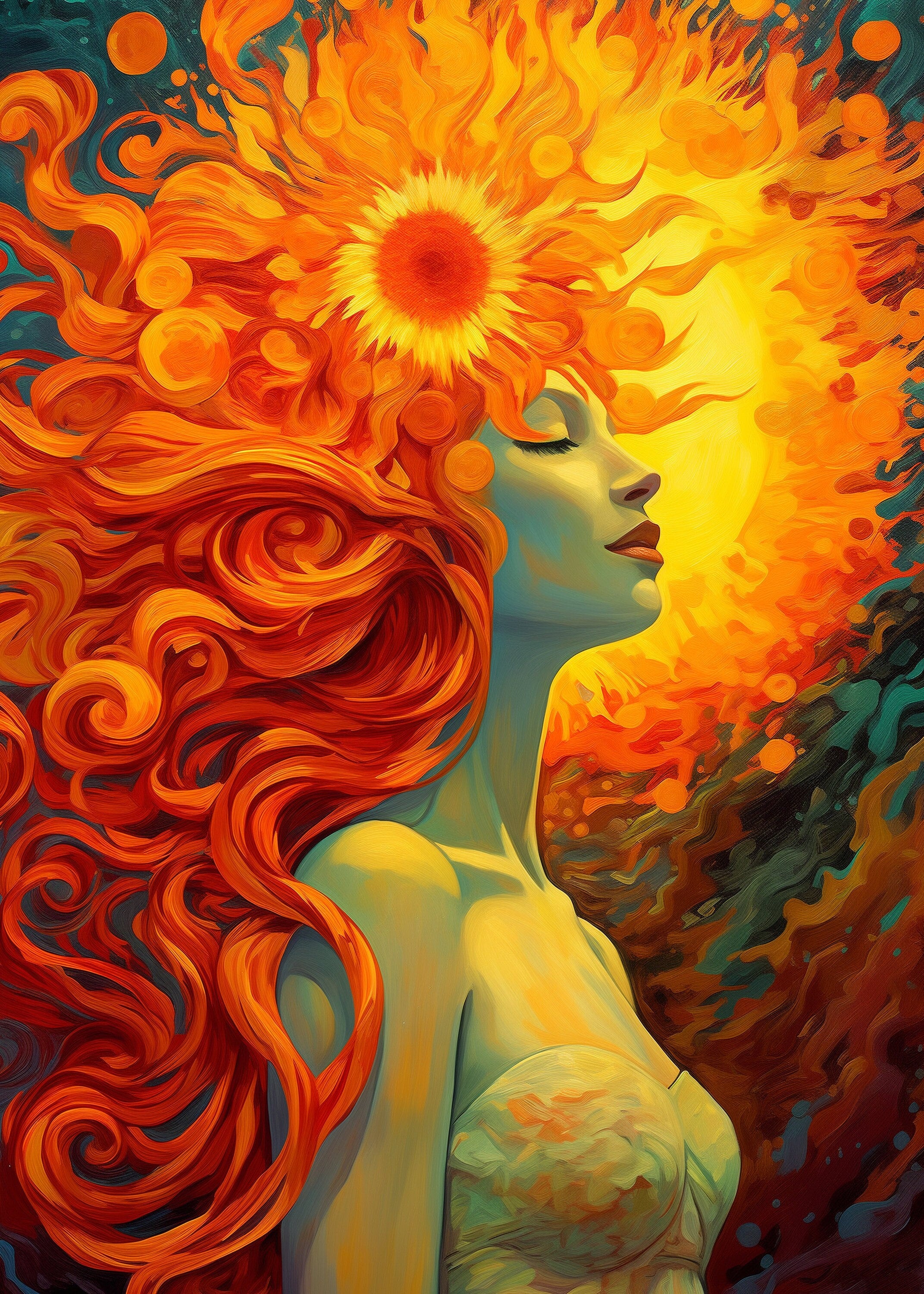
In modern times, Sol’s image has been reimagined in various forms. Digital art often depicts her as a fierce warrior, her chariot a sleek, futuristic vessel hurtling through space. Tattoo art frequently features her as a central motif, with intricate designs incorporating solar symbols, wolves, and chariots. Even in fashion, Sol’s radiance is celebrated through gold and yellow hues, evoking the warmth of the sun she embodies.
One striking example is the artwork from the provided data, where Sol is depicted in a variety of styles—from a serene goddess in a mythological landscape to a dynamic figure in a digital illustration. These modern interpretations bridge the gap between ancient myth and contemporary art, inviting viewers to see Sol not just as a relic of the past but as a living, evolving symbol of light and power.


Why Sol’s Story Matters Today
Sol’s tale is more than a mythological curiosity—it is a narrative that speaks to universal human experiences. Her story of resilience, renewal, and the eternal dance between light and darkness offers profound insights into the human condition. In an era where uncertainty and rapid change dominate, Sol’s journey reminds us of the power of endurance and the hope that arises from darkness.
Moreover, Sol’s association with the sun ties her to themes of energy, vitality, and transformation. The sun is a universal symbol of life, and Sol’s mythological role as its guardian underscores the importance of nurturing and protecting the forces that sustain us. In a world grappling with environmental challenges, Sol’s story serves as a call to honor and preserve the natural world, much as the Norse revered the sun’s life-giving power.
For those drawn to mythology, Sol offers a rich tapestry of symbolism to explore. Her connection to time, cycles, and cosmic balance invites deeper reflection on the rhythms of life and the inevitability of change. Whether as a source of artistic inspiration, a metaphor for personal growth, or a symbol of cultural heritage, Sol’s radiance continues to illuminate the path for those who seek meaning in ancient tales.
Conclusion
Sol, the Norse Sun Goddess, stands as a luminous figure in the pantheon of ancient deities, her story a testament to the enduring power of light and resilience. From her mythological origins as a chariot-driving guardian of the sun to her modern reinterpretations in art and culture, Sol’s radiance transcends time, offering wisdom and inspiration to all who encounter her tale. Her journey across the sky, pursued by the wolf of darkness yet destined to rise anew, mirrors the cycles of life itself—a reminder that even in the face of oblivion, light will always find a way to return.
As we reflect on Sol’s legacy, we are invited to embrace the light within our own lives, to seek balance in the dance between day and night, and to find hope in the promise of renewal. In a world that often feels shrouded in uncertainty, Sol’s story shines brightly, a beacon of endurance, transformation, and the unyielding power of the sun.
FAQ
Who is Sol in Norse mythology?
Sol is the Norse Sun Goddess, embodying the sun and representing life, warmth, and renewal.
What is the significance of Sol's story?
Sol’s story illustrates themes of resilience, renewal, and the cyclical nature of light and darkness.
Leave a Reply