Short Answer
Welcome to your comprehensive guide to the Sword Tarot—a suit that cuts through illusion with the precision of a blade. In this guide, you’ll explore the symbolic power of Swords, their meanings in readings, and how they reflect truth, conflict, and intellectual clarity. Whether you’re a beginner or an experienced reader, this exploration will deepen your understanding of how Swords interact with other cards, their upright and reversed meanings, and their role in storytelling within a tarot spread. By the end, you’ll see how the Swords suit acts as both a mirror and a sword—revealing what must be faced and what must be released.
The Essence of the Swords Suit: Intellect Meets Intuition
The Swords suit in the Minor Arcana represents the realm of the mind—thoughts, decisions, communication, and the power of truth. Unlike the emotional depth of Cups or the material focus of Pentacles, Swords operate in the airy domain of logic, reason, and mental clarity. Each card in this suit carries a message about perception, choice, and consequence. When Swords appear in a reading, they often signal a need for discernment, a call to examine beliefs, or a challenge to cut through deception—whether external or self-inflicted.
Swords are associated with the element of Air, which governs communication, ideas, and the flow of information. This connection explains why Swords often relate to words, conversations, and internal dialogues. They can indicate a time of mental rigor, where decisions must be made with precision, or where old thought patterns need to be released. Yet, Swords also carry a warning: truth can be sharp, and clarity can come at a cost. The mind is powerful, but it can also isolate, overanalyze, or lead to unnecessary conflict.
Understanding the Swords Court Cards: Personalities of the Mind
The court cards of the Swords suit—Page, Knight, Queen, and King—represent different expressions of mental energy. Each embodies a unique approach to thought, communication, and decision-making, offering insight into how these energies manifest in people or situations.
Page of Swords: The Page is a messenger of curiosity and new ideas. This card often appears when you’re exploring a new intellectual pursuit, gathering information, or communicating with youthful enthusiasm. It can signal a time of learning, but also a need to be cautious of spreading gossip or acting on incomplete knowledge.
Knight of Swords: Bold and direct, the Knight charges forward with conviction. This card represents swift action, assertive communication, or a rush to judgment. While the Knight’s energy can be inspiring, it may also lead to impulsive decisions or conflicts if not tempered with reflection.
Queen of Swords: The Queen embodies sharp intellect and emotional detachment. She is clear-sighted, honest, and unafraid to speak her truth—even when it’s uncomfortable. This card often appears when boundaries need to be set, or when you must rely on your own judgment rather than external validation.
King of Swords: The King represents mastery over the mind—authority, strategy, and ethical leadership. He is the embodiment of reason and justice, often appearing in readings about legal matters, academic pursuits, or leadership roles. The King of Swords encourages you to wield your intellect with integrity and precision.
The Major Arcana and Swords: Truth in the Journey
While the Swords suit belongs to the Minor Arcana, its themes resonate deeply with the Major Arcana, particularly in cards that deal with truth, choice, and transformation. For example:
The Magician: This card represents the power to manifest through focused intention—much like the Swords’ ability to cut through illusion. Together, they suggest using your mental and creative resources to bring clarity to a situation.
Justice: A direct connection to the Swords suit, Justice embodies the principle of cause and effect. It reflects the Swords’ role in revealing truth and delivering consequences based on decisions made.
Judgment: This card calls for a reckoning—a moment of truth where old patterns are released. Swords often appear alongside Judgment to highlight the mental and emotional work required to move forward.
When Swords interact with Major Arcana cards, they amplify themes of revelation, accountability, and the power of conscious choice. They remind you that truth, while liberating, also demands responsibility.
Swords in Readings: Upright and Reversed Meanings
Interpreting Swords in a reading depends on their position—upright or reversed—and their relationship to other cards in the spread. Below are key interpretations for each card in the suit, both upright and reversed.
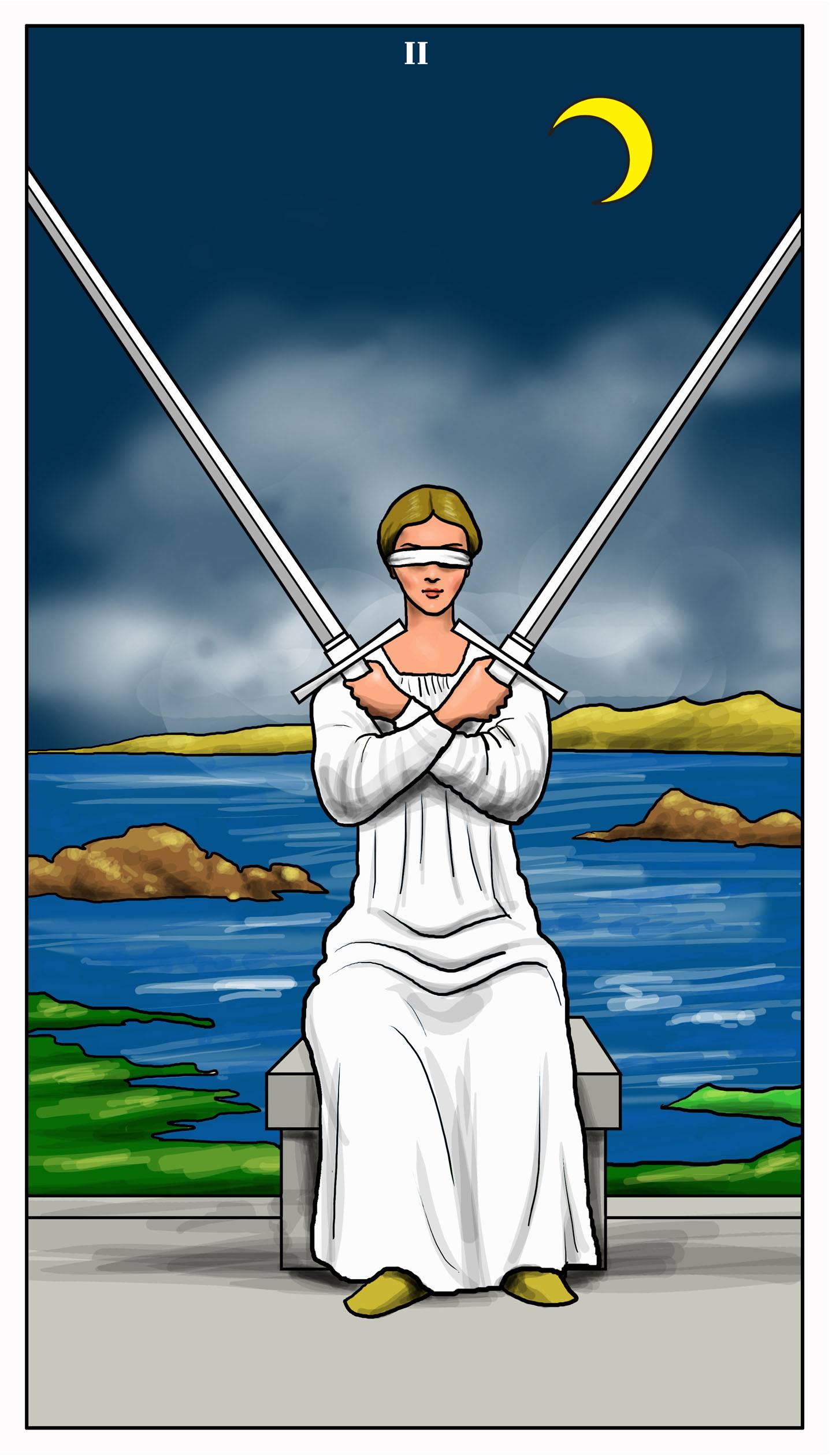
Two of Swords
Upright: A stalemate or indecision. You may be avoiding a difficult choice, burying your head in the sand, or refusing to see the truth. This card calls for courage to face the unknown.
Reversed: Avoidance reaches a breaking point. You can no longer ignore the issue at hand. This card signals a need to make a decision, even if it’s uncomfortable.
Three of Swords
Upright: Heartbreak, betrayal, or painful truth. This card often appears after a loss or a revelation that shatters illusions. It’s a necessary pain that leads to growth.
Reversed: Healing begins. You’re releasing old wounds, forgiving, or moving past emotional pain. This card signals recovery and the restoration of inner peace.
Five of Swords
Upright: Conflict, competition, or a win-at-all-costs mentality. You may have triumphed in a situation, but at the expense of relationships or integrity. This card warns of hollow victories.
Reversed: You recognize the futility of conflict. Apologies are made, and peace is restored. This card encourages letting go of grudges and choosing harmony over ego.
Eight of Swords
Upright: Feeling trapped by your own thoughts. Self-imposed limitations or overthinking create a mental prison. This card asks: What belief is holding you back?
Reversed: Breaking free. You’re releasing mental constraints and seeing new possibilities. This card marks the moment you step out of the illusion of limitation.
Swords and Relationships: Communication and Conflict
The Swords suit plays a crucial role in readings about relationships, where words, honesty, and mental alignment are key. A spread featuring multiple Swords may indicate:
- Open and honest communication: The need to express your truth, even if it’s difficult.
- Miscommunication or deception: Words that wound, half-truths, or unspoken resentments creating distance.
- Intellectual compatibility: A meeting of minds where ideas flow freely and challenges are embraced.
- Breakups or necessary endings: Sometimes, Swords reveal that a relationship must end to preserve your mental and emotional well-being.
For example, the Three of Swords in a relationship reading may point to betrayal or a painful truth coming to light, while the Two of Swords could suggest one partner is avoiding a difficult conversation. The Queen of Swords might indicate a need for clear boundaries or honest dialogue.
Swords in Career and Life Path
In career readings, Swords often highlight the importance of strategy, communication, and ethical decision-making. They can indicate:
- Negotiations or contracts: The need to read the fine print and assert your needs.
- Competitive environments: Where success depends on sharp thinking and adaptability.
- Intellectual pursuits: A call to further education, research, or creative problem-solving.
- Workplace conflicts: Misunderstandings or power struggles that require clear communication to resolve.
The King of Swords might suggest a leadership role where integrity and logic are valued, while the Knight of Swords could signal a fast-paced project or a bold career move. Reversed Swords in this context may warn against overworking the mind, burnout, or ethical compromises.
Shadow Work with Swords: Facing the Inner Critic
The Swords suit is deeply tied to the concept of shadow work—the process of confronting and integrating the parts of ourselves we’d rather ignore. Swords can bring to light:
- Self-deception: The stories we tell ourselves to avoid pain or responsibility.
- Overthinking: The mental loops that keep us stuck in anxiety or regret.
- Harsh self-judgment: The inner critic that wields truth like a blade, wounding rather than guiding.
- Unprocessed anger or grief: Emotions that fester when not acknowledged or expressed.
Working with Swords in shadow work often involves journaling, meditation, or tarot spreads designed to uncover hidden beliefs. For example, pulling the Five of Swords reversed might prompt you to reflect on past conflicts where you prioritized winning over connection. The Eight of Swords could reveal a limiting belief like “I’m not smart enough,” urging you to challenge it.
Creative Uses of Swords: Art, Writing, and Symbolism
Beyond divination, the Swords suit offers rich inspiration for creative expression. Writers might use Swords to explore themes of:
- Moral dilemmas: Characters forced to make tough choices.
- Betrayal and revenge: Plots driven by hidden truths or broken trust.
- Intellectual pursuits: Stories about scholars, detectives, or inventors.
Artists can draw on the suit’s imagery—swords, scales, and stormy skies—to evoke tension, clarity, or transformation. The sharp lines of Swords contrast beautifully with the fluidity of Cups or the stability of Pentacles, creating dynamic compositions. Even in music, Swords can inspire lyrics about conflict, awakening, or the search for truth.
Conclusion
The Swords suit is a powerful reminder that truth, while sometimes painful, is the foundation of growth. It challenges you to wield your intellect with courage, to communicate with honesty, and to face the shadows within. Whether you’re navigating a difficult decision, healing from betrayal, or simply seeking clarity, the Swords offer a path forward—one that demands both strength and surrender.
Remember, the blade cuts both ways: it reveals what must be seen and severs what no longer serves you. Use this guide as a tool to sharpen your awareness, trust your judgment, and embrace the transformative power of truth. In the dance of the tarot, the Swords are your guide—leading you to the light, even when the path is sharp.
Leave a Reply