Short Answer
Embark on a journey into the mystical world of tarot, where each card is a doorway to deeper self-discovery and cosmic wisdom. This comprehensive guide unveils the intricate tapestry of tarot card meanings, blending ancient symbolism with modern intuition. Whether you’re a seasoned reader or a curious beginner, you’ll uncover the hidden layers of meaning behind each card, from the enigmatic Major Arcana to the nuanced suits of the Minor Arcana. Discover how tarot serves as a mirror to your soul, a compass for life’s twists, and a bridge between the seen and unseen realms. Prepare to decode the language of symbols, colors, and archetypes that have captivated humanity for centuries.
The Major Arcana: The Soul’s Epic Journey
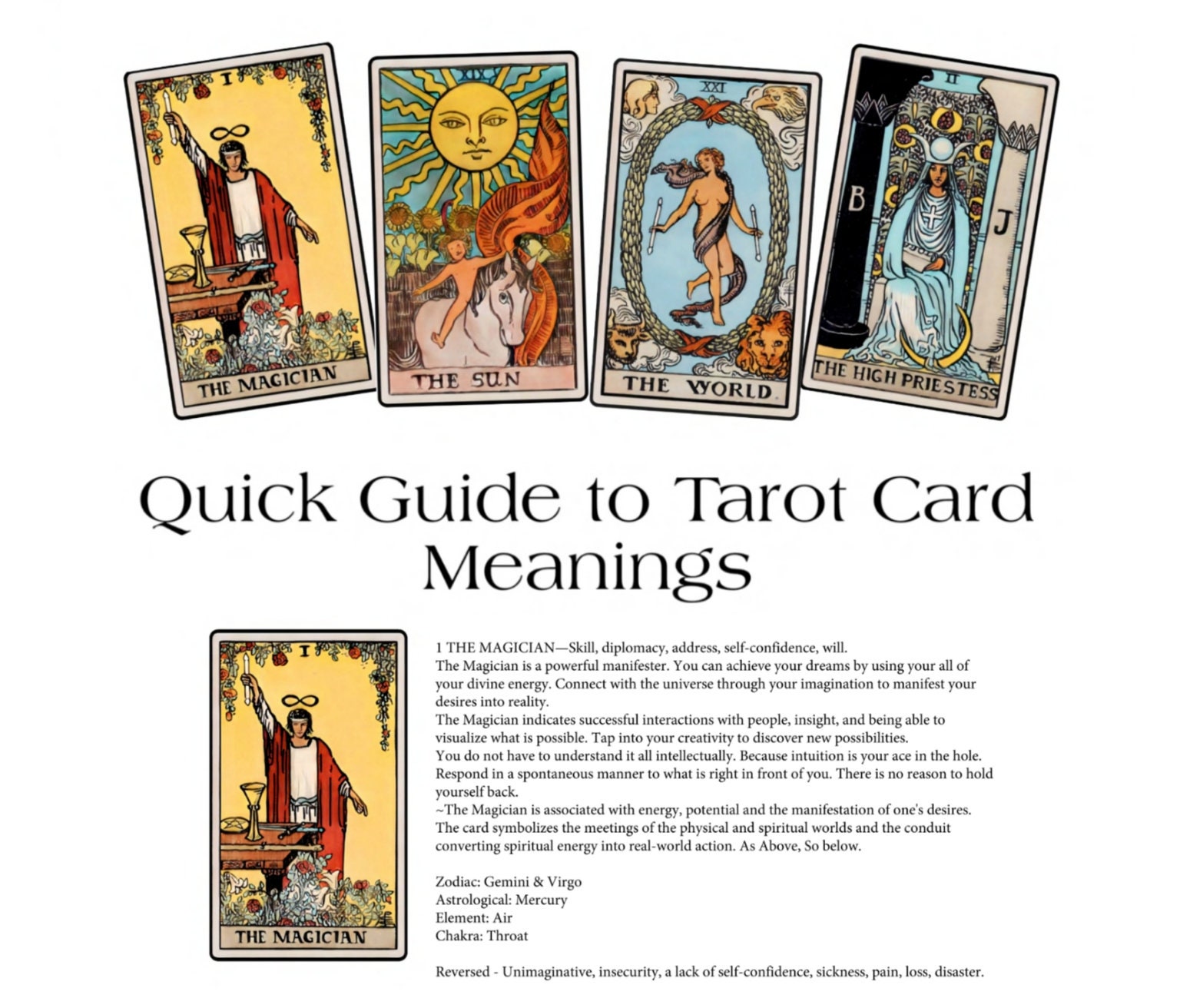
The Major Arcana consists of 22 cards, each representing a pivotal chapter in the human experience. These cards are the pillars of the tarot deck, embodying universal themes and spiritual lessons. The Fool’s journey begins with The Fool, a card of boundless potential and fearless leaps into the unknown. As you progress through the Major Arcana, you encounter archetypes like The Magician, a master of manifestation, and The High Priestess, the guardian of hidden knowledge. Each card is a stepping stone, guiding you through trials, transformations, and triumphs. The final card, The World, signifies completion and wholeness, a reminder that every journey—no matter how winding—leads to wisdom.

The Minor Arcana: The Rhythms of Daily Life
While the Major Arcana charts the grand narrative of existence, the Minor Arcana delves into the everyday tapestry of life. Divided into four suits—Wands, Cups, Swords, and Pentacles—these 56 cards reflect the ebb and flow of human experiences. Wands pulse with fiery passion and creative energy, while Cups flow with emotions and relationships. Swords cut through illusions with their sharp intellect, and Pentacles ground us in the tangible world of work, health, and abundance. Each suit contains numbered cards (Ace through 10) and court cards (Page, Knight, Queen, King), offering layers of meaning that resonate with specific situations and personalities.
Suits Deep Dive: Wands, Cups, Swords, and Pentacles
Wands are the suit of inspiration, ambition, and adventure. Representing the element of fire, they ignite the spark of creativity and drive us toward our goals. A Wand card often signals a time of action, passion, or new beginnings. In contrast, Cups embody the water element, flowing with emotions, intuition, and relationships. These cards invite you to explore your feelings, heal emotional wounds, and connect deeply with others. Swords, ruled by air, are the mind’s domain. They cut through confusion, challenge illusions, and demand clarity. A Swords card may herald a moment of truth or a need for decisive action. Finally, Pentacles ground us in the earth element, focusing on material reality, finances, and practical matters. These cards remind us to nurture our physical world and build sustainable foundations.
Court Cards: The Personalities Within the Deck
The court cards—Page, Knight, Queen, and King—are the most dynamic and personalized cards in the tarot. They represent people, energies, or aspects of ourselves that we embody or encounter. A Page embodies curiosity and potential, often signaling a message or a new learning phase. The Knight charges forward with determination, whether in pursuit of a goal or a whirlwind of change. Queens are the embodiment of mastery and nurturing energy, while Kings exude authority and leadership. Each court card carries the essence of its suit, offering insights into how we interact with the world and the roles we play in our own lives.
Reversed Cards: The Shadow Side of Meaning
When a tarot card appears upside down, it’s not a sign of failure but an invitation to explore the shadow side of its energy. Reversed cards often highlight internal struggles, blocked potential, or the need for introspection. For example, The Tower reversed may suggest resistance to necessary change, while Three of Cups reversed could point to emotional exhaustion or superficial connections. Reversals add depth to readings, urging you to confront what’s hidden beneath the surface. They remind us that growth often comes from facing our fears and embracing the unknown.
Tarot Spreads: Crafting Your Personal Narrative
The true magic of tarot lies in how you arrange and interpret the cards. Spreads are the framework that shapes your reading, from simple three-card layouts to intricate Celtic Crosses. A past-present-future spread offers a linear view of your journey, while a relationship spread explores dynamics between people. For deeper self-reflection, a single-card pull can provide daily guidance, while a year-ahead spread maps out the themes and challenges on the horizon. Experiment with different spreads to find what resonates with your intuition and questions.

Interpreting Symbols and Colors
Tarot cards are a visual language, rich with symbols and colors that speak directly to the subconscious. The color red in a card often signifies passion, energy, or urgency, while blue evokes calmness and intuition. Animals, plants, and mythological figures add layers of meaning—think of the lion in Strength or the lotus in Eight of Pentacles. Even the position of figures, their expressions, and the objects they hold contribute to the narrative. Learning to decode these elements transforms a reading from a simple fortune-telling exercise into a profound dialogue with the universe.
Tarot as a Tool for Self-Discovery
Beyond divination, tarot is a powerful tool for self-reflection and personal growth. Pulling a card daily can serve as a meditation, offering insights into your emotional state or the day ahead. Journaling your interpretations helps track patterns and track your spiritual evolution. Tarot can also act as a mirror, reflecting your subconscious fears, desires, and strengths. By engaging with the cards, you cultivate mindfulness, intuition, and a deeper connection to your inner wisdom. It’s not about predicting the future but about understanding the present moment with clarity and compassion.
Conclusion
The tarot is more than a deck of cards; it’s a living, breathing guide to the human experience. From the cosmic journey of the Major Arcana to the intimate details of the Minor Arcana, each card holds a story waiting to be uncovered. Whether you use tarot for guidance, creativity, or spiritual exploration, its power lies in its ability to illuminate the path ahead. Embrace the symbols, trust your intuition, and let the cards be your companions on the journey of discovery. The wisdom of the tarot is not in the answers it provides but in the questions it inspires—inviting you to explore, reflect, and grow.
FAQ
What are the Major Arcana cards?
The Major Arcana consists of 22 cards representing significant life themes and spiritual lessons.
How do you interpret reversed tarot cards?
Reversed cards indicate the shadow side of a card’s energy, highlighting internal struggles or blocked potential.
What is a tarot spread?
A tarot spread is the layout of cards during a reading, which can provide insight into specific questions or themes.
Leave a Reply