Short Answer
In this guide, you’ll explore the enigmatic Tower Gargoyle from The Dark Tower series, dissecting its symbolic weight, narrative function, and the deeper reasons behind its enduring fascination. Whether you’re a longtime fan or new to Stephen King’s magnum opus, this breakdown will illuminate why this creature resonates so profoundly with audiences.
The Tower Gargoyle: A Symbol of Protection and Peril
The Tower Gargoyle in The Dark Tower series is far more than a mere decorative element—it is a guardian of the Dark Tower itself. Perched atop the structure, these grotesque stone figures serve as both sentinels and omens, embodying the duality of protection and destruction. Their presence is a constant reminder of the Tower’s role as the linchpin of all realities, a concept that underscores the fragility of existence in King’s multiverse.
Gargoyles, in general, have long been associated with warding off evil in folklore and architecture. In The Dark Tower, this tradition is inverted. The gargoyles do not merely repel harm; they are the harm when necessary. Their stone forms crack and crumble as the Tower’s structural integrity weakens, mirroring the decay of Roland Deschain’s quest and the unraveling of the ka-tet. This duality—beauty in decay, protection in destruction—makes the Tower Gargoyle a compelling symbol of the series’ central themes: sacrifice, endurance, and the cyclical nature of time.
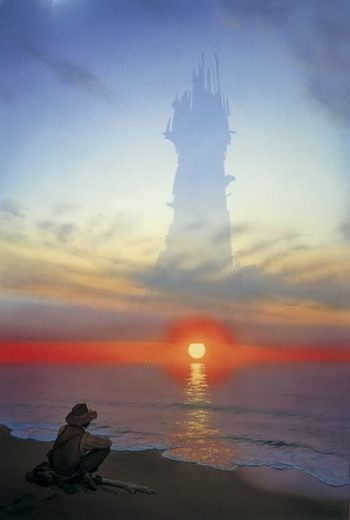
Narrative Function: The Gargoyle as a Harbinger of Doom
The Tower Gargoyle’s role in the narrative extends beyond symbolism; it is a harbinger of the Tower’s impending collapse. Roland’s journey is one of relentless pursuit, but the gargoyles serve as a visual and thematic counterpoint to his quest. Their deteriorating state reflects the protagonist’s own physical and moral decay. As Roland ages and his body betrays him, the gargoyles mirror his decline, their stone forms eroding under the weight of time and the Tower’s decay.
Moreover, the gargoyles are not passive observers. In key moments, they become active participants in the story, such as when they awaken to attack Roland and his ka-tet. This shift from static sentinels to active antagonists underscores the Tower’s sentience—it is not merely a structure but a living entity with its own will. The gargoyles, as extensions of the Tower, embody its wrath and its desperation to maintain order in a collapsing multiverse.
This narrative function also ties into the series’ exploration of ka, the force that governs destiny. The gargoyles, like Roland, are bound by ka. Their actions are predetermined, yet their presence introduces an element of unpredictability. They force Roland to confront the inevitability of his fate, reinforcing the idea that his quest is both heroic and doomed from the start.
Cultural and Mythological Roots of the Gargoyle
The Tower Gargoyle draws from a rich tapestry of cultural and mythological traditions. Gargoyles originated in medieval Europe, where they were believed to ward off evil spirits and protect sacred spaces. Their grotesque forms were intended to scare away malevolent forces, a concept that aligns with their role in The Dark Tower. However, King subverts this tradition by making the gargoyles agents of the Tower’s will rather than neutral protectors.
In Gothic literature, gargoyles often symbolize the grotesque and the sublime, bridging the gap between the divine and the monstrous. This duality is central to The Dark Tower, where the line between hero and villain is often blurred. The gargoyles, with their human-like features and animalistic traits, embody this ambiguity. They are neither fully good nor evil but exist in a liminal space, much like Roland himself.
Additionally, the gargoyles’ association with water—often depicted as spouting from their mouths—links them to purification and renewal. In The Dark Tower, this could symbolize the cyclical nature of Roland’s quest, where destruction and rebirth are intertwined. The water they spew may represent the cleansing of the old world to make way for the new, a theme that resonates with the series’ apocalyptic undertones.
Why the Tower Gargoyle Fascinates Us: A Psychological Perspective
The Tower Gargoyle’s enduring fascination lies in its ability to embody complex psychological and existential themes. On a surface level, gargoyles are visually striking, their exaggerated features triggering a primal response in the human brain. This visceral reaction is compounded by their symbolic depth, which invites deeper contemplation.
Psychologically, the gargoyle can be seen as a manifestation of the shadow self—a concept from Jungian psychology that represents the unconscious aspects of the personality. The gargoyle’s grotesque appearance forces Roland (and the audience) to confront the darker, more primal aspects of existence. It is a reminder that even in the pursuit of a noble quest, there is darkness lurking beneath the surface.
Furthermore, the gargoyle’s role as a guardian and a threat taps into universal human fears: the fear of the unknown, the fear of decay, and the fear of losing control. By personifying these fears in a tangible form, King makes them more accessible, allowing readers to engage with them on a personal level. This is why the Tower Gargoyle resonates so deeply—it is not just a monster or a symbol, but a reflection of our own inner struggles.
Conclusion
The Tower Gargoyle in The Dark Tower series is a multifaceted symbol that transcends its role as a mere creature of fantasy. It is a guardian, a harbinger, a reflection of decay, and a psychological mirror for both Roland and the audience. Its enduring fascination stems from its ability to encapsulate the series’ central themes: the cyclical nature of time, the duality of protection and destruction, and the inescapable pull of destiny.
By exploring the Tower Gargoyle’s symbolic weight, narrative function, and cultural roots, we gain a deeper understanding of The Dark Tower as a whole. It is a reminder that even in the darkest of stories, there is beauty in the grotesque, and meaning in the monstrous. Whether you view the gargoyle as a literal creature or a metaphor for the human condition, its presence in the series is undeniably powerful—a testament to Stephen King’s mastery of blending the fantastical with the profound.
FAQ
What is the symbolic meaning of the Tower Gargoyle?
The Tower Gargoyle symbolizes the duality of protection and destruction, embodying themes of sacrifice and the fragility of existence within The Dark Tower series.
How does the Tower Gargoyle relate to the story's protagonist, Roland?
The Tower Gargoyle mirrors Roland’s physical and moral decay, serving as both a guardian and a harbinger of doom throughout his quest.
Leave a Reply