Short Answer
Dive into the enigmatic concept of The Universe in Reverse – Completion Blocked, a metaphor that challenges our perception of time, progress, and cosmic order. This guide explores how reversing the universe’s expansion could redefine existence itself, offering a fresh lens through which to view reality. You’ll uncover the philosophical implications, scientific paradoxes, and the haunting beauty of a cosmos where entropy works backward. By the end, you’ll see the universe not as a one-way journey toward heat death, but as a cyclical, self-referential puzzle where beginnings and endings blur into a singular, eternal moment.
The Illusion of Linear Time: Why Reversing the Universe Matters
Time, as we understand it, flows in one direction—forward. Entropy, the measure of disorder, increases as the universe expands, leading to the inevitable heat death where all energy disperses into uniformity. But what if this arrow of time is an illusion? The idea of the universe in reverse flips this narrative, suggesting a cosmos where entropy decreases, structures form from chaos, and the past and future trade places. This isn’t just a thought experiment; it’s a radical reimagining of physics that forces us to question whether time’s direction is a fundamental property of reality or merely a local phenomenon.
Consider the implications: if the universe were running backward, galaxies would coalesce from the void, stars would collapse into their birthplaces, and life might emerge not from simplicity but from the remnants of a dying cosmos. This reversal doesn’t just invert cause and effect—it dissolves them entirely, leaving only a seamless, self-sustaining loop where every event is both origin and endpoint. The appeal lies in its subversion of expectation: instead of a universe that fades into nothingness, we’re left with one that eternally recreates itself, a cosmic ouroboros devouring and rebirthing its own tail.
The Paradox of Completion: Why the Universe Can Never Finish
At the heart of this metaphor is the idea of completion blocked—a state where the universe’s evolution is perpetually deferred, never reaching a final form. In a reversed universe, every “end” is merely a new beginning, and every structure that forms is doomed to unravel. This creates a paradox: the universe can never truly complete itself because its very nature is to oscillate between order and chaos without resolution. It’s a cosmic Catch-22, where the pursuit of wholeness is itself the obstacle.
This paradox mirrors human experiences of stagnation and renewal. Just as we chase goals that shift the moment we approach them, the universe in reverse ensures that fulfillment is always just out of reach. Yet, this incompleteness isn’t a flaw—it’s the engine of creation. Without the tension of an unachievable endpoint, there would be no drive to form galaxies, no impetus for life to emerge, and no narrative to the cosmos. The blocked completion becomes the source of all dynamism, a reminder that the beauty of existence lies not in arrival, but in the perpetual dance of becoming.
The Aesthetic of Reversed Cosmology: Beauty in the Unraveling
Visually and conceptually, a reversed universe is a feast for the imagination. Imagine watching a supernova collapse back into a star, or witnessing a black hole spit out matter in reverse, as if the fabric of spacetime is a film being rewound. The imagery is both surreal and strangely harmonious—structures that we associate with decay (crumbling buildings, fading stars) become acts of creation, while moments of birth (exploding stars, emerging life) are revealed as the universe’s way of undoing itself. This aesthetic isn’t just about inversion; it’s about finding poetry in the process rather than the product.
Artists and writers have long been drawn to this idea. In literature, reversed time is a tool to explore memory, regret, and the malleability of perception. In visual art, it manifests as surreal landscapes where gravity defies logic, and time flows like a river upstream. The unique appeal lies in its ability to make the familiar feel alien, forcing us to see the universe not as a static backdrop, but as an active participant in a grand, cyclical performance. It’s a reminder that even in a cosmos governed by entropy, there’s room for wonder—because what we call destruction is merely the universe rearranging its own bones.
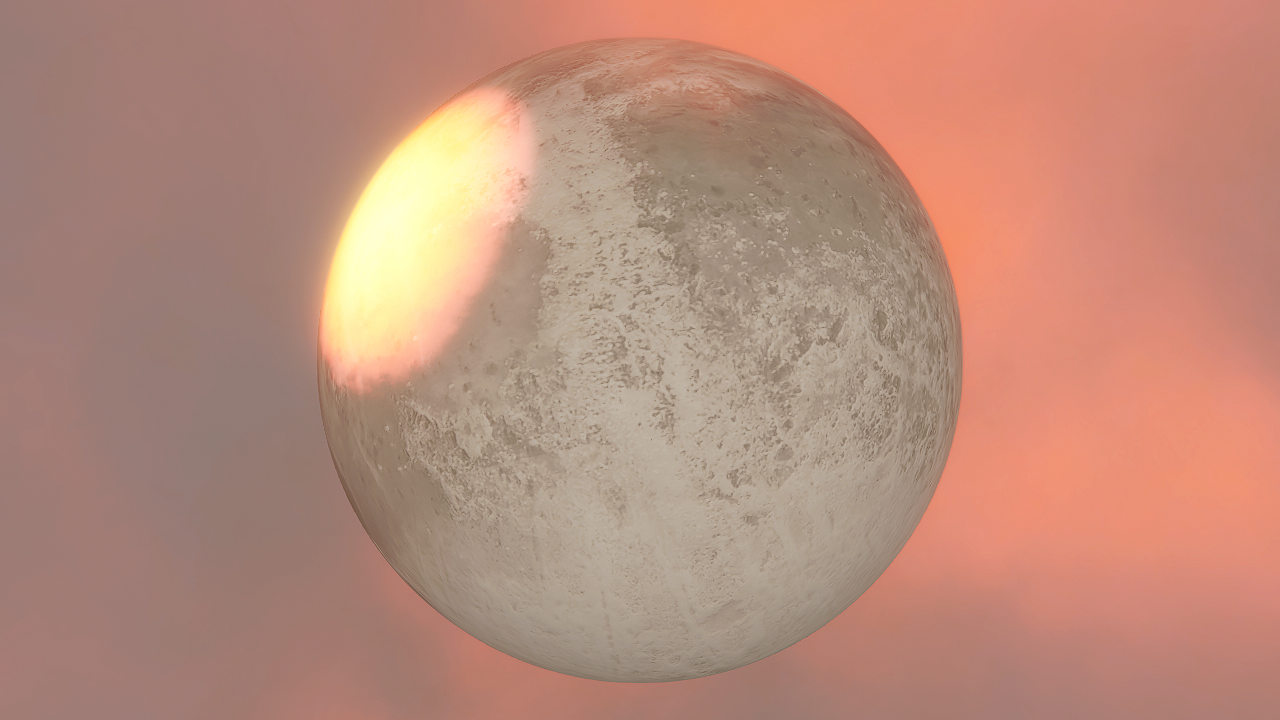
This image captures the eerie elegance of a universe where time’s arrow bends backward. The interplay of light and shadow, the sense of motion frozen mid-reversal—it’s a visual metaphor for the blocked completion, where every moment is both a beginning and an end.
The Scientific and Philosophical Implications
From a scientific standpoint, a reversed universe challenges core tenets of thermodynamics and cosmology. If entropy can decrease, does that mean the second law of thermodynamics is only a local rule? Could there be regions of the cosmos where time flows in the opposite direction, creating pockets of reversed causality? Some theories, like the conformal cyclic cosmology proposed by Roger Penrose, suggest that the end of one universe could birth another through a conformal rescaling, effectively reversing the arrow of time. Others propose that black holes might act as cosmic “erasers,” reversing the flow of information and energy.
Philosophically, the idea forces us to confront the nature of existence itself. If the universe is a loop where completion is impossible, does that render all striving meaningless—or does it imbue every action with cosmic significance? The metaphor extends to human endeavors: art, love, and discovery become acts of defiance against the inevitability of entropy, not because they achieve permanence, but because they participate in the universe’s eternal dance. In this view, blocked completion isn’t a curse; it’s the condition that makes creation possible.
Conclusion: Embracing the Eternal Unfinished
The Universe in Reverse – Completion Blocked is more than a thought experiment; it’s a mirror held up to existence, reflecting back the paradoxes and beauties we often overlook. It teaches us that the universe isn’t a story with a beginning, middle, and end, but a symphony where every note is both the start and the resolution of the piece. The blocked completion isn’t a failure—it’s the very mechanism that allows the cosmos to sing.
To embrace this idea is to accept that we are not passengers on a one-way train, but dancers in a grand, timeless waltz where the steps forward are also steps back. It’s a humbling and exhilarating realization: the universe doesn’t need to finish to be complete. Its incompleteness is its perfection.
FAQ
What does 'Completion Blocked' mean in the context of the universe?
It refers to a state where the universe’s evolution is perpetually deferred, suggesting that every end is a new beginning, and completion is never truly achieved.
How does reversing the universe challenge our understanding of time?
It proposes that time may not be linear and that entropy could decrease, leading to a cosmos where past and future are interchangeable.
Leave a Reply