Short Answer
The World Ouroboros – Eternal Cycle is a concept that has captivated philosophers, artists, and spiritual seekers for centuries. This guide explores the symbolism, historical significance, and psychological resonance of the Ouroboros, offering insights into why this ancient motif continues to fascinate modern minds. You will learn about its origins, interpretations across cultures, and its relevance in contemporary thought. By the end, you’ll understand how the Ouroboros represents the cyclical nature of existence, the union of opposites, and the eternal return of all things.
The Symbolism of the Ouroboros
The Ouroboros is a serpent or dragon depicted in a circular form, consuming its own tail. This self-referential image embodies the idea of infinity, wholeness, and eternal recurrence. At its core, the Ouroboros symbolizes the cyclical nature of life, death, and rebirth—a concept found in countless mythologies and spiritual traditions. The snake’s act of devouring itself suggests that endings are merely beginnings in disguise, reinforcing the belief that all things are interconnected and recurrent.
Visually, the Ouroboros is often depicted with scales, fangs, and a piercing gaze, evoking both primal fear and reverence. The circular shape eliminates any beginning or end, emphasizing the eternal nature of existence. In alchemical traditions, the Ouroboros represents the philosopher’s stone—a symbol of transformation and the union of opposites, such as life and death, creation and destruction. This duality is central to its enduring appeal, as it mirrors the human experience of constant change and renewal.
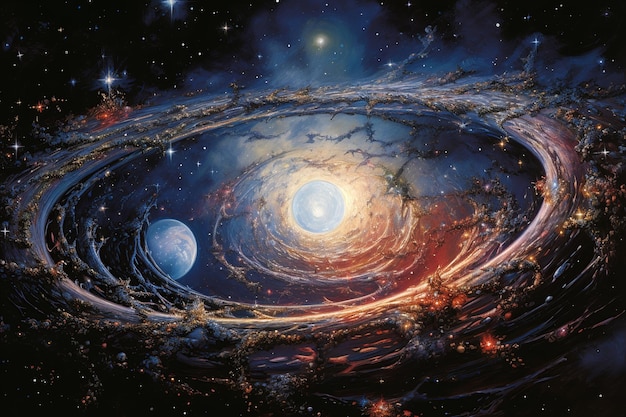
The Ouroboros also serves as a reminder of the impermanence of individual existence. Just as the snake consumes itself, so too do all living beings return to the cycle of life. This idea resonates deeply in cultures that emphasize reincarnation, such as Hinduism and Buddhism, where the soul is believed to be reborn in an endless loop of existence. The symbol thus becomes a bridge between the material and spiritual worlds, illustrating the interconnectedness of all things.
Historical Roots and Cultural Interpretations
The Ouroboros traces its origins to ancient Egypt, where it appeared as a symbol of the sun’s journey across the sky. The Egyptians associated it with the god Atum, who was said to create and destroy the world in an eternal cycle. From Egypt, the symbol spread to Greece, where it was adopted by the Gnostics and later by alchemists during the Middle Ages. In Greek mythology, the Ouroboros was linked to the story of the phoenix, a bird that rises from its own ashes, further emphasizing the theme of rebirth.
In Norse mythology, the Ouroboros-like concept appears in the form of Jörmungandr, the world serpent that encircles the earth and bites its own tail. This serpent is destined to release its tail during Ragnarök, the apocalyptic battle that heralds the end of the world and its subsequent renewal. Similarly, in Hindu traditions, the Ouroboros is mirrored in the cycle of the universe, where creation (Brahma), preservation (Vishnu), and destruction (Shiva) perpetually repeat in an endless loop.
Alchemical traditions of the Renaissance period elevated the Ouroboros to a central symbol of transformation. Alchemists believed that the Ouroboros represented the process of turning base metals into gold—a metaphor for spiritual enlightenment and the purification of the soul. The serpent’s self-consumption was seen as an allegory for the alchemical magnum opus, where the practitioner undergoes a profound inner metamorphosis. This interpretation highlights the Ouroboros as a tool for personal growth and self-discovery.
The Ouroboros in Philosophy and Psychology
Philosophically, the Ouroboros is most famously associated with Friedrich Nietzsche’s concept of the “eternal return.” Nietzsche proposed that the universe and all events within it repeat infinitely, suggesting that one’s life would recur identically for eternity. This idea was both terrifying and liberating, as it implied that every moment of existence is infinitely significant. The Ouroboros, with its endless cycle, became a visual representation of Nietzsche’s philosophy, encapsulating the weight of existence and the importance of living authentically.
In psychology, the Ouroboros has been linked to the process of individuation, a term coined by Carl Jung. Individuation refers to the journey of self-discovery and integration of the unconscious mind, where one confronts and reconciles opposing forces within the psyche. The Ouroboros, as a symbol of wholeness, reflects this process, illustrating how fragmentation can lead to a unified and enlightened state of being. Jung himself referenced the Ouroboros in his writings, noting its relevance to the cyclical nature of personal growth and transformation.
Modern interpretations of the Ouroboros extend to ecology and sustainability. The symbol’s emphasis on cycles aligns with the natural world’s rhythms, such as the seasons, water cycles, and the food chain. Environmentalists use the Ouroboros to illustrate the interconnectedness of all life and the importance of maintaining balance within ecosystems. This ecological perspective underscores the Ouroboros as a reminder of humanity’s responsibility to preserve the delicate cycles that sustain life on Earth.
Artistic and Modern Representations
The Ouroboros has inspired countless works of art, literature, and music throughout history. In visual art, it appears in illuminated manuscripts, alchemical texts, and contemporary paintings, often accompanied by intricate designs and symbolic motifs. Artists like William Blake and Salvador Dalí have incorporated the Ouroboros into their works, using it to explore themes of eternity, duality, and the subconscious mind.
In literature, the Ouroboros is a recurring motif in fantasy and speculative fiction. J.R.R. Tolkien’s Middle-earth, for example, features the concept of the “Circle of the World,” a cyclical universe where time is eternal and events repeat in grand patterns. Similarly, in modern fantasy novels, the Ouroboros often symbolizes the inescapable nature of fate or the hero’s journey, where challenges and triumphs recur in a never-ending cycle.

Music also draws on the Ouroboros for its themes of repetition and cyclicality. Composers like Johann Sebastian Bach and Philip Glass have used repetitive structures in their music to evoke the sensation of eternal recurrence. In popular culture, the Ouroboros appears in films, video games, and graphic novels, often as a metaphor for time loops, destiny, or the interconnectedness of all things. These modern representations demonstrate the symbol’s versatility and enduring relevance in contemporary storytelling.
Why the Ouroboros Fascinates Us
The enduring fascination with the Ouroboros can be attributed to its ability to encapsulate universal truths about existence. At a fundamental level, the symbol addresses the human desire to find meaning in chaos. By framing life as a series of cycles, the Ouroboros offers a sense of order and predictability, even in the face of uncertainty. This resonates deeply in an era where rapid technological and societal changes often leave individuals feeling disconnected from the natural rhythms of life.
Additionally, the Ouroboros speaks to the human experience of duality—light and dark, creation and destruction, life and death. These opposing forces are inherent in the human condition, and the Ouroboros serves as a reminder that they are not separate but interconnected. This idea is comforting to many, as it suggests that even the most challenging experiences are part of a larger, meaningful pattern. The symbol thus becomes a tool for navigating the complexities of life, offering a framework for understanding suffering, growth, and renewal.
Psychologically, the Ouroboros taps into the collective unconscious, a concept introduced by Carl Jung. As an archetype, it represents the eternal cycle of existence, a theme that resonates across cultures and time periods. This universality makes the Ouroboros a powerful symbol, capable of evoking deep emotional and intellectual responses. Whether encountered in ancient texts, modern art, or personal reflection, the Ouroboros continues to captivate because it mirrors the fundamental questions of human existence: Where do we come from? What is our purpose? And what happens when we return to the cycle?
Conclusion
The World Ouroboros – Eternal Cycle is more than just a symbol; it is a profound representation of the cyclical nature of existence. From its ancient origins in Egypt and Greece to its modern interpretations in philosophy, psychology, and art, the Ouroboros has remained a potent emblem of wholeness, transformation, and eternal recurrence. It challenges us to see the interconnectedness of all things and to embrace the cycles of life with acceptance and wonder.
Whether viewed through the lens of mythology, spirituality, or science, the Ouroboros invites us to reflect on our place in the grand tapestry of existence. It reminds us that endings are not final but merely transitions into new beginnings, and that every moment is a thread in the eternal fabric of time. As we navigate the complexities of modern life, the Ouroboros serves as a timeless guide, offering wisdom, comfort, and a deeper understanding of the world around us.
FAQ
What is the Ouroboros?
The Ouroboros is a symbol depicting a serpent or dragon eating its own tail, representing the cyclical nature of existence.
What does the Ouroboros symbolize?
It symbolizes infinity, wholeness, and the eternal cycle of life, death, and rebirth.
What are some cultural interpretations of the Ouroboros?
The Ouroboros has been interpreted in various cultures, including ancient Egypt, Greece, Norse mythology, and alchemical traditions.
How does the Ouroboros relate to philosophy and psychology?
Philosophically, it’s linked to Nietzsche’s concept of eternal return; in psychology, it represents the process of individuation in Jungian thought.
Leave a Reply