Short Answer
This guide explores the fascinating intersection between Thelema—a spiritual philosophy founded by Aleister Crowley—and the Third Eye Chakra, a key energy center in many Eastern traditions. You’ll discover how these two seemingly distinct systems share surprising parallels in their emphasis on inner vision, spiritual awakening, and the pursuit of higher consciousness. By examining their core principles, practices, and symbolic language, you’ll gain insights into why so many seekers are drawn to both paths. Whether you’re new to these concepts or seeking deeper integration, this article will illuminate their shared goals and the deeper reasons behind their enduring appeal.
Thelema: A Brief Overview of Its Core Principles
Thelema, derived from the Greek word for “will,” is a spiritual and philosophical system introduced by Aleister Crowley in the early 20th century. At its heart, Thelema is a path of self-discovery and liberation, encapsulated in its most famous axiom: “Do what thou wilt shall be the whole of the Law.” This phrase is often misunderstood as a call for hedonism or selfishness, but in Thelemic context, it signifies the alignment of one’s actions with their true purpose or “True Will.”
Thelema draws heavily from Western esoteric traditions, including Hermeticism, Kabbalah, and ceremonial magic. It emphasizes the importance of direct experience over dogma, encouraging practitioners to explore their inner worlds through meditation, ritual, and the study of sacred texts. Central to Thelema is the concept of the “Astral Plane,” a realm of consciousness where symbols, archetypes, and spiritual forces interact. This plane is not merely a metaphor but a tangible landscape for the magician to navigate, often accessed through practices like astral projection or scrying—methods that closely mirror techniques used to activate the Third Eye Chakra.
The Third Eye Chakra: Gateway to Inner Vision
The Third Eye Chakra, or Ajna in Sanskrit, is the sixth primary chakra in the Hindu and yogic traditions. Located between the eyebrows, it is associated with intuition, insight, and the ability to perceive beyond the physical senses. When balanced, the Third Eye Chakra fosters clarity, creativity, and a deep connection to one’s inner wisdom. However, blockages or imbalances can lead to confusion, lack of direction, or an over-reliance on external validation.
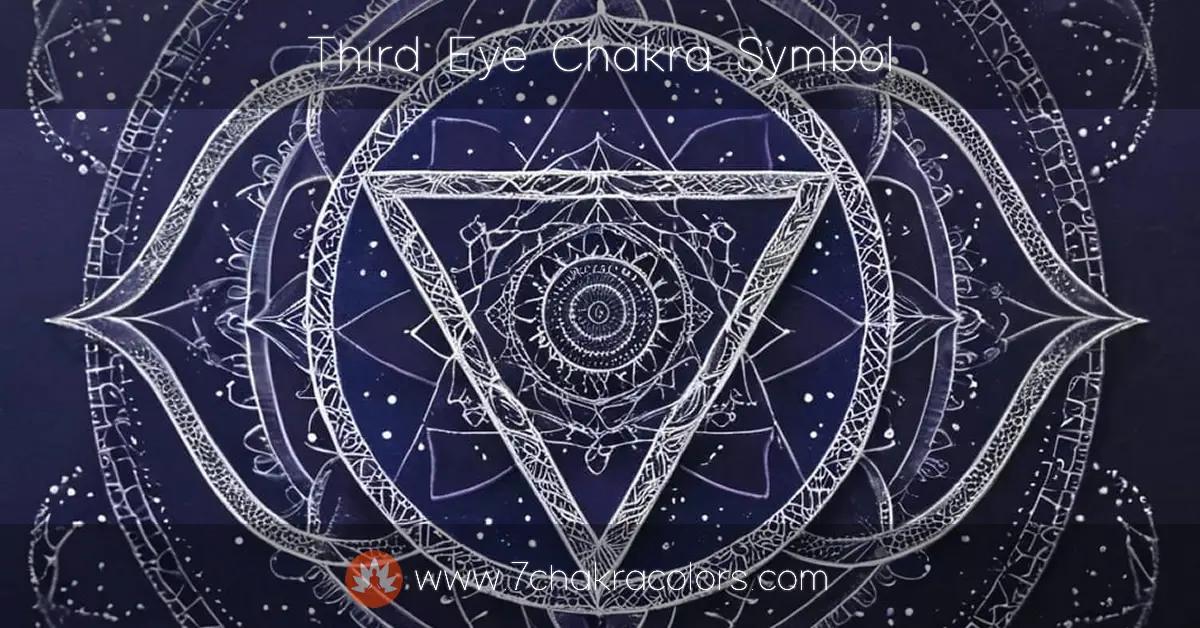
In yogic and tantric practices, the Third Eye is often visualized as a lotus flower with two petals, symbolizing the union of Shiva and Shakti—the masculine and feminine principles of consciousness. It is also linked to the pineal gland, a small endocrine gland in the brain that produces melatonin and is believed to play a role in regulating spiritual experiences. The activation of this chakra is a common goal in meditation, where practitioners focus their attention on the space between the eyebrows, often visualizing a indigo or violet light. This process shares striking similarities with Thelemic practices that aim to awaken the “Eye of Horus” or the “Pineal Eye,” a symbol of inner sight and enlightenment.

Parallels Between Thelema and the Third Eye Chakra
At first glance, Thelema and the Third Eye Chakra appear to belong to entirely different spiritual traditions—one rooted in Western esotericism and the other in Eastern mysticism. Yet, a closer examination reveals striking parallels in their goals and methods. Both systems emphasize the importance of inner vision as a tool for self-realization and spiritual growth. In Thelema, the magician seeks to “see” beyond the veil of ordinary perception, while in yogic traditions, the Third Eye is the organ of inner sight, allowing one to perceive the subtle realms.
Another key parallel is the role of symbols and archetypes. Thelema employs a rich tapestry of symbols, such as the Tree of Life from Kabbalah, the Stele of Revealing, and the rituals of the A∴A∴ (Astrum Argentum). Similarly, the Third Eye Chakra is associated with symbols like the OM mantra, the Ajna mandala, and the use of yantras (geometric diagrams) for meditation. Both systems recognize that symbols are not merely decorative but powerful tools for focusing the mind and accessing deeper states of consciousness.
The practice of meditation and visualization is also a shared cornerstone. In Thelema, rituals like the Lesser Banishing Ritual of the Pentagram (LBRP) are designed to purify the practitioner’s aura and open channels of perception. Likewise, yogic traditions employ techniques such as Trataka (steady gazing) and Ajna Chakra meditation to stimulate the Third Eye. These practices aim to quiet the chatter of the mind, allowing the practitioner to access states of heightened awareness where the boundaries between the self and the divine dissolve.
Why the Fascination? Unpacking the Allure of Both Paths
The enduring fascination with both Thelema and the Third Eye Chakra can be attributed to a shared human longing: the desire to transcend the limitations of the physical world and connect with something greater. In an era where technology and materialism often dominate, these paths offer a counterbalance—a way to reconnect with the inner self and the mysteries of existence. The allure of inner vision, whether framed as the “Eye of Horus” in Thelema or the Third Eye Chakra in yogic traditions, taps into a universal archetype: the hero’s journey of self-discovery.
Another reason for their appeal is the promise of empowerment. Both Thelema and the Third Eye Chakra teachings emphasize that the tools for transformation lie within the individual. Thelema’s focus on “True Will” suggests that each person possesses a unique path to fulfillment, while the Third Eye Chakra teaches that intuition and inner wisdom are accessible to anyone willing to cultivate them. This message resonates deeply in a world where external validation and societal expectations often overshadow personal truth.
The symbolic language of both systems also contributes to their mystique. The use of vivid imagery—whether it’s the Thelemic imagery of the Abyss, the Beast, and the Scarlet Woman, or the yogic imagery of lotus flowers, serpents, and chakras—creates a rich tapestry that invites exploration. These symbols act as gateways, allowing practitioners to engage with abstract concepts in a tangible way. They also foster a sense of mystery and wonder, which is a powerful motivator for seekers of all stripes.
Practical Steps to Integrate Thelema and Third Eye Practices
For those drawn to both Thelema and the Third Eye Chakra, integrating their practices can create a powerful synergy. Start by grounding yourself in the foundational teachings of each system. For Thelema, familiarize yourself with Crowley’s works, such as *Liber AL vel Legis* (The Book of the Law) and *Magick in Theory and Practice*. For the Third Eye Chakra, study yogic texts like the *Hatha Yoga Pradipika* or modern guides on chakra meditation. Understanding the core principles of each will provide a solid foundation for deeper exploration.
Next, incorporate meditation and visualization into your daily routine. Begin with simple breathwork to calm the mind, then focus your attention on the space between your eyebrows. Visualize an indigo or violet light growing brighter with each inhalation. As you do this, you can also invoke Thelemic symbols or deities, such as Thoth (the god of wisdom and communication) or Babalon (the divine feminine principle). Alternatively, recite mantras associated with the Third Eye, such as the bija mantra “OM” or the Thelemic phrase “IAO” (a sacred formula representing the union of Isis, Apophis, and Osiris).
Ritual can also serve as a bridge between the two systems. The Lesser Banishing Ritual of the Pentagram, for example, can be adapted to include Third Eye work by visualizing the chakra’s energy being purified and activated during the ritual. Similarly, you can create a personal ritual that combines elements from both traditions, such as lighting a candle to represent the Third Eye’s light while reciting a Thelemic invocation. The key is to experiment and find what resonates with you, trusting your intuition as your guide.
Conclusion
The intersection of Thelema and the Third Eye Chakra reveals a profound truth: the journey to spiritual awakening is not confined to a single tradition but is a universal quest that transcends cultural and historical boundaries. Both paths offer powerful tools for inner exploration, emphasizing the importance of will, intuition, and direct experience. By understanding their shared principles and practices, you can harness their combined wisdom to deepen your spiritual practice and unlock new dimensions of consciousness.
Whether you are drawn to Thelema’s emphasis on magick and self-mastery or the Third Eye Chakra’s focus on intuition and inner sight, the key is to approach your journey with an open heart and a curious mind. The tools are within you—your will, your breath, your symbols, and your symbols. All that remains is to begin.
FAQ
What is Thelema?
Thelema is a spiritual and philosophical system founded by Aleister Crowley, emphasizing self-discovery and alignment with one’s true purpose.
What is the Third Eye Chakra?
The Third Eye Chakra, or Ajna, is a key energy center associated with intuition and insight, located between the eyebrows.
How are Thelema and the Third Eye Chakra connected?
Both Thelema and the Third Eye Chakra emphasize inner vision and spiritual awakening, utilizing symbols and meditation practices.
Leave a Reply