Short Answer
Welcome to this comprehensive guide on the Three Cards No Positional – Open Reading, a dynamic and intuitive tarot spread designed to spark curiosity and encourage a shift in perspective. Unlike traditional positional spreads, this method allows the cards to speak freely without predefined meanings, inviting deeper exploration and personal insight. Whether you’re a seasoned reader or new to tarot, this guide will equip you with the tools to conduct and interpret this powerful spread effectively.
Understanding the Three Cards No Positional Spread
The Three Cards No Positional spread is a flexible and open-ended approach to tarot reading. Unlike structured spreads where each card has a specific position (e.g., past, present, future), this method treats the three cards as a collective narrative. The absence of positional constraints allows the cards to interact organically, revealing themes, contrasts, or synergies that might otherwise go unnoticed. This approach is particularly useful for exploring complex questions, uncovering hidden influences, or simply gaining fresh insights into a situation.
The spread consists of three cards drawn randomly and interpreted as a unified message. The lack of predefined positions means the reader must rely on intuition and the cards’ inherent symbolism to derive meaning. This method encourages a more fluid and interpretive approach, making it ideal for those who wish to explore tarot beyond rigid structures.
Preparing for the Reading
Before diving into the spread, it’s essential to set the stage for a meaningful reading. Start by centering yourself through meditation, deep breathing, or a brief grounding exercise. This helps quiet the mind and open yourself to the messages the cards may hold. Clarify your intention for the reading—whether it’s to gain clarity on a specific issue, explore a new opportunity, or simply seek inspiration. The more focused your intention, the more resonant the reading will be.
Shuffle your tarot deck while holding your question or intention in mind. Some readers prefer to shuffle until they feel a natural pull to stop, while others use a specific method, such as cutting the deck into three piles and reassembling them. Trust your intuition to guide the process, as the act of shuffling is itself a form of communication between you and the cards.
Drawing and Interpreting the Cards
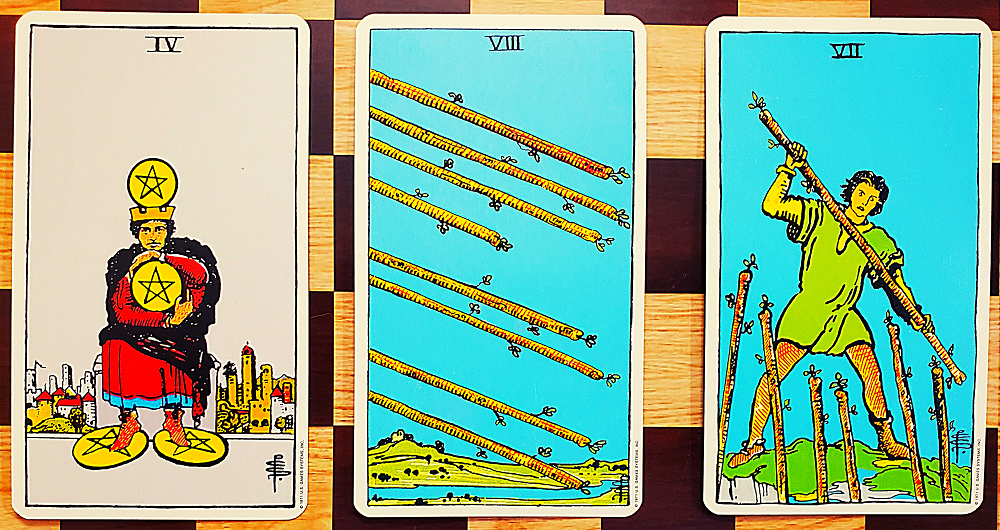
Once you’ve shuffled the deck, draw three cards at random. Lay them out in a horizontal row, face up. Since there are no predefined positions, the order in which the cards appear is less important than the collective story they tell. Begin by observing the cards individually, noting their imagery, symbols, and emotional resonance. Then, consider how they interact with one another—do they complement, contrast, or challenge each other?
For example, if you draw the Three of Cups, the Five of Swords, and the Page of Pentacles, you might interpret this as a narrative about celebration (Three of Cups) followed by conflict (Five of Swords), which ultimately leads to new opportunities (Page of Pentacles). The lack of positional constraints allows you to weave these cards into a cohesive story that reflects your current circumstances or question.
Pay attention to recurring themes, such as elements (fire, water, air, earth), colors, or archetypes. These can provide additional layers of meaning. For instance, if all three cards feature water imagery, the reading may be highlighting emotions, intuition, or fluidity in the situation you’re exploring.
Promising a Shift in Perspective
One of the most powerful aspects of the Three Cards No Positional spread is its ability to offer a fresh perspective. By removing the constraints of traditional positions, the reading can reveal unexpected connections or insights that challenge your initial assumptions. This shift in perspective is often the catalyst for growth, as it encourages you to see beyond your current viewpoint and consider alternative possibilities.
For example, if you’re feeling stuck in a career dilemma, the cards might reveal a hidden opportunity (e.g., the Ace of Wands) alongside a warning about burnout (e.g., the Eight of Swords). This juxtaposition could prompt you to reassess your priorities or explore new avenues you hadn’t previously considered. The open nature of the spread allows for such revelations to emerge naturally, without the influence of preconceived interpretations.
This spread is particularly effective for exploring questions that require a broader view, such as “What do I need to understand about my current path?” or “How can I embrace change in my life?” The lack of positional constraints invites the cards to speak to the underlying currents of your situation, rather than focusing on linear progression.
Piquing Curiosity and Encouraging Exploration
The Three Cards No Positional spread is inherently curious-making. By presenting three cards without a predefined narrative, the reading invites you to engage more deeply with the imagery and symbolism. This curiosity can lead to a richer understanding of the cards and their relevance to your life. It also encourages you to ask follow-up questions, draw additional cards, or revisit the spread at a later time to see how your perspective has evolved.
For instance, if the cards suggest a theme of transformation (e.g., the Death card, the Tower, and the Six of Wands), you might find yourself drawn to explore what changes are on the horizon or how you can harness this energy for personal growth. The open-ended nature of the spread leaves room for interpretation, making it a dynamic tool for ongoing exploration.
To deepen your engagement with the reading, consider journaling about the cards and their potential meanings. Write down your initial impressions, any emotions that arise, and how the cards might relate to your current circumstances. Over time, you may notice patterns or recurring themes that offer further insight into your journey.
Practical Tips for Conducting the Reading
To get the most out of the Three Cards No Positional spread, consider the following practical tips:
- Trust your intuition: Since there are no predefined positions, your gut reactions to the cards are just as important as their traditional meanings. If a card resonates strongly with you, explore why that might be.
- Look for connections: Pay attention to how the cards relate to one another. Do they tell a story? Do they highlight a particular theme or emotion?
- Embrace ambiguity: The open nature of this spread means that the cards may not provide clear-cut answers. Instead, they may offer questions or prompts for further reflection.
- Use reversals wisely: If you choose to read reversed cards, consider how their energy might contrast with the upright cards. This can add depth to your interpretation.
- Experiment with different decks: Different tarot decks have unique imagery and symbolism. Trying the spread with a new deck can offer fresh insights and perspectives.
Common Questions About the Three Cards No Positional Spread
Can I use this spread for any type of question?
Yes! The Three Cards No Positional spread is versatile and can be used for a wide range of questions, from personal growth to decision-making. Its open-ended nature makes it particularly useful for exploring complex or multifaceted issues.
Do I need to know traditional card meanings to use this spread?
While familiarity with traditional card meanings can enhance your interpretation, it’s not a requirement. Trusting your intuition and observing the imagery are equally important. Over time, you’ll develop your own unique way of interpreting the cards.
How often can I use this spread?
There’s no limit to how often you can use this spread. It’s a great tool for regular check-ins, exploring new questions, or revisiting old ones from a fresh perspective. Just be mindful of over-reading or becoming overly reliant on tarot for decision-making.
Conclusion
The Three Cards No Positional spread is a powerful and flexible tool for gaining insight, sparking curiosity, and encouraging a shift in perspective. By removing the constraints of traditional positional spreads, this method allows the cards to speak freely, revealing themes and connections that might otherwise remain hidden. Whether you’re exploring a specific question or simply seeking inspiration, this spread offers a dynamic and intuitive approach to tarot reading.
As you practice this spread, remember that the most important aspect of any tarot reading is your connection to the cards. Trust your intuition, embrace the ambiguity, and allow the cards to guide you toward deeper understanding. With time and experience, the Three Cards No Positional spread can become a valuable ally on your journey of self-discovery and growth.
FAQ
Can I use this spread for any type of question?
Yes! The Three Cards No Positional spread is versatile and can be used for a wide range of questions, from personal growth to decision-making.
Do I need to know traditional card meanings to use this spread?
Familiarity with traditional card meanings can enhance your interpretation, but it’s not a requirement; trusting your intuition is equally important.
How often can I use this spread?
There’s no limit to how often you can use this spread; it’s great for regular check-ins or exploring new questions.
Leave a Reply