Short Answer
Ever wondered why wands and staffs—those iconic symbols of magic and power—are so deeply intertwined in fantasy lore? Whether you’re an artist sketching enchanted weapons, a writer crafting a spellbinding narrative, or simply a curious enthusiast, understanding the nuances of “Three of Staffs” (or wands) can elevate your creative projects. This guide dives into the essence of these mystical tools, exploring their symbolism, design variations, and even playful challenges to spark your imagination. By the end, you’ll see wands and staffs not just as props, but as extensions of magic itself.
The Symbolism of Wands and Staffs: More Than Just Tools
Wands and staffs are far more than mere accessories in fantasy realms—they are conduits of power, extensions of a caster’s will, and often, reflections of their personality. Historically, wands have been associated with precision, elegance, and the ability to channel subtle energies, while staffs evoke strength, wisdom, and a broader range of magical influence. In tarot, the “Three of Staffs” card (often depicted as three wands or rods) symbolizes growth, expansion, and collaboration. It suggests a moment of progress where multiple forces come together to achieve a shared goal. This duality—between individual prowess and collective effort—makes wands and staffs fascinating subjects to explore.
Imagine a wand as a delicate, almost intimate tool, like a conductor’s baton guiding a symphony of spells. In contrast, a staff is the grand conductor itself, a towering presence that commands respect. Both, however, share a common thread: they are extensions of the user’s intent. A wand might flicker with the flick of a wrist, while a staff could unleash a storm with a single thud. Their designs—whether ornate, rustic, or futuristic—tell stories of their owners’ journeys, making them as unique as the magic they wield.
Designing Your Own Staff: From Concept to Creation
Creating a staff that feels alive in your world starts with inspiration. Begin by asking: What story does this staff tell? Is it carved from the heartwood of an ancient tree, passed down through generations? Does it hum with residual energy, or is it a crude tool wielded by a novice mage? The materials you choose—ebony, oak, bone, or even metal—set the tone for its magic. For example, a staff made of driftwood might belong to a sea witch, while one adorned with runes could be a relic of a forgotten civilization.
Next, consider the staff’s form. A straight, unadorned rod suggests simplicity and raw power, while a twisted or segmented staff hints at complexity and layered magic. Think about the embellishments: crystals for amplification, feathers for divination, or carvings depicting pivotal events in its history. Even the weight matters—is it light enough to twirl in battle, or does it require both hands to lift, emphasizing its formidable nature? Tools like digital sculpting software or traditional sketching can help you refine your design until it feels as tangible as the magic it’s meant to channel.
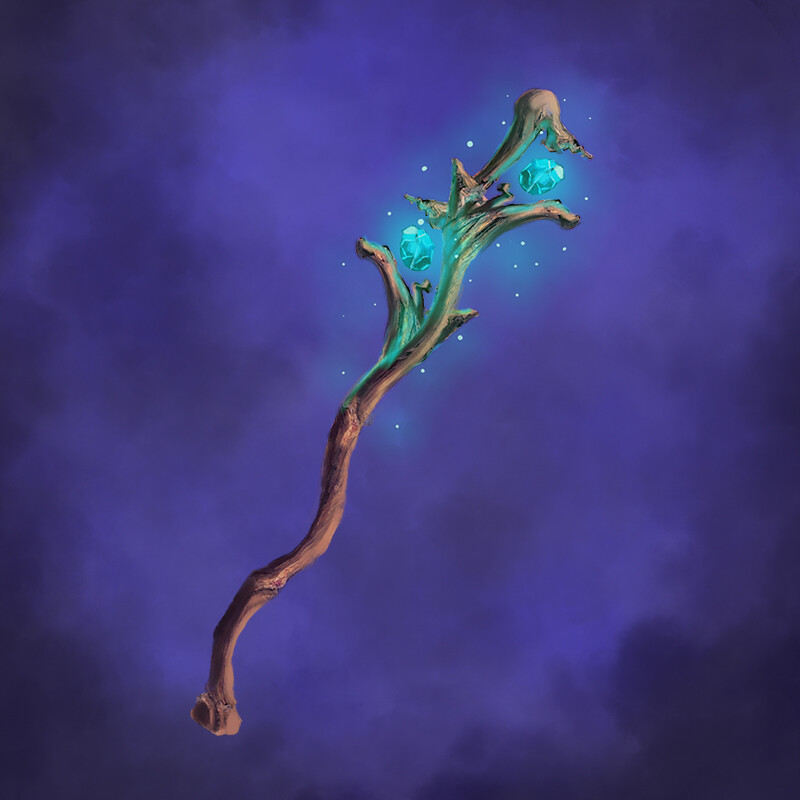
For a playful challenge, try designing a staff that defies convention. What if it’s not made of wood or metal, but of something unexpected—like glass, ice, or even living vines? How would its magic adapt to such a material? This exercise can push your creativity and help you discover new facets of your world’s magic system.
Poses and Animations: Bringing Staffs to Life
A staff isn’t just a static object; it’s a dynamic part of a character’s presence. The way a mage holds, wields, or even rests their staff can convey confidence, caution, or even humor. For artists and animators, mastering the poses of staff-wielding characters is key to making the magic feel real. Start with basic stances: a defensive posture might involve gripping the staff tightly with both hands, while an offensive stance could see it raised high, ready to strike. Consider the staff’s length—does it extend beyond the character’s height, emphasizing its power, or is it compact, suggesting agility?
Dynamic poses add depth. Imagine a mage mid-cast, their staff glowing as energy spirals around it, or a weary traveler leaning on their staff after a long journey. Even subtle details, like the tilt of the staff or the tension in the character’s grip, can tell a story. For animators, breaking down movements into keyframes—such as the staff’s arc during a spell or the recoil after a powerful strike—can make the magic feel visceral. Tools like Blender or After Effects can help you experiment with these motions, turning a simple staff into a character in its own right.
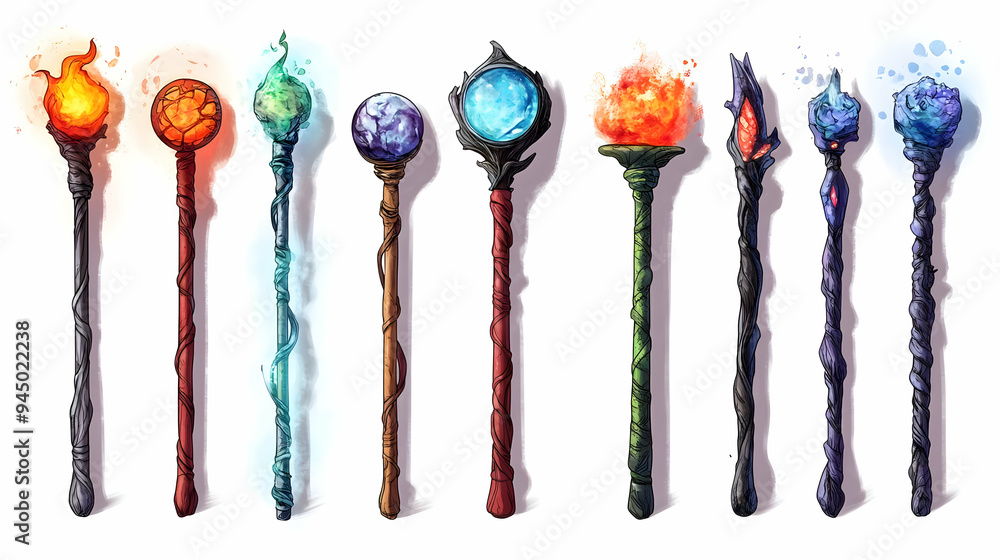
A fun challenge here is to animate a staff in a way that reflects its personality. What if it’s playful, bouncing or twirling when not in use? Or perhaps it’s temperamental, resisting its wielder’s commands until a bond is forged. These small touches can make your staff feel like a living entity, adding layers to your world’s lore.
The Magic Behind the Staff: Systems and Limitations
No guide to staffs would be complete without discussing the magic they channel. Every fantasy world has its own rules, and wands or staffs are no exception. Some systems might tie magic to the staff’s materials—crystals could amplify spells, while silver might repel dark forces. Others could require a symbiotic relationship between the staff and its user, where the staff grows stronger with the mage’s skill or even their emotions. For example, a staff might crack under the strain of uncontrolled power, or it could evolve alongside its wielder, changing form as they master new spells.
Consider the limitations of your staff’s magic. Does it have a finite charge, like a battery, or does it draw power from the environment, such as moonlight or storm energy? Perhaps it’s bound by a code of ethics—only usable for healing, or forbidden from causing harm. These constraints can create compelling narratives. A mage might struggle with a staff that refuses to cast destructive spells, forcing them to find creative solutions. Alternatively, a staff could have a mind of its own, acting independently and adding an element of unpredictability to the story.
For a creative exercise, invent a “staff’s curse” or quirk. What if it whispers secrets to its wielder, or grows heavier the more lies it hears? How would such a trait shape the character’s journey? These details can turn a simple prop into a pivotal element of your world’s magic system.
Conclusion
Wands and staffs are more than just tools—they are characters in their own right, each with a story to tell and a magic to wield. Whether you’re designing a staff for a character, writing a scene where magic comes to life, or simply exploring the lore of fantasy, these objects offer endless possibilities. From their symbolic meanings to their dynamic roles in poses and animations, staffs invite you to think beyond the ordinary and infuse your world with wonder. So, the next time you encounter a staff in a story or artwork, ask yourself: What secrets does it hold? What power does it command? And perhaps, more importantly, what magic could you create with it?
FAQ
What does the 'Three of Staffs' represent in tarot?
It symbolizes growth, expansion, and collaboration.
How can one design a staff in a fantasy setting?
Consider its story, materials, form, and embellishments to reflect its magical properties.
Leave a Reply