Short Answer
In this comprehensive guide, you’ll uncover the mystical world of the Tree of Life Tarot and its deep-rooted connection to Kabbalah. You’ll explore the symbolic layers, the Major and Minor Arcana’s alignment with the Sephiroth, and how this fusion creates a powerful tool for spiritual insight and self-discovery. Whether you’re a seasoned tarot reader or a curious newcomer, this exploration will illuminate the intricate dance between ancient wisdom and modern divination.
The Sacred Union: Tarot and Kabbalah
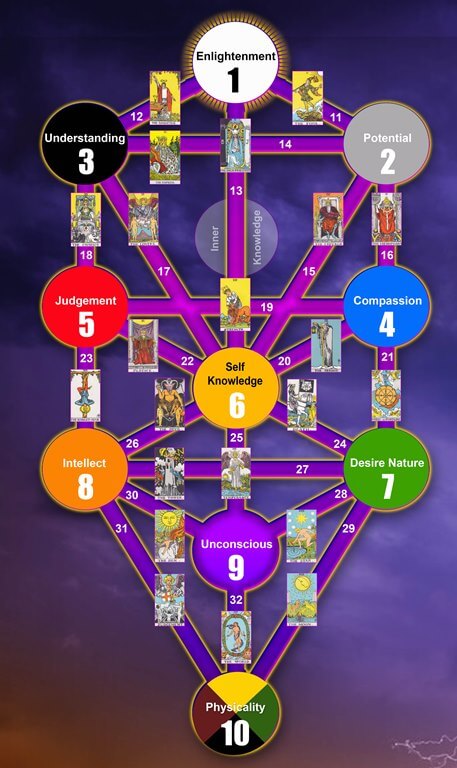
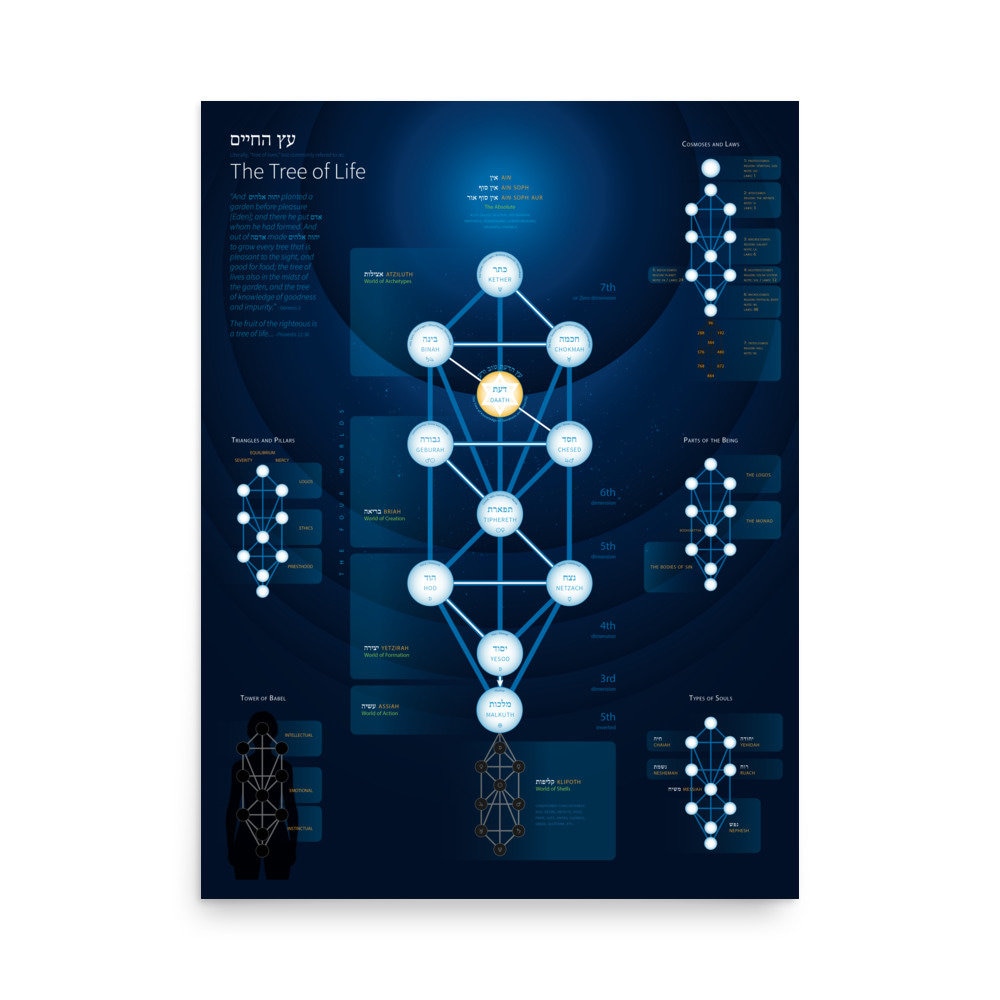
The Tree of Life Tarot represents a profound synthesis of two esoteric traditions: the Tarot’s symbolic imagery and the Kabbalah’s metaphysical framework. The Kabbalah, a Jewish mystical system, maps the divine emanations of God through ten Sephiroth (divine attributes) connected by 22 paths on a diagram resembling a tree. The Tarot, with its 78 cards—22 Major Arcana and 56 Minor Arcana—mirrors this structure. Each Major Arcana card corresponds to a Sephirah or path, while the Minor Arcana’s four suits (Wands, Cups, Swords, Pentacles) reflect the four Kabbalistic worlds: Atziluth (Emanation), Briah (Creation), Yetzirah (Formation), and Assiah (Action). This alignment transforms the Tarot into a living map of spiritual evolution, where each card becomes a stepping stone on the path to enlightenment.
Decoding the Sephiroth: Major Arcana’s Divine Blueprint
The ten Sephiroth of the Kabbalistic Tree of Life serve as the foundation for the Major Arcana’s symbolic journey. Each Sephirah embodies a unique aspect of divine consciousness, and its corresponding Tarot card encapsulates that energy in human terms. For instance, Kether (Crown), the first Sephirah, represents pure divine will and is linked to The Fool card—a symbol of infinite potential and uncharted beginnings. Chokmah (Wisdom), the second Sephirah, aligns with The Magician, embodying the active, creative force of the universe. Binah (Understanding), the third Sephirah, corresponds to The High Priestess, representing intuitive wisdom and the hidden depths of the subconscious.
The journey through the Sephiroth is not linear but cyclical, mirroring the Fool’s path from innocence (The Fool) to integration (The World). Cards like The Lovers (Tiphareth, Beauty) and Death (same Sephirah) highlight the balance between harmony and transformation, while The Tower (Geburah, Severity) and The Star (Chesed, Mercy) illustrate the interplay between destruction and renewal. This dynamic interplay invites readers to see life’s challenges as opportunities for growth, where every card is a teacher.

The Minor Arcana: Kabbalah’s Four Worlds in Action
While the Major Arcana charts the soul’s journey, the Minor Arcana grounds the experience in the practical realities of daily life through the lens of the four Kabbalistic worlds. Each suit corresponds to a world, and the court cards (Page, Knight, Queen, King) represent the energies of that realm. Wands, tied to Atziluth (Emanation), embody the fiery, creative impulse of the divine. Cards like the Ace of Wands signify inspiration and new ventures, while the Ten of Wands reflects the burden of carrying too many responsibilities. Cups, associated with Briah (Creation), delve into emotions and relationships. The Two of Cups speaks of partnership and harmony, while the Five of Cups reveals grief and loss.
Swords, linked to Yetzirah (Formation), cut through illusion with their mental clarity. The Ace of Swords represents breakthroughs and truth, while the Seven of Swords warns of deception or avoidance. Pentacles, tied to Assiah (Action), ground spirituality in the material world. The Three of Pentacles celebrates collaboration and craftsmanship, while the Nine of Pentacles reflects abundance and self-sufficiency. Together, these suits weave a tapestry of human experience, where every challenge and triumph is a reflection of divine order.
The Paths: 22 Connections Between the Sephiroth
The 22 paths connecting the Sephiroth are where the Tarot’s Major Arcana truly shines. Each path is a journey in itself, represented by a card that bridges two Sephiroth. For example, the path between Chokmah (Wisdom) and Binah (Understanding) is The High Priestess, symbolizing the veil between conscious and unconscious realms. The path between Geburah (Severity) and Chesed (Mercy) is The Chariot, illustrating the balance between discipline and compassion. These paths are not just theoretical; they are lived experiences, where each card offers a lesson in navigating life’s complexities.
The paths also reveal the interconnectedness of the Tree of Life. A reading might show a querent moving from Netzach (Victory) to Hod (Splendor) via The Hermit, suggesting a need for introspection and wisdom before achieving success. Alternatively, a journey from Yesod (Foundation) to Malkuth (Kingdom) via The Moon could indicate a transition from illusion to reality, urging the querent to ground their dreams in tangible action. This dynamic interplay makes the Tree of Life Tarot a living, breathing system of guidance, where every card is a mirror reflecting the querent’s inner landscape.
The Unique Appeal: Why the Tree of Life Tarot Resonates
The Tree of Life Tarot’s allure lies in its ability to speak to both the intellect and the soul. For those drawn to esoteric traditions, it offers a structured, symbolic language that transcends cultural and religious boundaries. The Kabbalah’s emphasis on unity and divine order resonates with the Tarot’s archetypal power, creating a system that feels both ancient and timeless. For modern seekers, this fusion provides a framework for understanding life’s mysteries—whether through the lens of psychology, spirituality, or personal growth.
Moreover, the Tree of Life Tarot is inherently visual. The Sephiroth’s geometric arrangement and the cards’ rich symbolism invite contemplation and meditation. A single card, like The Empress, can be interpreted as a mother figure, a creative force, or a representation of the divine feminine, depending on its position in a spread. This multi-layered meaning allows the Tarot to adapt to the querent’s unique journey, making it a deeply personal tool for reflection. Whether used for divination, meditation, or artistic inspiration, the Tree of Life Tarot transcends its components to become a gateway to deeper understanding.
Practical Applications: How to Work with the Tree of Life Tarot
Incorporating the Tree of Life Tarot into your practice begins with familiarizing yourself with its structure. Start by studying the Sephiroth and their corresponding cards, then explore the paths and suits. Meditating on a single card’s position within the Tree can reveal profound insights—for example, pulling The Tower and seeing it align with Geburah might suggest a need for controlled release of pent-up emotions. Spreads designed around the Tree of Life, such as a 10-card spread where each position represents a Sephirah, can provide a holistic view of a situation.
Journaling is another powerful tool. Record your interpretations of each card in relation to its Sephirah, noting how its energy shifts depending on its position in a spread. You might also experiment with creating your own spreads, using the Tree’s structure as a guide. For instance, a spread focusing on the lower three Sephiroth (Yesod, Malkuth, and Hod) could explore the querent’s foundation, practical challenges, and intellectual responses. The key is to approach the Tarot with curiosity and openness, allowing the symbols to speak to you in ways that resonate personally.
Conclusion
The Tree of Life Tarot is more than a deck of cards; it is a sacred map that bridges the mystical and the mundane. By weaving the Tarot’s archetypal language with the Kabbalah’s divine structure, it offers a unique lens through which to view life’s journey. Whether you’re drawn to its esoteric depth, its visual richness, or its practical applications, the Tree of Life Tarot invites you to explore the interconnectedness of all things. It reminds us that every card, every path, and every Sephirah is a reflection of the divine within and around us—a testament to the eternal dance between spirit and matter. As you delve deeper into this system, you may find that the Tarot becomes not just a tool for divination, but a mirror for the soul’s evolution.
Leave a Reply