Short Answer
Embarking on your tarot journey can feel like stepping into a mystical library where each card whispers secrets of the universe. This guide is your lantern in the shadows, illuminating the path to understanding the tarot’s profound symbolism. Whether you’re drawn to the Major Arcana’s grand narratives or the Minor Arcana’s everyday tales, you’ll uncover how these 78 cards weave a language of intuition, fate, and self-discovery. By the end, you’ll not only grasp the meanings behind each card but also learn how to interpret their messages in your life. Let’s unravel the tapestry of tarot together, where every symbol is a thread connecting you to deeper truths.
The Tarot’s Language: A Symphony of Symbols
The tarot is more than a deck of cards—it’s a visual symphony where every image, color, and figure plays a note in a grand composition. The Major Arcana, with its 22 cards, acts as the spine of this symphony, each card representing a pivotal life lesson or archetypal journey. From the Fool’s leap into the unknown to the World’s completion of a cycle, these cards mirror the human experience in its rawest form. Meanwhile, the Minor Arcana’s 56 cards—divided into four suits—mirror the rhythms of daily life. Cups reflect emotions, Swords cut through intellect, Pentacles ground us in material reality, and Wands ignite our passions. Together, they form a language that speaks to the heart, mind, and soul.
Major Arcana: The Hero’s Journey Unfolded
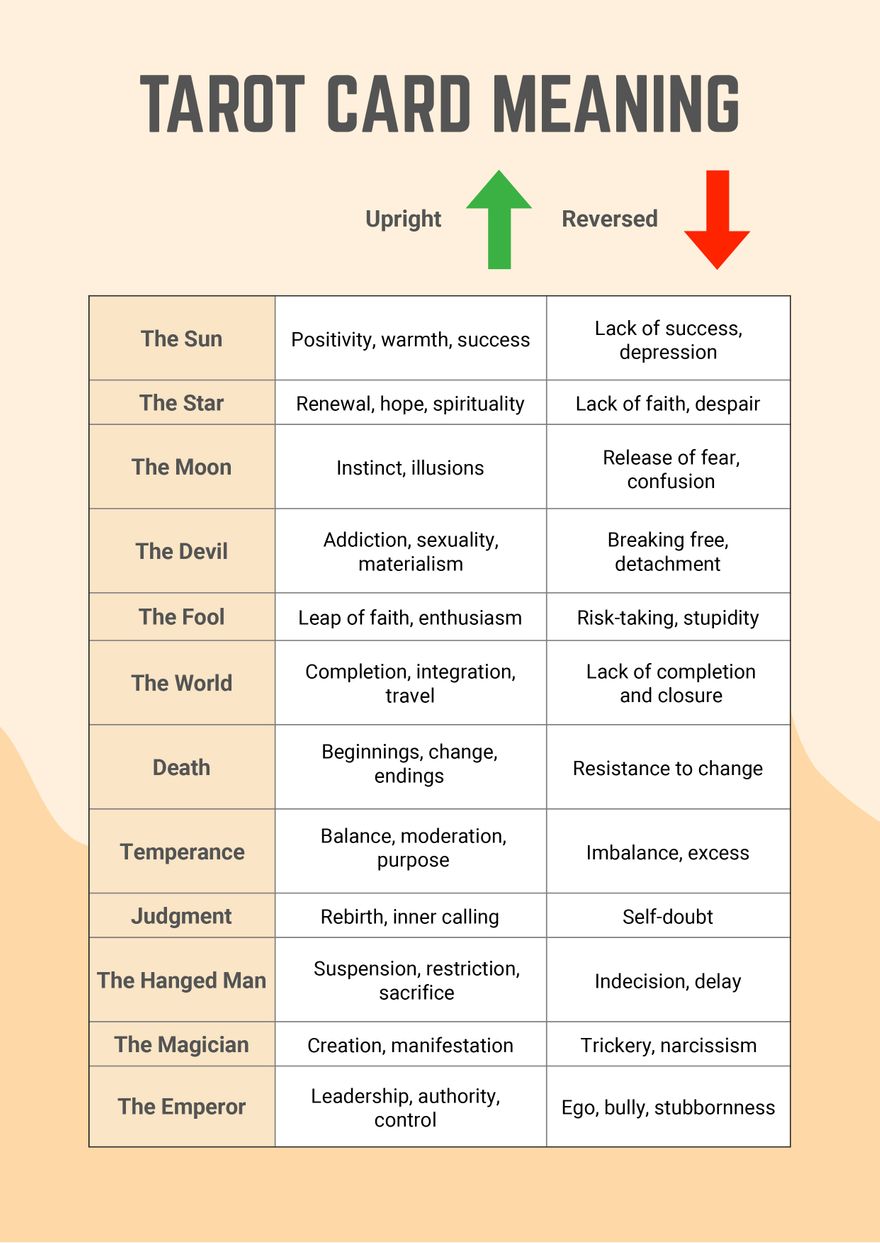
The Major Arcana is your personal odyssey, a map of the soul’s evolution. The Fool, card zero, embodies pure potential—stepping off a cliff with a carefree spirit, unaware of the adventures ahead. As you progress through the deck, you encounter the Magician, who wields tools of creation, and the High Priestess, guardian of hidden knowledge. The Empress and Emperor represent nurturing and structure, while the Lovers card delves into choices and harmony. Death, often misunderstood, symbolizes transformation, not an end. The Tower’s lightning strike shatters illusions, paving the way for renewal. Each card is a chapter in a story you’re already living, inviting you to recognize your role in the narrative.
Minor Arcana: The Colors of Everyday Magic
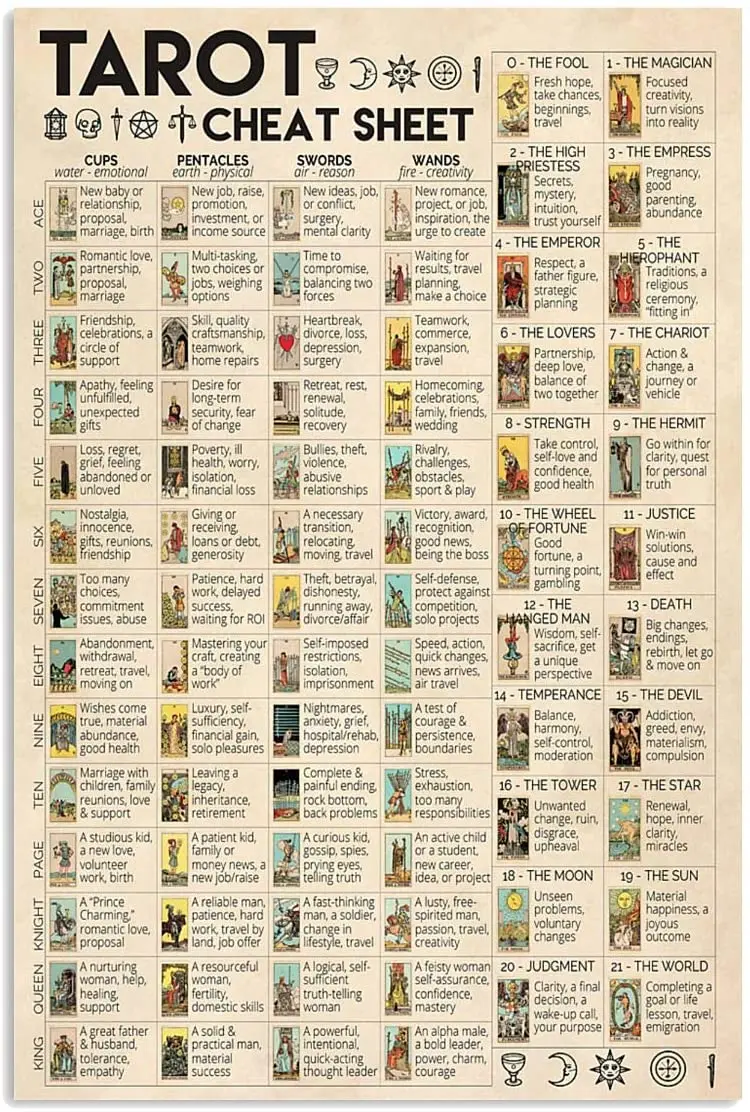
Where the Major Arcana sets the stage, the Minor Arcana paints the details of your daily life. The suit of Cups is the ocean of your emotions—love, joy, sorrow, and intuition swirl within its depths. Drawing the Three of Cups? Celebrate friendships. The Five of Cups? Grieve, but don’t forget the blessings behind you. Swords, with their sharp edges, slice through confusion and conflict. The Ace of Swords is clarity cutting through fog, while the Ten of Swords marks a painful but necessary ending. Pentacles root you in the tangible world—wealth, health, and stability. The Queen of Pentacles cradles abundance, while the Knight of Pentacles plods steadily toward long-term goals. Wands, the suit of fire, are all about passion and inspiration. The Page of Wands bursts with new ideas, while the King of Wands commands them with charisma. These cards are your companions in the mundane, revealing the magic hidden in routine.
Reading the Cards: Intuition Meets Structure
Tarot reading is a dance between intuition and structure. While memorizing card meanings provides a foundation, your inner voice is the compass that guides you. Start by shuffling the deck while focusing on a question or situation. Pull a single card for daily guidance, or lay out a spread—like the Celtic Cross—for deeper insight. Observe the imagery: What emotions arise? Does a figure’s gaze follow you? Colors can evoke feelings—red for passion, blue for calm. Notice the card’s position in the spread. A reversed card might indicate blocked energy or a need for reflection. Trust your gut. If a card’s traditional meaning doesn’t resonate, explore its personal symbolism. The tarot is a mirror; its truest reflections are the ones you see in yourself.
Common Misconceptions: Dispelling the Shadows
Tarot is often shrouded in mystery, and misconceptions can cloud its light. One myth is that the tarot predicts the future with certainty. In reality, it offers guidance, highlighting potential paths and hidden influences. The cards don’t dictate fate; they illuminate choices. Another fallacy is that you need psychic abilities to read tarot. While intuition enhances readings, anyone can learn the language of symbols with practice. Some fear the Death card or the Tower, associating them with doom. Yet these cards are about transformation—endings that make way for new beginnings. The tarot doesn’t judge or condemn; it reflects back what you already know, often in ways you’ve overlooked.
Ethics and Respect: Honoring the Tarot’s Power
With great insight comes great responsibility. Approach the tarot with respect, recognizing its potential to influence thoughts and decisions. Avoid using it to manipulate or control others. When reading for someone else, frame interpretations as possibilities, not absolutes. The tarot thrives in a space of honesty and openness. If a reading feels heavy or unsettling, take a break and return with a clear mind. Cleanse your deck regularly—smoke, moonlight, or salt can clear lingering energies. Store your cards in a sacred space, like a silk pouch or a wooden box, to honor their wisdom. The tarot is a tool, but it’s also a partner in your growth, deserving of care and reverence.

Your Tarot Journey: Where to Begin
Start small. Draw one card each morning and reflect on its message. Keep a journal to track patterns and personal interpretations. Study the cards’ traditional meanings, but let your intuition guide you. Join tarot communities to share insights and learn from others. Experiment with spreads—try a simple three-card layout for past, present, and future, or a one-card pull for daily guidance. Don’t rush. The tarot is a lifelong companion, revealing new layers with each reading. Embrace the process, and you’ll find that the cards don’t just predict your path—they help you walk it with confidence and curiosity.
Conclusion
The tarot is a gateway to self-discovery, a mirror that reflects your inner world with unflinching honesty. It’s a language of symbols that speaks to the subconscious, offering clarity in chaos and comfort in uncertainty. Whether you’re drawn to its mystical allure or its practical wisdom, the tarot invites you to explore the depths of your psyche and the vastness of your potential. Remember, the cards are not fortune-telling devices but tools for introspection and growth. As you delve deeper, you’ll find that the real magic lies not in the cards themselves, but in the insights they help you uncover. So, shuffle the deck, ask a question, and let the journey begin—one card at a time.
FAQ
What is tarot?
Tarot is a deck of cards used for divination and self-reflection, consisting of the Major and Minor Arcana.
How do I read tarot cards?
Start by focusing on a question, shuffle the deck, and draw cards to interpret their meanings based on traditional symbolism and your intuition.
What does the Death card symbolize?
The Death card represents transformation and new beginnings rather than a literal end.
Can anyone learn to read tarot?
Yes, anyone can learn tarot by studying the cards and practicing their interpretations.
Leave a Reply