Short Answer
Welcome to a journey where the cards are flipped, and the story takes a twist. In this guide, you’ll uncover the hidden layers of reversed tarot meanings—where upside-down isn’t bad, it’s just different. You’ll learn how to interpret reversed cards with confidence, understand their symbolic language, and embrace the nuance they bring to your readings. Whether you’re a seasoned reader or just starting, this exploration will deepen your connection with the tarot and reveal the magic in the margins.
The Tarot’s Dance: Why Upside-Down Isn’t Bad
At first glance, a reversed tarot card might seem like a stumbling block—a sign that the universe is throwing a curveball. But what if it’s not a stumble at all? What if it’s a deliberate pause, a whispered secret, or a hidden door? Reversed cards are not warnings; they’re invitations. They ask us to look closer, to listen deeper, and to recognize that the tarot’s wisdom isn’t always delivered in bold, upright strokes. Sometimes, it’s in the subtle shifts, the hesitations, and the quiet revolutions that shape our path.
The tarot is a mirror, and like any mirror, it reflects not just what’s in front of it but the angles at which we hold it. A reversed card is simply the tarot’s way of showing you a different perspective—one that might be more introspective, more challenging, or more transformative than its upright counterpart. It’s not about failure; it’s about evolution. It’s not about loss; it’s about rediscovery. The tarot doesn’t judge; it reflects. And sometimes, the reflection is upside-down because that’s the angle from which the truth is most visible.
Decoding the Language of Reversed Cards
Reversed tarot cards speak in a language of subtlety and suggestion. While upright cards often deliver clear messages, reversed cards thrive in the realm of possibility. They’re like a poet’s metaphor—open to interpretation, rich in layers, and never one-dimensional. To decode them, you’ll need to tune into their rhythm, their pauses, and their unspoken hints.
For example, the upright Three of Cups celebrates joy, community, and celebration. But reversed, it might whisper of gossip, exclusion, or a celebration that feels hollow. The upright Five of Pentacles speaks of hardship and feeling left out in the cold. Reversed, it could hint at resilience, finding warmth in unexpected places, or even a moment of unexpected generosity. The key is to ask: What’s the opposite of this energy? What’s the shadow side? What’s the unspoken truth?
Reversed cards often highlight internal struggles, unresolved emotions, or areas where growth is still needed. They’re not here to discourage you; they’re here to guide you toward the parts of your story that need attention. Think of them as the tarot’s way of saying, “Pay attention to this. It matters.”
The Art of Reading Reversed Cards: Techniques That Work
Reading reversed cards is less about rigid rules and more about intuition. Here are a few techniques to help you navigate their depths:
- Intuitive Pull: Let your gut lead. If a reversed card feels positive to you, trust that feeling. The tarot is a personal language, and your intuition is its translator.
- Contextual Clues: Look at the surrounding cards. Are they mostly upright? Mostly reversed? The energy of the spread can shift the meaning of a single card.
- Elemental Dignities: Consider the elements of the cards around the reversed one. Fire and water might soften its impact, while earth and air could amplify it.
- Card Imagery: Study the artwork. Is the reversed card showing a figure turned away? A broken object? A hidden door? These visual cues can reveal its message.
- Question the Opposite: Ask, “What’s the opposite of this card’s upright meaning?” Then, explore the gray areas in between.
Remember, there’s no single “correct” way to read reversed cards. The tarot is a conversation, and reversed cards are the parts where the conversation takes a detour—sometimes to a more interesting place.
Common Reversed Cards and Their Hidden Messages
Some reversed cards appear so frequently that they’ve become almost like old friends—each with their own personality and quirks. Here’s a quick guide to a few of the most common reversed cards and what they might be trying to tell you:
The Fool Reversed
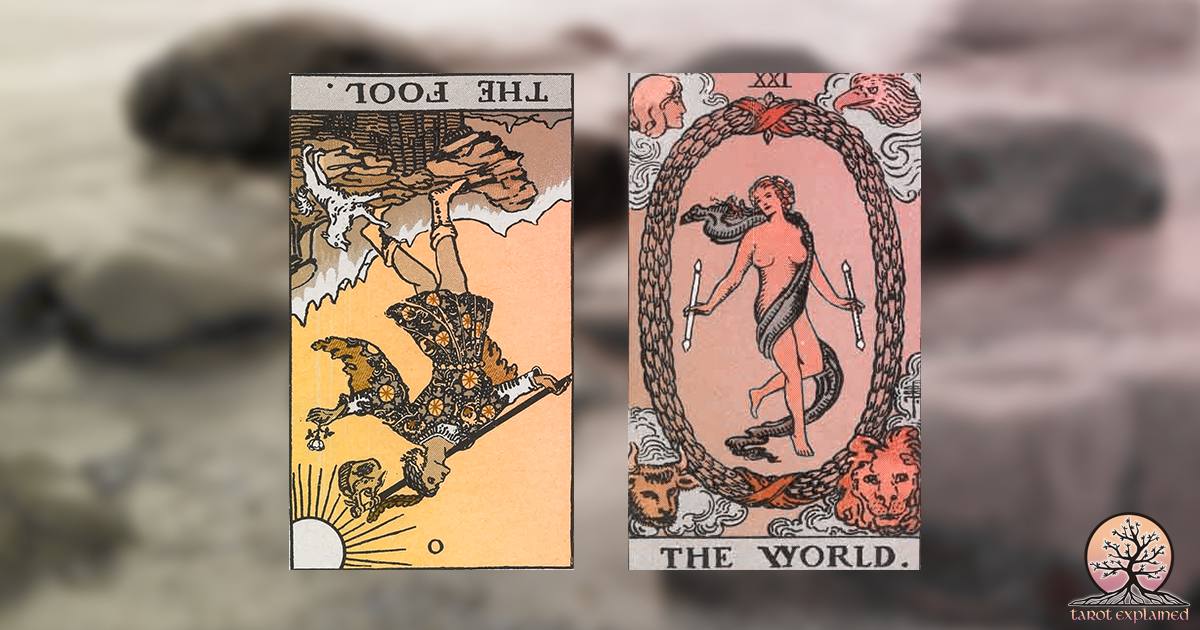
The Fool reversed isn’t reckless; it’s cautious. It might be asking you to pause before jumping into a new adventure, to weigh the risks, or to recognize that not every leap is worth taking. It’s not about fear—it’s about wisdom. The Fool reversed could also signal a lack of direction, a need to ground yourself before moving forward, or even a missed opportunity that still lingers in your mind.
The Lovers Reversed
When The Lovers appear reversed, it’s rarely about love gone wrong. Instead, it’s about choices, alignment, and self-love. Are you staying in a relationship that doesn’t serve you? Are you ignoring your own desires for the sake of harmony? The Lovers reversed asks you to look inward: What do you truly want? What are you willing to sacrifice? It might also hint at a relationship that’s more about obligation than passion—or a decision that’s tearing you apart.
The Tower Reversed
The Tower is often feared for its destruction, but reversed, it’s about avoiding collapse. It could mean that you’re sensing a storm on the horizon but haven’t yet reached the breaking point. It’s a warning to prepare, to fortify, or to make changes before the inevitable happens. The Tower reversed might also suggest that you’re holding onto something that’s already crumbling—whether it’s a belief, a relationship, or a situation—and it’s time to let go.
The Ten of Swords Reversed
Upright, the Ten of Swords is the ultimate “rock bottom” card. Reversed, it’s about recovery, resilience, and the slow climb back. It might indicate that you’re healing from a painful ending, that you’re refusing to let a past failure define you, or that you’re finding strength in vulnerability. The reversed Ten of Swords is a reminder that even the darkest nights don’t last forever—and neither do the swords that wound us.
Embracing the Shadow: Why Reversed Cards Are Your Allies
Reversed cards are not your enemies; they’re your allies in disguise. They show you the parts of your story that are still being written, the lessons that haven’t been learned, and the growth that’s still to come. They’re the tarot’s way of saying, “You’re not done yet.”
Think of reversed cards as the tarot’s version of a plot twist. Just when you think you know how the story ends, they flip the script. They challenge you to see things from a new angle, to question your assumptions, and to find meaning in the mess. They’re not here to scare you; they’re here to surprise you.
In many ways, reversed cards are like the moon—often overlooked in favor of the sun, but just as powerful in their own right. They bring depth, mystery, and a quiet intensity to your readings. They remind you that life isn’t always black and white, and neither is the tarot. Sometimes, the most profound insights come from the places we least expect.
Conclusion
The tarot is a living, breathing entity, and like all living things, it thrives on balance. Upright cards shine a light on what’s clear and present, while reversed cards illuminate what’s hidden, what’s evolving, and what’s still in shadow. They’re not a sign of failure; they’re a sign of depth. They’re not a warning; they’re an invitation to explore further.
So the next time you pull a reversed card, don’t flinch. Instead, lean in. Ask questions. Listen closely. The tarot is speaking to you in a language of whispers and shadows, and the message it’s delivering might just be the one you’ve been waiting for. Upside-down isn’t bad—it’s where the magic happens.
FAQ
What is the significance of reversed tarot cards?
Reversed tarot cards signify a different or more subtle meaning compared to their upright counterparts, often highlighting internal struggles, delays, or alternative viewpoints.
How do reversed cards affect tarot readings?
They add depth and nuance to readings by encouraging deeper reflection and consideration of less obvious messages.
Can reversed cards indicate positive outcomes?
Yes, reversed cards can indicate recovery, resilience, caution, or opportunities for growth rather than purely negative outcomes.
Leave a Reply