Short Answer
Embarking on your tarot journey can feel like stepping into a mystical library where each card whispers ancient secrets and reveals hidden truths about life’s journey. Whether you’re drawn to the tarot for guidance, self-discovery, or sheer fascination with its symbolic language, this beginner’s guide will illuminate the path ahead. You’ll uncover the foundational meanings of the Major Arcana, explore the nuanced messages of the Minor Arcana, and learn how to interpret spreads with confidence. By the end, you’ll not only understand the cards but also feel empowered to weave their wisdom into your daily life. Let’s unlock the door to this enchanting world together.
The Tarot as a Mirror: Why These Cards Speak to the Soul
The tarot is far more than a deck of illustrated cards—it’s a mirror that reflects the human experience in all its complexity. Each card is a snapshot of life’s triumphs, challenges, and quiet moments, framed in vivid symbolism that transcends language. The Major Arcana, with its 22 cards, acts as a narrative spine, charting the hero’s journey from innocence (The Fool) to enlightenment (The World). Meanwhile, the Minor Arcana—divided into four suits—grounds these grand themes in everyday reality, offering practical insights into emotions, relationships, and obstacles. Together, they create a language that resonates with the subconscious, making the tarot a uniquely personal tool for introspection.
Decoding the Major Arcana: The Hero’s Journey in 22 Steps
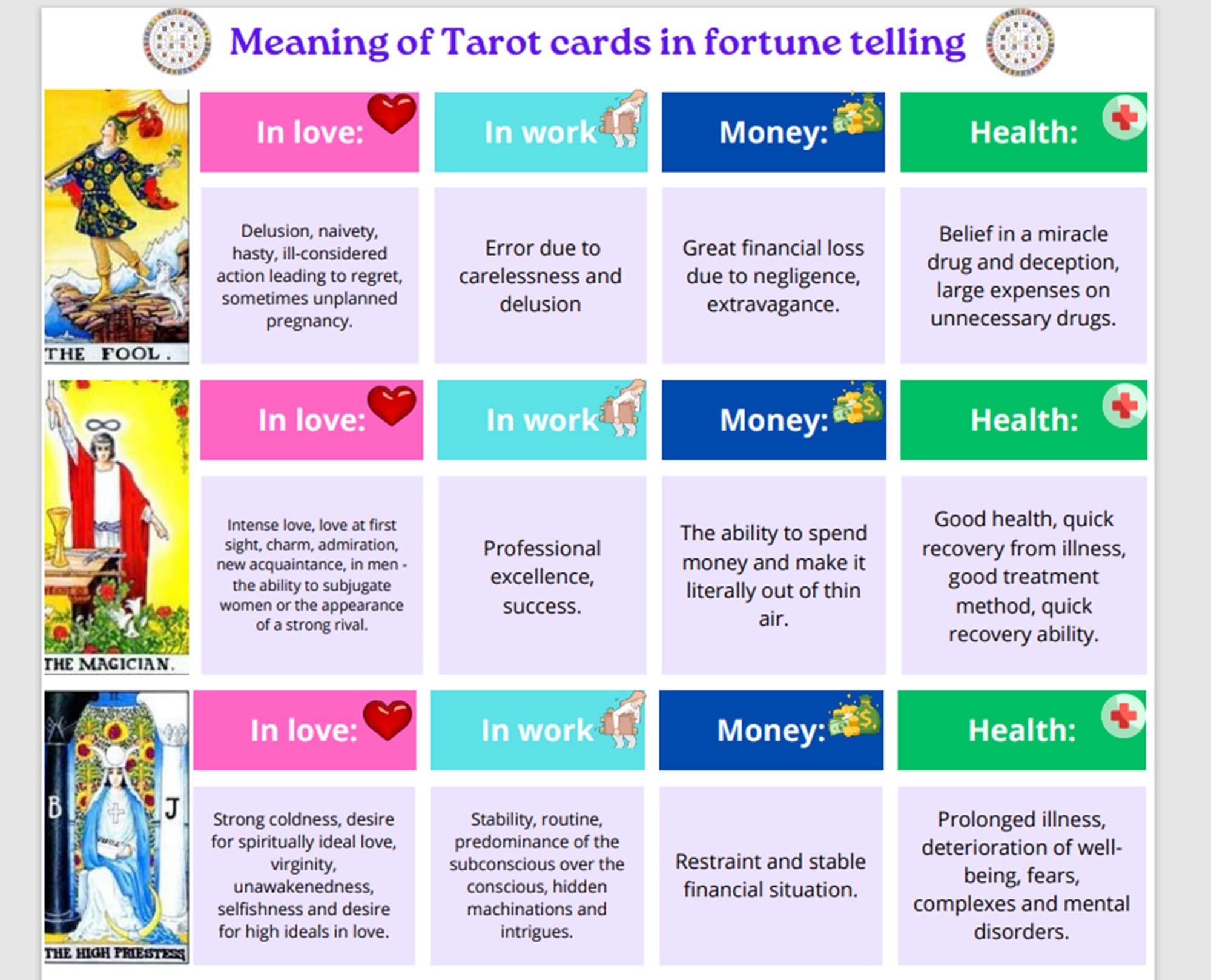
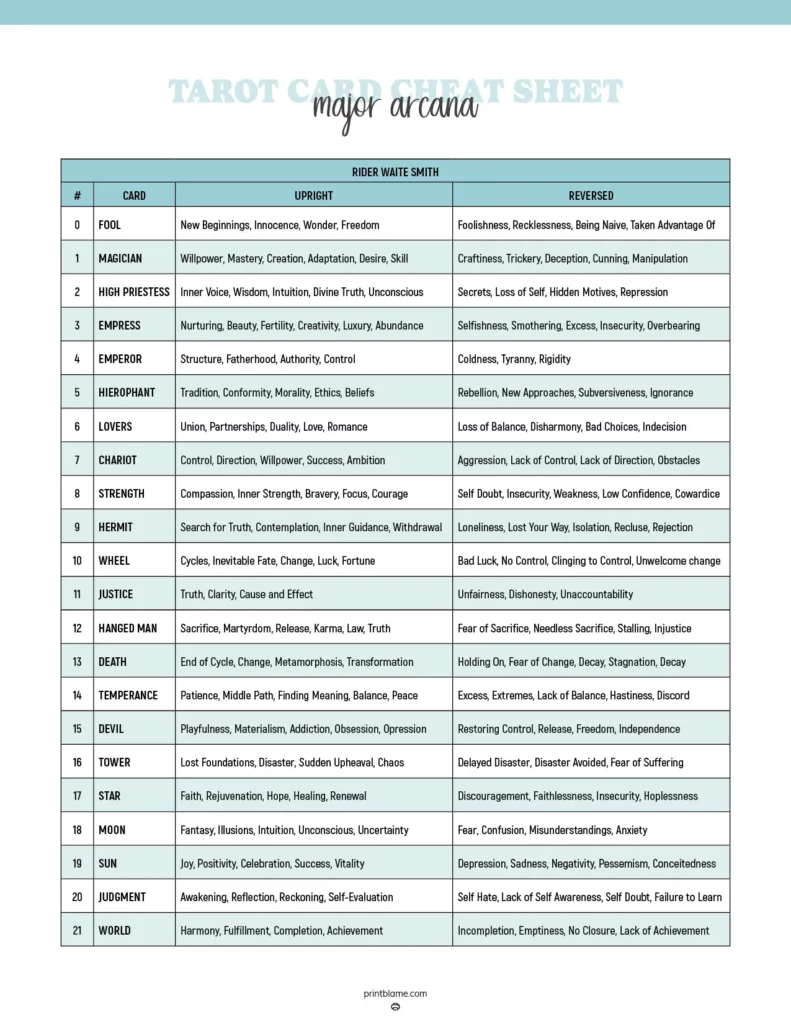
The Major Arcana cards are the tarot’s most iconic figures, each representing a pivotal moment in the universal human experience. The Fool, often depicted as a carefree traveler on the edge of a cliff, embodies new beginnings, spontaneity, and the leap of faith required to start an adventure. In contrast, The Magician stands at a table laden with tools, symbolizing manifestation and the power to turn dreams into reality through skill and intention. The High Priestess, draped in mystery, guards the veil between conscious and subconscious, urging you to trust your intuition. As you progress through the Major Arcana, cards like The Lovers (choices and harmony), Death (transformation), and The Star (hope) weave a tapestry of growth, loss, and renewal. These cards don’t predict fate but illuminate the patterns shaping your path.
The Minor Arcana: Where Magic Meets Everyday Life
While the Major Arcana sets the stage for life’s grand themes, the Minor Arcana—comprising 56 cards divided into four suits (Wands, Cups, Swords, and Pentacles)—brings the tarot into the realm of the tangible. Each suit corresponds to an element and a facet of human experience:
- Wands (Fire): Creativity, passion, and ambition. These cards ignite the spark of inspiration and urge you to pursue your goals with fiery determination.
- Cups (Water): Emotions, relationships, and intuition. Cups reveal the depths of your heart, from joy (Ace of Cups) to heartbreak (Three of Cups reversed).
- Swords (Air): Intellect, conflict, and communication. Swords cut through illusion, challenging you to face harsh truths or wield words with precision.
- Pentacles (Earth): Material world, finances, and stability. These cards ground you in reality, from the promise of abundance (Ace of Pentacles) to the weight of financial stress (Five of Pentacles).
Each suit progresses from Ace (potential) to Ten (completion), with Court Cards (Page, Knight, Queen, King) adding layers of personality and energy. For example, the Queen of Swords might represent a sharp-witted mentor, while the Knight of Wands embodies restless, adventurous energy. The Minor Arcana thrives on context—pairing cards with their neighbors to reveal the full story.
Reading Tarot Spreads: From Simple to Sacred
A tarot spread is a layout that assigns positions to cards, creating a framework for interpretation. Beginners often start with the Single-Card Pull, perfect for daily guidance or quick insights. For deeper dives, the Three-Card Spread (Past, Present, Future) offers a linear narrative, while the Celtic Cross—a 10-card spread—unravels complex situations with layers of challenge, influence, and outcome. To read a spread:
- Shuffle intuitively: Let your hands guide the cards, infusing them with your energy.
- Lay out the spread: Place cards in their designated positions, noting their upright or reversed orientation.
- Observe the story: Look for patterns, contrasts, and recurring symbols. For example, a reversed Ten of Cups (family harmony) might highlight unresolved tension in relationships.
- Trust your gut: The tarot is a conversation, not a test. If a card’s traditional meaning doesn’t resonate, explore its imagery or emotional pull.
Remember, reversals (cards upside down) aren’t “bad”—they often signal internalized energy, delays, or a need for introspection. For instance, the Five of Pentacles upright may warn of financial hardship, while reversed, it could suggest resilience or unexpected support.
Tarot as a Tool for Self-Discovery: Beyond Fortune-Telling
The tarot’s true magic lies in its ability to foster self-awareness. It doesn’t dictate your future but highlights possibilities and subconscious patterns. Use it to:
- Clarify decisions: Pull a card before making choices to uncover hidden motivations or fears.
- Explore relationships: A spread focused on a partnership might reveal unspoken needs or areas for growth.
- Navigate challenges: Cards like The Tower (sudden upheaval) or Eight of Swords (feeling trapped) can validate struggles and inspire solutions.
- Celebrate growth: Revisit past readings to track your evolution—notice how cards like The Chariot (determination) or Strength (inner courage) appear at pivotal moments.
Keep a tarot journal to record your interpretations, synchronicities, and evolving relationship with the cards. Over time, you’ll develop a personal lexicon that speaks directly to your soul.
Common Pitfalls and How to Avoid Them
Even seasoned readers stumble, but these tips will help you navigate the tarot’s nuances:
- Over-reliance on guides: While reference books are helpful, prioritize your intuition. If a card’s imagery speaks to you differently, honor that.
- Fear of reversals: Reversals add depth. Instead of seeing them as “negative,” ask: “What is this energy trying to teach me?”
- Rigid interpretations: Context matters. A Three of Cups in a career reading might hint at collaboration, not just celebration.
- Ignoring the big picture: Focus on the spread’s overall narrative, not just individual cards. A Death card followed by The Star suggests transformation leading to hope.
Conclusion: Your Tarot Journey Awaits
The tarot is a living, breathing entity—one that grows with you. As you shuffle the deck for the first time, remember that there are no “wrong” ways to engage with it. Whether you’re seeking clarity, inspiration, or a playful exploration of symbolism, the cards are ready to meet you where you are. Start with a single card, let its message marinate, and gradually expand your practice. Over time, you’ll find that the tarot isn’t just a tool for divination; it’s a companion on the journey to understanding yourself and the world around you. So draw a card today, and let the adventure begin.
FAQ
What is the significance of the Major Arcana in tarot?
The Major Arcana consists of 22 cards that represent key life events and spiritual lessons, acting as a narrative spine in tarot readings.
How do I start reading tarot cards as a beginner?
Begin by familiarizing yourself with the meanings of the cards, practicing simple spreads like the Single-Card Pull, and trusting your intuition during readings.
What should I do if a card's meaning doesn't resonate with me?
Explore the imagery and emotional pull of the card instead of relying solely on traditional interpretations; tarot is a personal journey.
Leave a Reply