Short Answer
Have you ever drawn a spread in tarot that left you staring blankly at the cards, wondering, “What does this *actually* mean when they’re all together?” You’re not alone. Many readers—beginners and seasoned ones alike—get tripped up when multiple cards interact. The good news? Tarot combinations don’t have to feel like decoding an ancient cipher. With the right approach, you can decode multiple cards fast, turning confusion into clarity and uncertainty into insight. In this guide, you’ll learn how to interpret tarot combinations with confidence, using simple yet powerful techniques that work whether you’re pulling two cards or ten. By the end, you’ll see spreads not as a puzzle, but as a story waiting to be told.
Why Tarot Combinations Matter: More Than the Sum of Their Parts
When you draw a single tarot card, its meaning is clear—more or less. But when two or more cards appear together, their energies blend, clash, or amplify each other in ways that can shift the entire message. Think of it like mixing paint: red plus blue doesn’t just make two colors—it creates purple. Similarly, the Fool next to the Tower doesn’t just mean “new beginnings and sudden change”—it suggests a leap of faith that could lead to upheaval. Ignoring these combinations means missing the deeper narrative your deck is trying to share. Whether you’re reading for yourself or others, understanding how cards interact gives your readings depth, nuance, and real-world relevance. It turns a static snapshot into a dynamic conversation between your question and the universe’s response.
Start with the Core: Understand Individual Card Meanings First
Before diving into combinations, make sure you know each card’s standalone meaning. This isn’t just about memorizing keywords—it’s about internalizing the essence of each card. For example, The High Priestess represents intuition and hidden knowledge, while The Chariot embodies willpower and control. When these two appear together, their contrast can highlight a tension between trusting your gut versus taking decisive action. Without this foundation, combinations become guesswork. Use flashcards, journal your pulls, or work with a guidebook until the cards feel like old friends. Only then can you truly see how they dance together when they share the table.
Look for Patterns: How Cards Interact in Spreads
Not all combinations are created equal. Some cards naturally amplify each other, while others create friction. Pay attention to these key interactions:
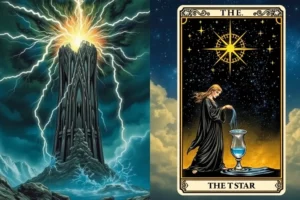
- Supportive Pairings: Cards like The Sun and The Star often reinforce each other, suggesting hope, joy, and renewal. Their energies align, making the message clearer and more uplifting.
- Contrasting Forces: The Emperor and The Empress together highlight a balance between structure and nurturing—ideal for questions about leadership or relationships.
- Clashing Energies: The Tower and Ten of Cups can signal a painful breakdown leading to emotional fulfillment, but only if the querent is willing to face the disruption.
Position in the spread also matters. A card in the past position influencing a card in the future can show how past actions shape outcomes, while a card in the outcome position clarifying a central challenge. Always consider the flow of energy across the layout, not just the cards themselves.
Use Elemental Dignities: A Quick Way to Gauge Harmony
Elemental dignities are a classic tool for assessing how cards interact based on their elemental associations—Fire, Water, Air, Earth. For example:
- Fire (Wands) + Water (Cups): These elements can balance each other, but may also create emotional tension or impulsive decisions.
- Air (Swords) + Earth (Pentacles): This pairing often brings clarity to practical matters, like planning or problem-solving.
- Fire + Fire: High energy, but can lead to burnout or recklessness if not grounded.
By assigning each card to an element (check your guidebook), you can quickly assess whether the combination is harmonious, challenging, or neutral. This method is especially helpful for beginners who want a structured way to interpret spreads without overcomplicating things.
Storytelling Over Keywords: Craft a Narrative from the Cards
Instead of listing meanings, try telling a story. Imagine the cards as characters in a scene. What is The Magician doing next to The Hanged Man? Perhaps the Magician is trying to manifest something, but the Hanged Man suggests a pause—a time to reflect before taking action. Or maybe The Lovers and The Devil together reveal a relationship that’s both passionate and toxic. By framing combinations as a mini-drama, you tap into your intuitive understanding of human nature and symbolism. This approach makes readings more engaging and relatable, especially for clients who want real-life insights, not just abstract interpretations.
Practice with Simple Two-Card Spreads
Mastering combinations starts with small steps. Use a simple two-card pull—past and present, or situation and challenge—and focus on how the cards relate. Ask yourself:
- Do they support each other or create conflict?
- Is one card modifying the meaning of the other?
- What emotion or theme emerges when they’re together?
Keep a journal of these pulls. Over time, you’ll start to see patterns and build a personal “dictionary” of combinations that resonate with you. This practice builds confidence and trains your eye to spot connections quickly, even in complex spreads.
Watch for Reversals: When Upright and Reversed Cards Collide
Reversed cards add another layer to combinations. A reversed card can soften, intensify, or reverse the meaning of its upright counterpart. For example, The Empress reversed next to The Emperor upright might suggest a lack of nurturing in a structured environment—like a workplace that values results over well-being. Pay attention to whether reversals are emphasizing blockages, internal struggles, or subconscious influences. They often reveal the hidden side of a situation, making the combination more nuanced and accurate.
Use Technology as a Helper, Not a Replacement
While tarot is deeply intuitive, tools can help decode combinations faster. Apps and online calculators can suggest possible meanings based on card pairings, giving you a starting point. However, always trust your gut over any external source. For example, a calculator might pair The Chariot and Three of Swords as “victory through heartbreak,” but your intuition might sense a journey toward emotional resilience. Use technology to spark ideas, not dictate them.
Common Pitfalls to Avoid
Even experienced readers can fall into traps when interpreting combinations. Avoid these mistakes:
- Overcomplicating: Not every card needs a deep analysis. Sometimes, the combination is simply confirming a clear message.
- Ignoring Context: Always consider the querent’s question and life situation. A combination that means one thing in a career reading might mean something else in a love reading.
- Forcing Meanings: If a combination doesn’t resonate, don’t force it. Trust that the right interpretation will come with time and reflection.
Conclusion
Tarot combinations don’t have to feel like a mystery wrapped in an enigma. With practice, patience, and a few simple tools, you can decode multiple cards fast and turn confusion into insight. Start by mastering individual card meanings, then observe how they interact in pairs and spreads. Use elemental dignities and storytelling to add depth, and always keep your intuition at the forefront. Remember, the goal isn’t to become a perfect decoder—it’s to become a confident storyteller who can help others (or yourself) see the bigger picture. Every combination is a conversation between the cards and the reader. The more you listen, the clearer the message becomes. So next time you pull a spread, don’t just look at the cards—listen to what they’re saying together. The story is already there. You just have to read it.
FAQ
What are tarot combinations?
Tarot combinations refer to the interpretation of multiple cards drawn together in a spread, where their meanings interact to create a deeper, more nuanced message.
Why is it important to understand individual card meanings before interpreting combinations?
Knowing each card’s standalone meaning provides a foundation that helps readers accurately interpret how cards influence each other in combinations.
How do elemental dignities help in reading tarot combinations?
Elemental dignities assess harmony or tension between cards based on their elemental associations (Fire, Water, Air, Earth), helping to quickly gauge the nature of their interaction.
Can reversed cards affect tarot combinations?
Yes, reversed cards can modify, soften, intensify, or reverse the meaning of their upright counterparts, adding complexity to the combination’s interpretation.
Should technology replace intuitive tarot reading?
No, technology can be a helpful tool to suggest interpretations, but intuition should always guide the final meaning in a tarot reading.
Leave a Reply