Short Answer
Welcome to a deep exploration of the Death Tarot card—one of the most misunderstood yet profoundly transformative cards in the tarot deck. In this guide, you’ll uncover the rich symbolism, metaphorical depth, and life-changing insights this card offers. Whether you’re a seasoned tarot reader or a curious beginner, you’ll gain a clearer understanding of how Death isn’t about literal endings, but about powerful transitions, rebirth, and personal evolution. By the end, you’ll see why this card is a beacon of hope in times of change, and how its message can guide you through life’s inevitable cycles of transformation.
The Death Tarot Card: More Than Meets the Eye
The Death card is the thirteenth card in the Major Arcana and is often depicted with a skeletal figure on horseback, carrying a black banner adorned with a white rose—a stark yet elegant contrast. This imagery isn’t meant to evoke fear, but rather to symbolize the end of one phase and the beginning of another. The skeletal figure represents the impermanence of life, while the horse signifies forward motion and progress. The white rose on the banner is a symbol of purity and the promise of new beginnings, even in the face of endings.
At its core, the Death card is about transformation. It signals the shedding of old habits, beliefs, or relationships that no longer serve your highest good. This isn’t a card of physical death, but of metaphorical death—the kind that paves the way for growth. Think of it as the autumn season, where leaves fall to make room for new growth in the spring. The Death card invites you to embrace change, even when it feels uncomfortable or uncertain.
In readings, the Death card often appears when you’re standing at a crossroads. It may indicate the end of a job, a relationship, or a phase of life, but it’s always followed by the promise of renewal. The key is to trust the process and recognize that endings are necessary for new beginnings. This card encourages you to release what no longer aligns with your path and step into a future that’s more aligned with your true self.
Symbolism and Imagery: Decoding the Visual Language
The Death card’s visual language is rich with meaning, each element offering a clue to its deeper message. The skeletal rider, often depicted in black armor, represents the inevitability of change and the universal truth that all things must pass. The horse, usually white or pale, symbolizes purity and the natural progression of life’s cycles. Its movement forward suggests that transformation is not only inevitable but also purposeful.
The black banner with the white rose is one of the most striking symbols. The black background represents the unknown, the mystery of what comes next, while the white rose stands for hope, innocence, and the potential for rebirth. This duality highlights the card’s theme: even in darkness, there is light and the promise of renewal. The rising sun in the background of some depictions further emphasizes this idea, signaling a new dawn after a long night.
Other common elements include a river or body of water, symbolizing the flow of life and the passage of time. The river may also represent the need to let go of the past and allow life to carry you forward. In some decks, a child or a young figure is seen watching the rider, symbolizing innocence and the potential for a fresh start. These symbols collectively paint a picture of transition—not as something to fear, but as a natural and necessary part of growth.
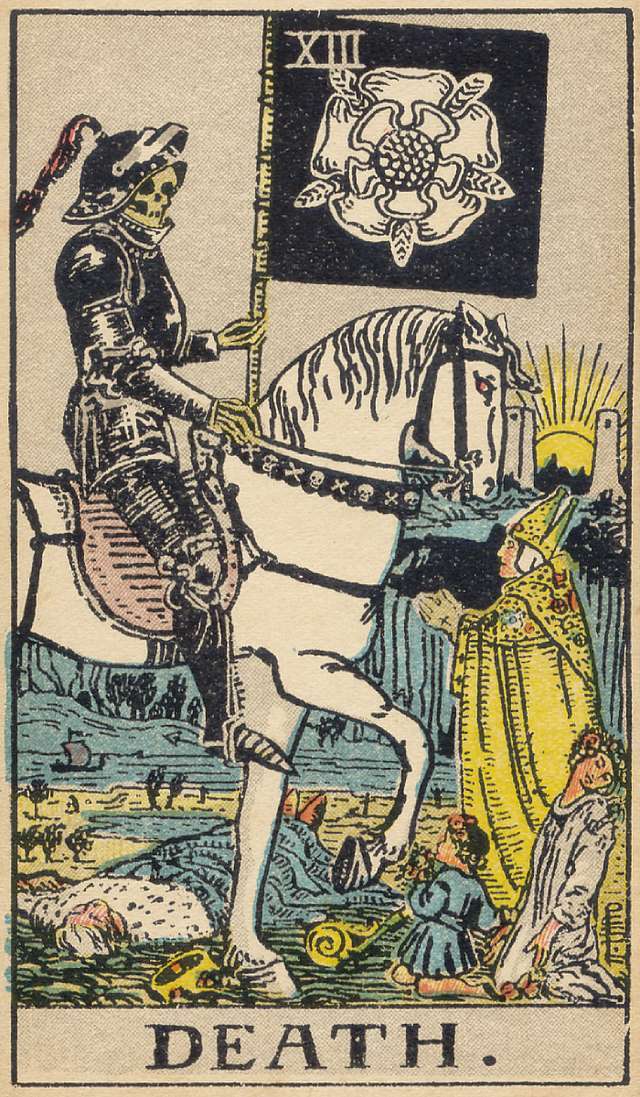
In the Rider-Waite deck, the Death card’s imagery is particularly vivid. The skeletal figure is cloaked in black, blending into the shadows, while the horse’s white coat stands out against the muted background. This contrast underscores the card’s message: even in the darkest moments, there is light and the potential for transformation. The figures in the background—some weeping, others kneeling—represent the emotional response to change. Their reactions remind us that endings can be painful, but they are also opportunities for renewal.
Interpretations Across Different Contexts
The Death card’s message can vary depending on its position in a spread and the surrounding cards. In a general reading, it often signifies a major life transition, such as a career change, the end of a relationship, or a shift in personal beliefs. It’s a call to let go of what no longer serves you and embrace the unknown with courage. When paired with positive cards like The Sun or The Star, Death’s message is amplified, suggesting that the transformation will lead to joy, hope, and new opportunities.
In matters of love, the Death card can indicate the end of a relationship that has run its course. This isn’t necessarily a negative sign—it may mean that both parties have outgrown each other or that one person is holding onto something that’s no longer healthy. The card encourages you to release the past and trust that a more fulfilling connection is on the horizon. If you’re single, Death might signal the end of a self-limiting pattern or belief that’s been holding you back from love.
In career readings, the Death card often points to the end of a job or a professional phase. This could be a layoff, a career change, or the closure of a business. While this may feel daunting, the card reassures you that this ending is necessary for your growth. It may be time to pursue a passion, start a new venture, or simply let go of a role that no longer fulfills you. The Death card reminds you that endings are not failures, but stepping stones to something greater.
In spiritual contexts, the Death card is a powerful symbol of awakening. It may indicate a spiritual rebirth, a deepening of your faith, or a shedding of old dogmas that no longer resonate with you. This card encourages you to question your beliefs, explore new philosophies, and embrace a more authentic spiritual path. It’s a reminder that growth often requires letting go of what you thought you knew.
The Psychological and Emotional Impact of the Death Card
On a psychological level, the Death card represents the process of individuation—the journey toward self-actualization. Carl Jung, the renowned psychologist, spoke of the shadow self, the parts of us that we suppress or deny. The Death card invites you to confront these shadows, to acknowledge the aspects of yourself that need to change or evolve. This can be a painful process, as it requires facing fears, regrets, and insecurities. However, it’s also incredibly liberating, as it allows you to integrate these parts of yourself and emerge stronger and more whole.
Emotionally, the Death card can bring up feelings of grief, fear, or resistance. It’s natural to feel hesitant about change, especially when it involves letting go of something familiar. The card acknowledges these emotions but encourages you to see them as part of the process. It’s okay to mourn what’s ending, but it’s also important to trust that the transformation will lead to something better. The Death card teaches resilience and the power of surrender—letting go of control and allowing life to unfold as it should.
For those who struggle with change, the Death card can be a gentle nudge toward acceptance. It reminds you that resistance only prolongs the inevitable. By embracing the card’s message, you can navigate transitions with grace and even find beauty in the process. The Death card is not a harbinger of doom, but a guide through the dark nights of the soul, leading you toward the light of a new dawn.
How to Work with the Death Card in Readings
If the Death card appears in your reading, take a moment to reflect on what area of your life is undergoing transformation. Ask yourself: What old patterns, beliefs, or relationships are no longer serving me? What am I being called to release? Journaling can be a powerful tool for exploring these questions. Write about what you’re letting go of and what you hope to welcome into your life. This exercise can help you clarify your intentions and align with the card’s energy.
Meditation is another effective way to connect with the Death card’s message. Visualize the skeletal rider riding toward you, carrying the banner of transformation. Imagine yourself releasing what no longer serves you and stepping into a new phase of life. You might also create a ritual to symbolize this release, such as burning a piece of paper with what you’re letting go of or writing a letter to your past self. These practices can help you embody the card’s energy and move forward with confidence.
When interpreting the Death card in a reading, pay attention to the surrounding cards. If it’s paired with The Tower, for example, the transformation may be sudden and unexpected. If it’s next to The Empress, the change could be more nurturing and growth-oriented. The Death card’s message is always about renewal, but the path to that renewal can vary. Trust your intuition and let the cards guide you toward a deeper understanding of your journey.
Conclusion: Embracing the Power of Endings
The Death card is a reminder that endings are not the opposite of beginnings, but a part of them. It’s a card of courage, resilience, and the beauty of transformation. By embracing its message, you can navigate life’s transitions with grace and trust that every ending is a step toward something greater. Whether you’re facing a major life change or simply reflecting on your personal growth, the Death card offers a powerful invitation to let go and step into the unknown with an open heart.
Remember, the Death card isn’t here to frighten you—it’s here to guide you. It’s a symbol of the natural cycles of life, the impermanence of all things, and the promise of rebirth. So when this card appears in your reading, take a deep breath and trust the process. The end of one chapter is always the beginning of another, and the Death card is your guide through the darkness toward the light.
FAQ
What does the Death Tarot card represent?
The Death Tarot card represents transformation, signaling the end of one phase and the beginning of another, often symbolizing personal growth and renewal.
Is the Death card a bad omen?
No, the Death card is not a bad omen; it symbolizes necessary endings that pave the way for new beginnings and personal evolution.
Leave a Reply