Short Answer
In this guide, you’ll explore the profound connection between The Hierophant and The High Priestess in tarot. These two cards often appear together in readings, sparking curiosity about their deeper meanings and how they interact. You’ll learn how they represent structured wisdom and intuitive mystery, and why their pairing fascinates so many. By the end, you’ll understand their individual roles, their combined significance, and how to interpret their presence in your own tarot practice.
The Hierophant: The Voice of Tradition and Structure
The Hierophant is the fifth card in the Major Arcana, symbolizing tradition, spiritual guidance, and institutional wisdom. Often depicted as a religious figure seated between two pillars, he represents the bridge between the divine and the earthly. His role is to teach, uphold, and transmit sacred knowledge through established systems like religion, education, or moral codes. When The Hierophant appears in a reading, it suggests a need to seek wisdom from authoritative sources or to honor traditions that have stood the test of time.
This card emphasizes the importance of structure, whether in personal beliefs, societal norms, or spiritual practices. It encourages you to question dogma thoughtfully rather than reject it outright. The Hierophant doesn’t demand blind obedience; instead, he invites you to explore the deeper truths behind established teachings. His presence often signals a time to reconnect with your roots, whether through formal education, mentorship, or revisiting the philosophies that shape your worldview.
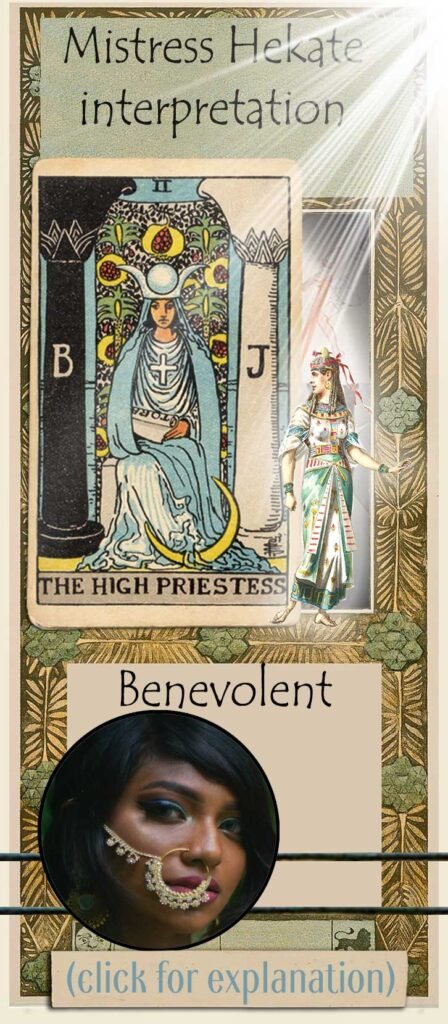
The High Priestess: The Keeper of Intuitive Mysteries
The High Priestess, the second card in the Major Arcana, stands in stark contrast to The Hierophant. She is the guardian of hidden knowledge, intuition, and the subconscious mind. Often depicted seated between two pillars with a crescent moon at her feet, she represents the power of inner wisdom and the unseen forces that guide us. While The Hierophant speaks of external authority, The High Priestess points inward, urging you to trust your instincts and explore the mysteries beyond logical understanding.
This card is deeply connected to the moon, symbolizing cycles, intuition, and the feminine divine. She encourages you to listen to your inner voice, even when it contradicts societal expectations. The High Priestess often appears when you need to pause and reflect, suggesting that answers lie not in external validation but in your own subconscious. She is the whisper in the dark, the gut feeling that defies explanation—a reminder that not all wisdom is written in books or taught by teachers.

The Dynamic Duo: Why Their Combination Captivates Readers
When The Hierophant and The High Priestess appear together in a reading, their contrast creates a fascinating tension. This pairing often highlights a conflict between external authority and inner wisdom, tradition and intuition, or dogma and personal belief. Many readers are drawn to this combination because it mirrors the human struggle to reconcile structure with freedom, logic with mystery. It’s a reminder that growth often comes from balancing opposing forces rather than favoring one over the other.
This duo can also signify a need to integrate different aspects of your life. The Hierophant may represent a mentor or a traditional path you’re expected to follow, while The High Priestess suggests an inner calling that defies convention. Their presence together might indicate a moment where you must decide whether to conform to external expectations or trust your own inner guidance. It’s a call to find harmony between the two, rather than rejecting one in favor of the other.
Practical Interpretations: How to Apply Their Meaning in Readings
In a tarot reading, The Hierophant and The High Priestess together can offer profound insights depending on their positions and surrounding cards. If The Hierophant is the outcome and The High Priestess is the challenge, it may suggest that you’re being called to reconcile your intuitive insights with the wisdom of tradition. Conversely, if The High Priestess is the outcome, it could indicate that your inner voice will guide you toward breaking free from restrictive structures.
When interpreting this pair, pay attention to the querent’s question. If they’re seeking advice on a career path, The Hierophant might suggest following a conventional route, while The High Priestess could hint at a more unconventional or creative calling. In matters of love, this duo might reflect a tension between societal expectations of relationships and the deeper, perhaps unspoken, desires of the heart. The key is to see them as complementary rather than contradictory, using their energies to find a balanced path forward.
Conclusion
The Hierophant and The High Priestess are two of the most intriguing cards in the tarot deck, not just for their individual meanings but for the dynamic interplay they create when they appear together. The Hierophant represents the structured, external wisdom that guides us, while The High Priestess embodies the intuitive, internal mystery that speaks to our souls. Their combination challenges us to find balance between tradition and intuition, authority and personal truth.
Whether you’re a seasoned tarot reader or a curious beginner, exploring the relationship between these two cards can deepen your understanding of the tarot’s layers. They remind us that wisdom isn’t one-dimensional; it’s a dance between the known and the unknown, the taught and the felt. Next time you encounter this duo in a reading, take a moment to reflect on how their energies might be guiding you toward a more integrated, authentic path.
FAQ
What do The Hierophant and The High Priestess symbolize in tarot?
The Hierophant symbolizes tradition and structured wisdom, while The High Priestess represents intuition and hidden knowledge.
How do these two cards interact in a tarot reading?
Their combination reflects a tension between external authority and inner wisdom, offering insights on how to reconcile these aspects in life.
Leave a Reply