Short Answer
Have you ever wondered why some symbols, poses, or even words seem to flip our understanding of reality when viewed upside down? What if the key to unlocking deeper meanings lies not in the upright position, but in the inverted one? In this guide, we’ll explore the fascinating world of upright and reversed (or upside-down) meanings across language, art, tarot, and human expression. You’ll discover how inversion challenges our perceptions, adds layers of interpretation, and sometimes reveals hidden truths. Whether you’re a curious learner, a creative thinker, or someone who loves to question the obvious, this exploration will change how you see the world—literally.
Understanding Upright vs. Reversed: The Power of Perspective
The concept of “upright” and “reversed” meanings isn’t just about physical orientation—it’s about perspective. In language, an upright phrase carries its conventional meaning, while a reversed or upside-down version might twist that meaning into something ironic, humorous, or profound. For example, the phrase “upside down” itself is a playful inversion of order, suggesting chaos or a shift in viewpoint. This duality appears in everything from idioms to visual art, where the act of flipping an image or idea forces us to reconsider its original intent.
In tarot, the distinction between upright and reversed cards is even more deliberate. An upright card represents its traditional meaning, while a reversed card suggests a blocked energy, internal struggle, or a need for introspection. This inversion isn’t about negativity—it’s about depth. It invites the reader to ask: What happens when the usual interpretation is turned on its head?
The Playful Challenge of Upside-Down Language
Language thrives on inversion. Think of palindromes, spoonerisms, or even simple wordplay like “taco cat.” These linguistic tricks rely on reversing letters, sounds, or meanings to create humor or surprise. But what about phrases that are intentionally flipped to convey a different message? Consider the phrase “I’m not bad” versus “I’m bad”—the addition or removal of a single word completely alters the tone. Now imagine flipping the entire phrase upside down. Suddenly, the meaning isn’t just reversed; it’s visually and conceptually disorienting.
This challenge extends to idioms and sayings. For instance, “The cat’s out of the bag” becomes nonsensical when reversed, while “Don’t put the cart before the horse” might still make sense but lose its urgency. The playful question arises: Can language truly be “upside down,” or is it just a trick of perception? The answer lies in how we engage with these inversions—do we see them as errors, jokes, or opportunities for deeper meaning?
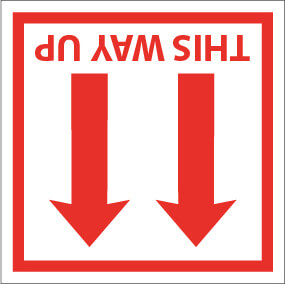
Reversed Tarot: Decoding Symbolism in the Upside-Down
Tarot readers have long used reversed cards to add nuance to a reading. When a card appears upside down, it’s not just a visual quirk—it’s a signal to look beyond the surface. For example, the upright Three of Cups might represent celebration and friendship, but reversed, it could hint at gossip, overindulgence, or a lack of emotional fulfillment. The inversion here isn’t arbitrary; it reflects the card’s energy being blocked or distorted.
Reversed tarot cards challenge the reader to ask critical questions: Is the querent avoiding a difficult truth? Are they experiencing self-doubt or external pressures? The upside-down card becomes a mirror, reflecting not just the card’s meaning but the querent’s internal state. This layer of interpretation transforms tarot from a simple divination tool into a psychological and spiritual practice.

Art and Design: When Upside Down Becomes a Statement
In art and design, inversion is a powerful tool. Artists like M.C. Escher played with perspective to create impossible structures, while contemporary designers use upside-down imagery to provoke thought. Consider the logo for the band U2, where the “U” and “2” are designed to look like a person standing on their head. This inversion isn’t just visual—it’s symbolic, representing rebellion, freedom, or a fresh perspective.
Similarly, surrealist art often employs upside-down imagery to disrupt the viewer’s expectations. A familiar object, when flipped, becomes alien and intriguing. This technique forces the audience to engage more deeply, questioning what they’re seeing and why it feels “wrong.” The challenge here is to embrace the discomfort of inversion and find meaning in the unexpected.

The Psychological Twist: Why Our Brains Love (and Hate) Inversion
Our brains are wired to seek patterns and familiarity. When something is upside down, it triggers a cognitive dissonance—a mismatch between what we expect and what we see. This can be unsettling, but it’s also why inversion is so effective in communication. Advertisers, for example, use upside-down imagery to grab attention. A logo or product that’s slightly askew stands out in a sea of uniformity.
Psychologically, inversion can also represent a break from convention. It’s a way to signal that the usual rules don’t apply here. In therapy, clients might be encouraged to “flip their perspective” on a problem, seeing it from a different angle. The challenge is to train the mind to accept inversion not as a mistake, but as a valid—and sometimes more insightful—way of seeing.
Conclusion: Embracing the Upside-Down World
The world of upright and reversed meanings is far more than a linguistic or artistic curiosity—it’s a lens through which we can explore deeper truths. Whether it’s the playful challenge of upside-down language, the introspective depth of reversed tarot cards, or the rebellious spirit of inverted art, inversion forces us to question, adapt, and grow. The next time you encounter something upside down, ask yourself: What new meaning could this hold? Instead of rushing to “fix” the inversion, try embracing it. You might just find that the most profound insights come from the most unexpected angles.
FAQ
What does an upright tarot card mean?
An upright tarot card represents its traditional meaning, often indicating positive or straightforward interpretations.
What does a reversed tarot card signify?
A reversed tarot card suggests a blocked energy, internal struggle, or a need for introspection, inviting deeper reflection.
Leave a Reply