Short Answer
Welcome to a deep dive into the enigmatic world of tarot, where each card holds layers of meaning waiting to be uncovered. In this guide, we’ll explore the Four of Coins—a card that speaks to the human tendency to cling tightly to what we have, often at the expense of growth and connection. You’ll discover how this card reflects financial caution, emotional attachment, and the paradox of security versus stagnation. By the end, you’ll understand not just its traditional interpretations but also how it mirrors our modern struggles with control and release. Let’s unravel the mysteries of holding on too tight.
The Four of Coins: A Symbol of Control and Security
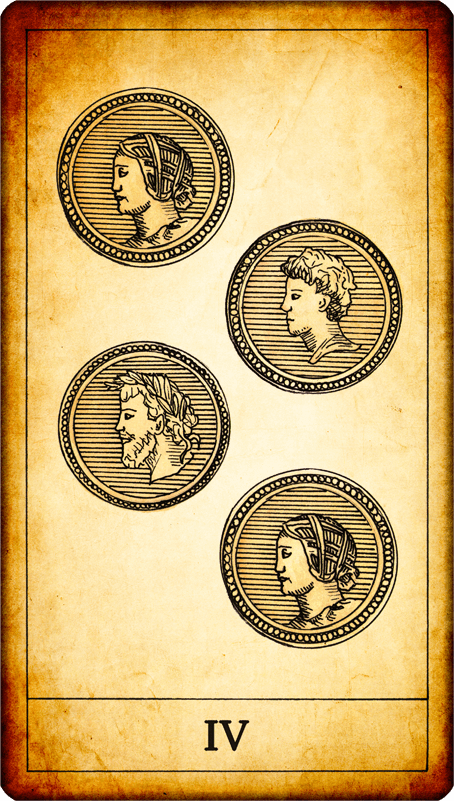
The Four of Coins is often depicted as a figure clutching four golden coins—three held close to the chest and one balanced precariously on the head. This imagery is rich with metaphor: the coins represent material wealth, stability, and the tangible rewards of labor. Yet, the act of holding them so tightly suggests a fear of loss, a reluctance to share, or an inability to trust in the natural flow of abundance. Unlike the open-handed generosity of the Three of Coins, the Four of Coins embodies a closed fist, symbolizing a mindset that equates security with hoarding.
In many decks, the figure’s expression is one of tension—eyes wide, brows furrowed—as if bracing against an unseen threat. This tension is key to understanding the card’s message. The Four of Coins isn’t just about money; it’s about the emotional and psychological weight of control. It asks: What are you so afraid to lose that you’ve stopped living?
Financial Caution vs. Financial Fear
In financial readings, the Four of Coins often appears as a warning against excessive frugality or a reluctance to invest in oneself or others. It may indicate someone who saves every penny but never enjoys the fruits of their labor, or a business that clings to outdated strategies rather than adapting to change. The card can also highlight a fear of scarcity—a belief that if you let go of even a little, you’ll end up with nothing.
Yet, there’s a fine line between prudence and paralysis. The Four of Coins challenges us to examine our relationship with money. Are we saving for a rainy day, or are we so afraid of the storm that we’ve stopped dancing in the rain altogether? This card invites reflection on whether our financial habits are serving us or trapping us in a cycle of anxiety.
Emotional Attachment and the Fear of Vulnerability
Beyond finances, the Four of Coins delves into the realm of emotions. It can represent someone who holds onto past hurts, grudges, or even relationships long past their expiration date. The act of clutching these emotional “coins” becomes a way to avoid vulnerability, as if letting go would mean acknowledging failure or loss. This is the card of the person who stays in a toxic job because it’s familiar, or who remains in a dead-end relationship out of fear of the unknown.
The Four of Coins reminds us that security isn’t found in rigid control but in the courage to release what no longer serves us. It’s the difference between a fortress with barred windows and a home with open doors—one keeps the world out, while the other welcomes it in. The card asks: What would happen if you trusted the universe to catch you?
The Paradox of Stagnation and Growth
One of the most intriguing aspects of the Four of Coins is its paradoxical nature. On one hand, it represents stability—the foundation we build to feel safe. On the other, it warns against the dangers of stagnation. When we hold too tightly to what we have, we risk missing opportunities for growth. The Four of Coins can signal a period where we’re so focused on preserving our current state that we fail to innovate, adapt, or seize new paths.
Consider the entrepreneur who refuses to pivot their business model, the artist who won’t experiment with new styles, or the individual who clings to outdated beliefs. The Four of Coins is a mirror held up to these patterns, urging us to ask: Is this control serving me, or am I serving it? Growth requires a willingness to let go—to trust that what’s meant for us will find us, even if we release our grip on what we think we need.
Breaking Free: Practical Steps to Release the Four of Coins Energy
If the Four of Coins has appeared in your reading, it’s a sign to examine where you’re holding on too tightly. Here are some actionable steps to shift this energy:
- Practice Generosity: Whether it’s sharing knowledge, time, or resources, find small ways to give without expectation. This can break the cycle of scarcity mindset.
- Embrace Impermanence: Recognize that everything in life is temporary—even our struggles. What feels like a life-or-death grip today may be a passing shadow tomorrow.
- Trust the Process: Instead of micromanaging every detail, try surrendering to the flow of life. This doesn’t mean being passive; it means having faith in your ability to handle whatever comes your way.
- Release Old Stories: Write down the narratives you’ve been clinging to—fears, regrets, or limiting beliefs—and burn or bury them as a symbolic act of letting go.
The Four of Coins isn’t a card of doom; it’s a card of awareness. It doesn’t condemn us for wanting security—it simply asks us to examine whether our methods are enriching our lives or draining them.
Conclusion
The Four of Coins is a powerful reminder that security is an illusion when built on fear. It challenges us to confront our attachments—whether to money, people, or past versions of ourselves—and to ask whether these bonds are nurturing or suffocating. In a world that often glorifies control, this card is a breath of fresh air, urging us to embrace vulnerability as the path to true abundance.
So the next time you find yourself gripping tightly to what you have, pause and ask: Is this a shield or a cage? The answer may just set you free.
FAQ
What does the Four of Coins Tarot card represent?
The Four of Coins represents themes of control, security, financial caution, and the fear of vulnerability.
How can the Four of Coins impact financial decisions?
It serves as a warning against excessive frugality and encourages reflection on financial habits.
What practical steps can I take if I draw the Four of Coins?
Consider practicing generosity, embracing impermanence, trusting the process, and releasing old narratives.

Leave a Reply