Short Answer
The Celtic Wisdom Tarot is more than just a deck of cards—it is a bridge to ancient traditions, mythic storytelling, and profound spiritual insight. Whether you are a seasoned tarot reader or a curious newcomer, this guide will illuminate the deep meanings woven into the Celtic Wisdom Tarot, revealing why its imagery and symbolism resonate so powerfully with the human soul. You will discover the historical roots of the deck, explore its unique artistic language, and uncover the hidden layers of meaning that make it a transformative tool for divination and self-reflection. By the end, you’ll understand why this tarot is not just a deck to consult, but a companion for life’s journey.
The Ancient Roots: Where Myth Meets Divination
The Celtic Wisdom Tarot draws its power from the rich tapestry of Celtic mythology, a tradition that spans over two thousand years. Unlike many modern tarot decks that rely on Renaissance symbolism, this deck taps into the older, more esoteric lore of the Celts—peoples who once dominated vast stretches of Europe and whose spiritual practices were deeply intertwined with nature, cycles of time, and the unseen world. The Celts viewed the universe as a living, breathing entity, where every tree, river, and stone held a story and a spirit. This perspective is vividly reflected in the deck’s imagery, where figures like the Green Man, the Morrigan, and the Dagda appear not as distant historical characters, but as living archetypes that speak to universal human experiences.
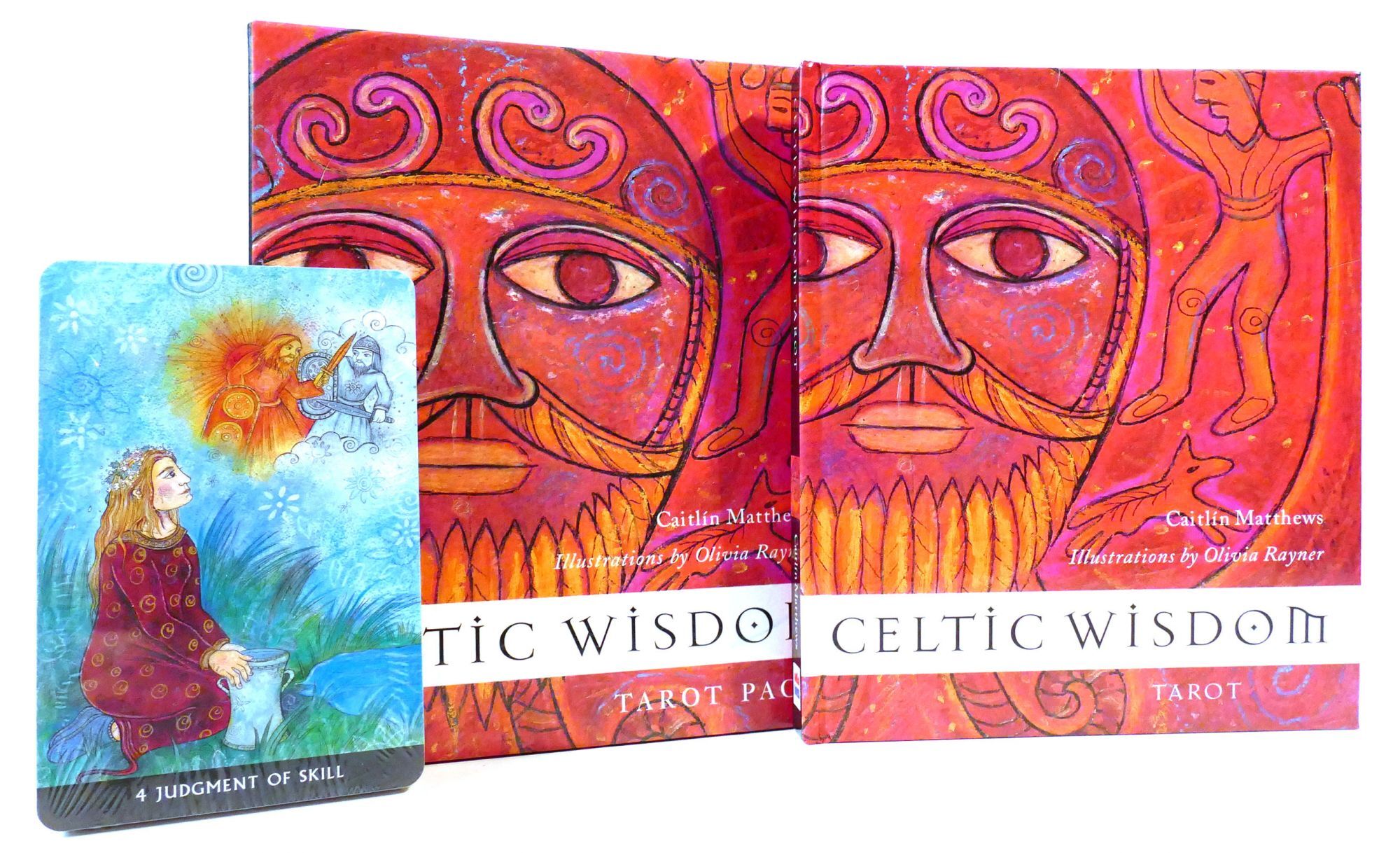
The deck’s creator, Caitlín Matthews, wove these ancient narratives into the tarot’s structure, ensuring that each card carries the weight of centuries-old wisdom. For example, the High Priestess card is not just a guardian of secrets but a figure tied to the Celtic goddess Ceridwen, whose cauldron of inspiration and transformation mirrors the card’s role as a keeper of hidden knowledge. By understanding these connections, readers can move beyond surface-level interpretations and engage with a tarot that feels alive with ancestral energy.
The Artistic Language: A Visual Feast of Symbolism
One of the most striking features of the Celtic Wisdom Tarot is its artwork, which blends traditional Celtic knotwork, illuminated manuscripts, and vivid, almost dreamlike scenes. The deck’s illustrations are not merely decorative; they are a language unto themselves, communicating ideas that words alone cannot capture. For instance, the Ace of Cups is depicted as a chalice overflowing with a liquid that forms into the shape of a dragon—a symbol of primal emotion and creative force. This kind of layered imagery invites the reader to pause, reflect, and let the symbols speak to them on a subconscious level.
The use of color is equally deliberate. Deep greens and blues evoke the lush landscapes of the Celtic world, while golds and reds symbolize the fire of inspiration and the blood of life. Even the borders of the cards are adorned with intricate knotwork, a reminder that everything in the universe is interconnected—a core tenet of Celtic thought. This artistic richness makes the Celtic Wisdom Tarot particularly appealing to those who appreciate visual storytelling and wish to engage with the deck on an aesthetic as well as a spiritual level.
Archetypes Reimagined: Gods, Heroes, and Everyday Magic
At the heart of the Celtic Wisdom Tarot are its archetypes, which are drawn from both myth and everyday life. Unlike the traditional tarot’s use of figures like the Pope or the Emperor, this deck features characters like the Warrior (representing the hero’s journey), the Sovereign (embodying wisdom and rulership), and the Smith (symbolizing craftsmanship and transformation). These archetypes are not static; they are dynamic forces that reflect the ebb and flow of human experience. For example, the Fool card is not just a naive traveler but a figure who embodies the Celtic concept of the “threshold”—a liminal space where one stands between the known and the unknown, ready to embark on a new path.
The deck also introduces figures from Celtic lore who are less commonly seen in mainstream tarot, such as the Cailleach, the divine hag who shapes the land with her staff, and Manannán mac Lir, the god of the sea who guards the thresholds between worlds. These characters add a layer of depth and mystery, inviting readers to explore themes of fate, transformation, and the cyclical nature of life. By working with these archetypes, the Celtic Wisdom Tarot becomes a tool for personal growth, helping users to recognize their own inner heroes, wise counselors, and transformative forces.
The Major Arcana: A Journey Through the Celtic Cosmos
The Major Arcana in the Celtic Wisdom Tarot is a map of the soul’s journey, mirroring the stages of initiation found in Celtic myth and folklore. Each card is a chapter in a larger story, one that begins with the Fool’s leap into the unknown and ends with the World, where the cycle of life is complete. Along the way, cards like the Hanged Man become the “Hanged One,” a figure suspended between worlds, embodying sacrifice and new perspective. The Tower, meanwhile, is reimagined as “The Fall of the Tower,” a dramatic collapse that clears the way for rebirth—a theme that resonates deeply with Celtic tales of destruction and renewal, such as the burning of the old year to make way for the new.
What sets this Major Arcana apart is its emphasis on cyclical time. The Celts saw life as a series of repeating patterns, where endings are always followed by beginnings. This is reflected in cards like the Wheel of Fortune, which is not just a symbol of chance but a representation of the ever-turning wheel of the seasons, the phases of the moon, and the cycles of human life. By engaging with these cards, readers can begin to see their own lives as part of a larger, meaningful narrative, where every challenge is a lesson and every joy is a gift.
The Minor Arcana: Nature’s Rhythms and Human Experience
The Minor Arcana in the Celtic Wisdom Tarot is divided into four suits—Swords, Cups, Wands, and Pentacles—each corresponding to an element and a realm of human experience. However, these suits are reimagined through a Celtic lens. Swords become “Knives,” representing the sharpness of intellect and the power of words, while Cups are tied to the cauldron of Ceridwen, symbolizing emotion, intuition, and the waters of life. Wands are “Staves,” reflecting the energy of growth and creativity, and Pentacles are “Coins,” embodying the material world and the cycles of prosperity and scarcity.
Each suit is further enriched with Celtic imagery. For example, the Knight of Cups is not just a romantic figure but a messenger from the Otherworld, bringing gifts of inspiration and emotional depth. The Queen of Pentacles is a sovereign of the land, a nurturer who tends to both the physical and spiritual needs of her community. These cards encourage readers to see their daily lives as part of a sacred pattern, where even the smallest actions—planting a seed, sharing a meal, or speaking a kind word—are acts of magic and connection.
Divination and Beyond: How to Work with the Deck
Using the Celtic Wisdom Tarot for divination is an act of co-creation with the ancient world. Unlike more abstract decks, this one invites readers to engage with its symbols on a deeply personal level. When pulling a card, it’s helpful to ask not just “What does this mean?” but “What story is this card telling me?” For example, drawing the Three of Swords might not just indicate heartbreak but a call to release old wounds and embrace the healing power of the Morrigan, the Celtic goddess of transformation. The deck’s rich symbolism allows for multiple layers of interpretation, making each reading a unique dialogue between the reader and the unseen forces at play.
For those interested in meditation or ritual work, the Celtic Wisdom Tarot can also serve as a focal point. Drawing a card and spending time with its imagery can open doors to deeper self-awareness or even serve as a gateway to the Otherworld, the Celtic realm of spirits and ancestors. Some readers choose to place a card on their altar or carry one in their pocket as a talisman, allowing its energy to guide them throughout the day. The key is to approach the deck with reverence and an open heart, allowing its wisdom to unfold naturally.
Conclusion: A Tarot for the Soul’s Journey
The Celtic Wisdom Tarot is more than a tool for fortune-telling—it is a living tradition, a bridge between the past and the present, and a mirror for the soul. Its deep roots in Celtic mythology, its rich artistic language, and its archetypes that resonate across time make it a deck unlike any other. Whether you are drawn to its visual beauty, its mythic storytelling, or its profound spiritual insights, this tarot offers a path to deeper understanding and connection. It reminds us that we are not separate from the cycles of nature or the stories of our ancestors, but woven into the very fabric of the universe. By working with the Celtic Wisdom Tarot, you are not just consulting a deck of cards—you are stepping into a timeless conversation with the wisdom of the ages.
FAQ
What makes the Celtic Wisdom Tarot different from other tarot decks?
The Celtic Wisdom Tarot draws heavily from Celtic mythology and features unique archetypes and symbolism tied to ancient Celtic spiritual traditions, rather than traditional Renaissance tarot imagery.
Who created the Celtic Wisdom Tarot?
The deck was created by Caitlín Matthews, who incorporated Celtic myths and archetypes into the tarot structure.
How can the Celtic Wisdom Tarot be used for personal growth?
By engaging with its archetypes and symbolism, users can explore themes of transformation, fate, and cyclical life patterns, aiding self-reflection and spiritual insight.
Are the card meanings in the Celtic Wisdom Tarot similar to traditional tarot decks?
While some cards correspond to traditional tarot archetypes, many are reimagined through a Celtic lens with different figures and symbolism, offering layered and unique interpretations.
Leave a Reply