Short Answer
Unlock the hidden language of tarot with Easy Tarot Meanings: Decode Any Reading Instantly. Whether you’re a seasoned reader or a curious beginner, this guide will transform how you interpret tarot cards by simplifying complex symbolism into clear, actionable insights. You’ll discover how to recognize patterns, decode hidden messages, and gain confidence in your readings—no memorization required. By the end, you’ll see tarot not just as a tool for divination, but as a mirror for self-reflection and intuitive growth. Prepare to shift your perspective and ignite your curiosity as you learn to read tarot with ease and clarity.
Why Tarot Meanings Feel Overwhelming (And How to Fix It)
Many people approach tarot with excitement, only to feel overwhelmed by the sheer volume of meanings associated with each card. Traditional guides often present long lists of keywords, symbols, and interpretations that can feel like memorizing a foreign language. The problem isn’t your understanding—it’s the way the information is structured. Tarot is rich with layers, but those layers don’t need to be tackled all at once. Instead of forcing yourself to recall every possible meaning, focus on recognizing the core themes and emotions each card represents. This shift from memorization to intuition is where real insight begins.
For example, the Three of Cups isn’t just about celebration—it’s about connection, joy, and sometimes even a warning against overindulgence. By distilling the essence of the card into a few key ideas, you’ll find it easier to apply its meaning to any reading. The goal isn’t to know every possible interpretation, but to understand the card’s energy and how it interacts with the cards around it.
Breaking Down the Major Arcana: The Story of Your Journey
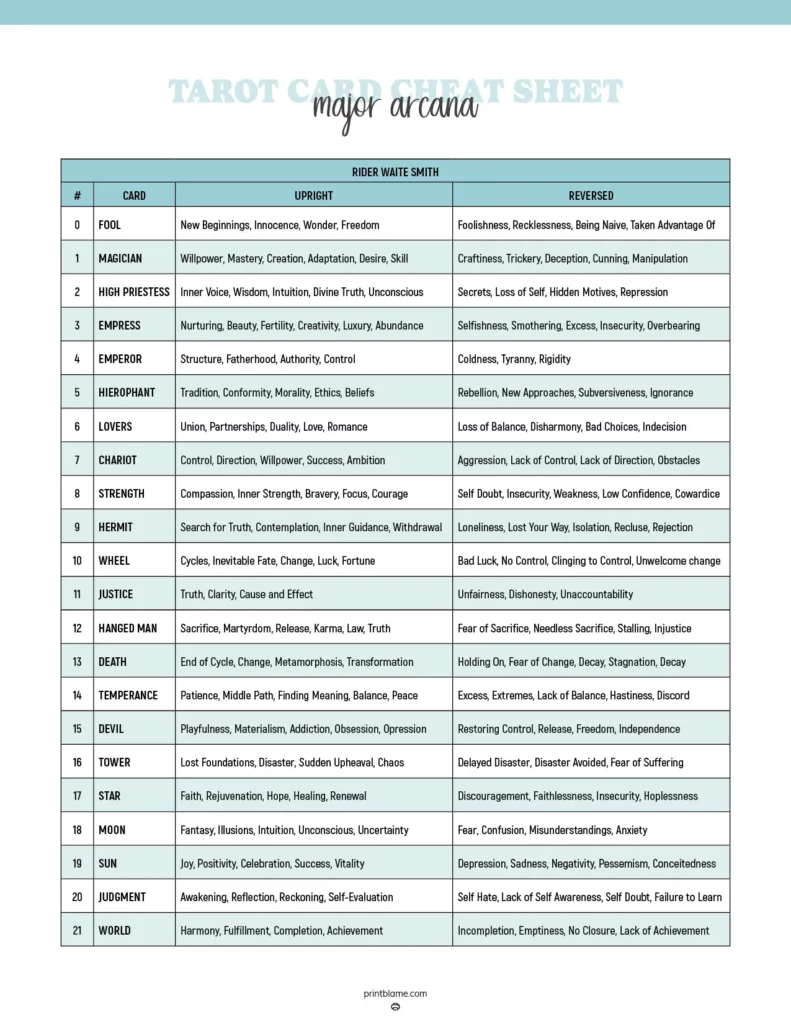
The Major Arcana cards are the heart of tarot, representing life’s grand themes and spiritual lessons. Instead of viewing them as isolated symbols, think of them as chapters in a story—your story. Each card builds on the last, creating a narrative that reflects your personal growth. For instance, The Fool represents new beginnings and spontaneity, while The Magician symbolizes harnessing your skills and resources. Together, they suggest a journey from potential to action.
To make this easier, group the Major Arcana into smaller sections based on their themes. Cards like The High Priestess, The Empress, and The Emperor all relate to intuition, nurturing, and structure, respectively. By understanding these groupings, you can quickly identify the overarching message of a spread. For example, if multiple cards from the “intuition” group appear, it may be a sign to trust your inner voice. This method turns a complex deck into a navigable map of your life’s path.

Minor Arcana Made Simple: Focus on the Essentials
The Minor Arcana often feels like the “real work” of tarot, but it doesn’t have to be complicated. These 56 cards break down into four suits—Cups, Pentacles, Swords, and Wands—each representing a different aspect of life: emotions, finances, intellect, and creativity. Instead of memorizing every card, focus on the suit’s core energy and how it interacts with the number or court card. For example, Five of Pentacles in a spread about finances might indicate struggle or feeling left out, while Ten of Cups suggests emotional fulfillment and harmony.
Court cards (Page, Knight, Queen, King) add another layer, representing people or personality traits. Think of them as archetypes: the Queen of Swords could symbolize a sharp-witted, independent woman, while the Knight of Wands might represent someone passionate and adventurous. To simplify, ask yourself: What energy does this card bring to the reading? Is it fiery (Wands), practical (Pentacles), emotional (Cups), or analytical (Swords)? This approach keeps the Minor Arcana accessible and relevant to real-life situations.
Reading Reversed Cards: Embracing the Shadow Side
Reversed cards often stir up confusion, but they’re not as intimidating as they seem. A reversed card doesn’t necessarily mean the opposite of its upright meaning—instead, it highlights blocked energy, internal struggles, or untapped potential. For example, The Tower reversed might suggest resistance to change or avoiding necessary upheaval, while Three of Cups reversed could indicate loneliness or a need to reconnect with others. The key is to look at the card’s core message and consider how it’s being expressed in the reading.
To interpret reversals, ask yourself: What part of this card’s energy is being suppressed or ignored? Is it a lack of action (reversed action cards like the Knight of Wands), or an excess of something (reversed abundance cards like the Six of Pentacles)? By reframing reversals as opportunities for growth rather than obstacles, you’ll find they add depth and nuance to your readings. Remember, even the “negative” cards have valuable lessons to offer.
Practical Tips for Instant Clarity in Any Reading
Reading tarot becomes effortless when you have a few go-to strategies. Start by asking open-ended questions that invite meaningful answers, such as “What do I need to know about my current situation?” instead of “Will I get the job?” This keeps the focus on insight rather than prediction. Next, use a three-card spread (past, present, future) to ground your interpretation in a clear narrative. For example, if the Page of Swords appears in the past position, it might suggest a time of curiosity and learning, while the same card in the future could indicate a need for clear communication.
Another powerful technique is to look for dominant symbols in the cards. If multiple cards feature water (Cups), the reading may be emphasizing emotions or relationships. Similarly, repeated numbers (like the number 7) often carry specific themes, such as introspection or spiritual growth. Don’t overlook the background details in the artwork either—elements like clouds, animals, or colors can add layers of meaning. For instance, a stormy sky in the background of a card might hint at turmoil or a need for resilience.
Common Pitfalls and How to Avoid Them
Even experienced readers can fall into traps that cloud their interpretations. One of the biggest mistakes is over-reliance on guidebooks. While they’re helpful for beginners, using them during a reading can disrupt your intuitive flow. Instead, trust your first impression of the card—your gut reaction is often more accurate than a memorized list. Another pitfall is ignoring the question’s context. A card’s meaning changes depending on the query. For example, The Chariot in a career reading might symbolize determination and success, while in a relationship spread, it could indicate a need for balance and control.
Finally, avoid reading cards in isolation. A single card’s meaning is limited, but when combined with others, it tells a richer story. For instance, The Lovers next to The Devil might suggest a toxic relationship, while The Lovers next to The Star could indicate a deep, spiritual connection. Always consider the cards as a whole, and don’t be afraid to ask for clarification if a reading feels unclear. Sometimes, stepping back and revisiting the spread with fresh eyes can reveal hidden insights.
Conclusion: Your Path to Effortless Tarot Mastery
Tarot doesn’t have to be a puzzle with endless pieces—it’s a language waiting to be understood. By focusing on core themes, trusting your intuition, and approaching each card with curiosity, you’ll decode readings with ease and confidence. Remember, the goal isn’t perfection; it’s connection. Each time you pull a card, you’re engaging in a dialogue with your subconscious, the universe, or your higher self. The more you practice, the more natural it becomes to see the patterns and messages that guide you.
Start small: pull one card a day and reflect on its message. Notice how the same cards reappear in different contexts, offering new layers of meaning. Over time, you’ll develop a personal relationship with the deck, one that feels intuitive and empowering. Tarot is a tool for self-discovery, and the clarity you seek is already within you—you just need to learn how to listen. With these strategies, you’re not just reading cards; you’re unlocking the wisdom of your own journey.
FAQ
What is the best way to learn tarot card meanings quickly?
Focus on understanding the core themes and energy of each card instead of memorizing long lists of meanings. Use groupings and intuitive impressions to decode readings more naturally.
How do I interpret reversed tarot cards?
Reversed cards highlight blocked energy, internal struggles, or untapped potential rather than simply meaning the opposite of the upright card. Consider what part of the card’s message is suppressed or exaggerated.
Why do tarot meanings feel overwhelming at first?
Traditional guides often present many keywords and symbols at once, making it feel like memorizing a foreign language. Focusing on core emotions and themes allows for easier, more intuitive readings.
Can tarot be used for self-reflection?
Yes, tarot is a powerful tool for self-reflection and intuitive growth, helping you engage in dialogue with your subconscious and gain insights into your personal journey.
What are some common mistakes to avoid when reading tarot?
Common mistakes include over-relying on guidebooks, ignoring question context, and reading cards in isolation. Trusting your intuition and considering the full spread leads to richer interpretations.
Leave a Reply