Short Answer
Embark on a journey through the enigmatic world of All Cards Tarot – The Full 78, where each card is a doorway to deeper self-discovery, cosmic wisdom, and hidden truths. Whether you’re a seasoned tarot reader or a curious beginner, this guide will illuminate the profound symbolism, historical roots, and modern relevance of the complete 78-card tarot deck. Discover how the Major Arcana’s grand narratives intertwine with the Minor Arcana’s everyday lessons, and why this ancient system continues to captivate hearts and minds across centuries. By the end, you’ll see the tarot not just as a divination tool, but as a mirror reflecting the human experience in all its complexity.
The Sacred Architecture of the 78-Card Tarot Deck
The tarot’s structure is no accident—it’s a meticulously designed tapestry of archetypes, numbers, and elemental forces. The deck is divided into two primary sections: the Major Arcana and the Minor Arcana, each serving a distinct yet complementary purpose.
The Major Arcana consists of 22 cards, numbered 0 (The Fool) to XXI (The World), representing life’s pivotal moments, spiritual lessons, and karmic cycles. These cards are the “big picture” of a tarot reading, often symbolizing transformative phases like The Lovers for choices, Death for rebirth, or The Tower for sudden upheaval. Their imagery is rich with mythological and esoteric references, from the Egyptian Anubis in Judgement to the alchemical imagery in The Magician.
The Minor Arcana, comprising 56 cards, mirrors the structure of a standard playing deck with four suits—Wands, Cups, Swords, and Pentacles—each governed by an element (Fire, Water, Air, Earth). These cards delve into the nuances of daily life, from the fiery passion of a Three of Wands to the emotional depth of a Ten of Cups. Court cards—Page, Knight, Queen, and King—add layers of personality and influence, acting as messengers or archetypal figures in a reading.
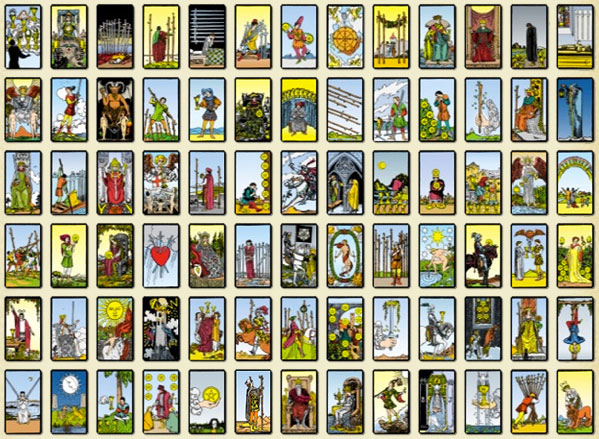
This dual structure creates a dynamic interplay: the Major Arcana sets the stage for destiny’s grand themes, while the Minor Arcana fills in the details of how those themes manifest in your life. Together, they form a language that speaks to both the soul and the practicalities of existence.
The Major Arcana: A Cosmic Narrative of the Soul
The Major Arcana is often called the “spiritual journey” of the tarot, and for good reason. Each card is a chapter in a hero’s quest, from the naive optimism of The Fool (beginning a new adventure) to the enlightenment of The World (completing a cycle). These cards are universal touchstones, resonating across cultures and eras because they tap into shared human experiences—love, loss, power, and transformation.
Take The High Priestess, for example. She sits between the pillars of light and dark, her veil adorned with pomegranates (symbols of hidden knowledge). She represents intuition, mystery, and the subconscious mind, urging you to trust your inner voice. In contrast, The Devil is a stark reminder of bondage—whether to addictions, toxic relationships, or limiting beliefs—challenging you to break free from what enslaves you.
One of the most intriguing aspects of the Major Arcana is its numerological and astrological correlations. For instance, The Chariot (VII) aligns with the zodiac sign Cancer, symbolizing determination and control, while Strength (XI) embodies the fiery energy of Leo, teaching mastery over primal instincts. These connections deepen the tarot’s resonance, making it a tool for both divination and self-reflection.
The Minor Arcana: The Poetry of Everyday Life
While the Major Arcana deals in grand themes, the Minor Arcana thrives in the details of daily existence. The four suits each govern a realm of human experience:
- Wands (Fire): Creativity, ambition, and inspiration. These cards burn with passion—whether it’s the spark of a new project (Ace of Wands) or the burnout of Ten of Wands.
- Cups (Water): Emotions, relationships, and intuition. From the joy of Three of Cups to the heartbreak of Five of Cups, these cards navigate the tides of feeling.
- Swords (Air): Intellect, conflict, and communication. Sharp and decisive, they cut through illusion—Two of Swords shows indecision, while Eight of Swords reveals mental traps.
- Pentacles (Earth): Material world, finances, and practicality. These cards ground the spiritual into the tangible—Four of Pentacles warns of hoarding, while Nine of Pentacles celebrates abundance.
The Court cards add another dimension, acting as psychological portraits. A Knight of Cups might represent a romantic idealist, while a Queen of Swords embodies sharp-witted independence. Their meanings shift based on their position in a spread, making them versatile tools for understanding people and situations.

The Minor Arcana’s strength lies in its relatability. Whether you’re seeking clarity on a career dilemma, a relationship, or personal growth, these cards offer nuanced insights that feel deeply personal. They remind us that magic isn’t just in the extraordinary—it’s in the ordinary moments, waiting to be seen.
Reading the Full 78: Synergy and Depth
The true power of the tarot emerges when you read the entire deck together. A spread that incorporates both Major and Minor Arcana can reveal how grand life themes intersect with daily realities. For example, pulling The Tower (Major) alongside Five of Pentacles (Minor) might suggest a sudden financial crisis, while The Star (Major) paired with Six of Cups (Minor) could indicate healing through nostalgia.
Some tarot traditions, like the Rider-Waite-Smith deck, use visual cues to link the suits to the Major Arcana. For instance, the Queen of Wands shares the fiery energy of The Chariot, while the King of Cups embodies the compassion of The Hierophant. These connections create a cohesive narrative, making the tarot feel like a living, breathing system.
For those new to the 78-card deck, starting with simple spreads—like a three-card layout for past, present, and future—can help build confidence. As you grow, you might explore more complex spreads, such as the Celtic Cross, which weaves together multiple cards to paint a detailed picture of a situation.
The Tarot as a Mirror: Reflection and Empowerment
Beyond divination, the tarot is a tool for empowerment. It doesn’t predict the future; it reflects the present, offering a chance to pause, reflect, and choose a new path. The cards act as a mirror, revealing unconscious patterns, hidden desires, and untapped potential.
Consider the Three of Swords, often feared for its imagery of a heart pierced by swords. Rather than a warning of doom, it can highlight emotional pain—perhaps from a betrayal or loss—and invite healing. Similarly, The Hermit encourages introspection, reminding you that solitude can be a source of wisdom.
The tarot also serves as a bridge between the mundane and the mystical. A reading might reveal that your “luck” in a career is tied to The Magician’s resourcefulness, or that a relationship’s challenges are reflected in The Lovers’ duality. This dual perspective—grounded yet transcendent—makes the tarot endlessly fascinating.
Choosing Your Deck: A Personal Invitation
While the 78-card structure is universal, the artwork and symbolism of each deck can vary widely. Some decks, like the Thoth Tarot, lean into esoteric and occult imagery, while others, like the Modern Witch Tarot, offer inclusive and contemporary interpretations. The key is to choose a deck that resonates with your intuition and aesthetic.
When selecting a deck, consider:
- Art Style: Do you prefer traditional, surreal, or minimalist designs?
- Symbolism: Does the deck’s imagery speak to you on a deep level?
- Guidebook: Is the accompanying text clear and insightful?
Many readers recommend starting with the Rider-Waite-Smith deck for its rich symbolism and widespread availability. However, don’t hesitate to explore decks like the Wild Unknown or Light Seer’s Tarot if they call to you. The right deck will feel like an extension of your intuition.
Conclusion: The Tarot as a Living Tradition
The 78-card tarot is more than a collection of images and symbols—it’s a living tradition that evolves with each reader who engages with it. Whether you use it for guidance, creativity, or self-exploration, the tarot offers a unique language to articulate the inexpressible. It invites you to see the world through a lens of metaphor, where every card is a story waiting to be told, and every spread a conversation with the universe.
As you delve deeper into the Major and Minor Arcana, remember that the tarot’s true magic lies in its ability to reflect back to you the truths you already hold within. It’s not about fortune-telling; it’s about awakening. So shuffle your deck, draw a card, and let the journey begin.
FAQ
What is the significance of the Major Arcana in tarot?
The Major Arcana represents life’s pivotal moments and spiritual lessons, with each card symbolizing significant themes in a person’s journey.
How do the Minor Arcana differ from the Major Arcana?
The Minor Arcana focuses on everyday experiences and details, divided into four suits that represent different aspects of life.
What should beginners know about reading tarot?
Beginners should start with simple spreads and familiarize themselves with both Major and Minor Arcana meanings to build confidence.
Leave a Reply