Short Answer
Unlock the deeper layers of tarot by learning how to combine cards for readings that promise a shift in perspective and ignite curiosity. This guide will walk you through the essential techniques for interpreting card combinations, helping you move beyond single-card pulls to richer, more nuanced insights. Whether you’re a beginner or an experienced reader, mastering these methods will elevate your ability to uncover hidden truths and guide others with clarity and confidence.
Why Combining Tarot Cards Matters
Single-card draws offer quick insights, but combining tarot cards transforms a reading into a dynamic conversation between the cards. When two or more cards appear together, their energies interact, creating a narrative that reveals layers of meaning often missed in isolated interpretations. This interplay can highlight contrasts, amplify themes, or suggest resolutions, providing a more holistic view of a situation. For seekers, this approach promises a shift in perspective—challenging assumptions and encouraging deeper reflection. It also piques curiosity by uncovering unexpected connections, making the reading feel like a journey rather than a static message.
Basic Principles of Card Combinations
Before diving into specific combinations, it’s crucial to understand the foundational principles that govern how cards interact:
- Card Positions: The placement of cards in a spread (past, present, future, etc.) influences their meaning. A card in the “past” position may soften the impact of a challenging card in the “future” position.
- Elemental Dignities: Each card belongs to an element (fire, water, air, earth) or lacks one. Cards of the same element often harmonize, while opposing elements may create tension or balance.
- Numerology: The numbers on cards carry significance. For example, a 3 (creation) paired with a 7 (introspection) might suggest a need for reflection after a period of growth.
- Suits and Themes: Cards from the same suit (Cups, Pentacles, Swords, Wands) usually share a common theme. Combining them can deepen the exploration of that theme.
By keeping these principles in mind, you’ll avoid superficial interpretations and instead uncover the subtle nuances that make combinations powerful.
How to Interpret Two-Card Combinations
Two-card combinations are the simplest yet most revealing way to explore relationships between cards. Here’s how to approach them:
1. Contrasting Cards (Light vs. Shadow)
When a Major Arcana card (e.g., The Magician) appears with a Minor Arcana card (e.g., Five of Cups), the contrast often highlights a duality. For example, The Magician represents skill and manifestation, while the Five of Cups suggests loss or regret. This pairing might indicate a need to focus on what you still have (The Magician’s resources) rather than dwelling on what’s missing (Five of Cups). Such combinations encourage a shift in perspective by forcing the reader to reconcile opposing forces.
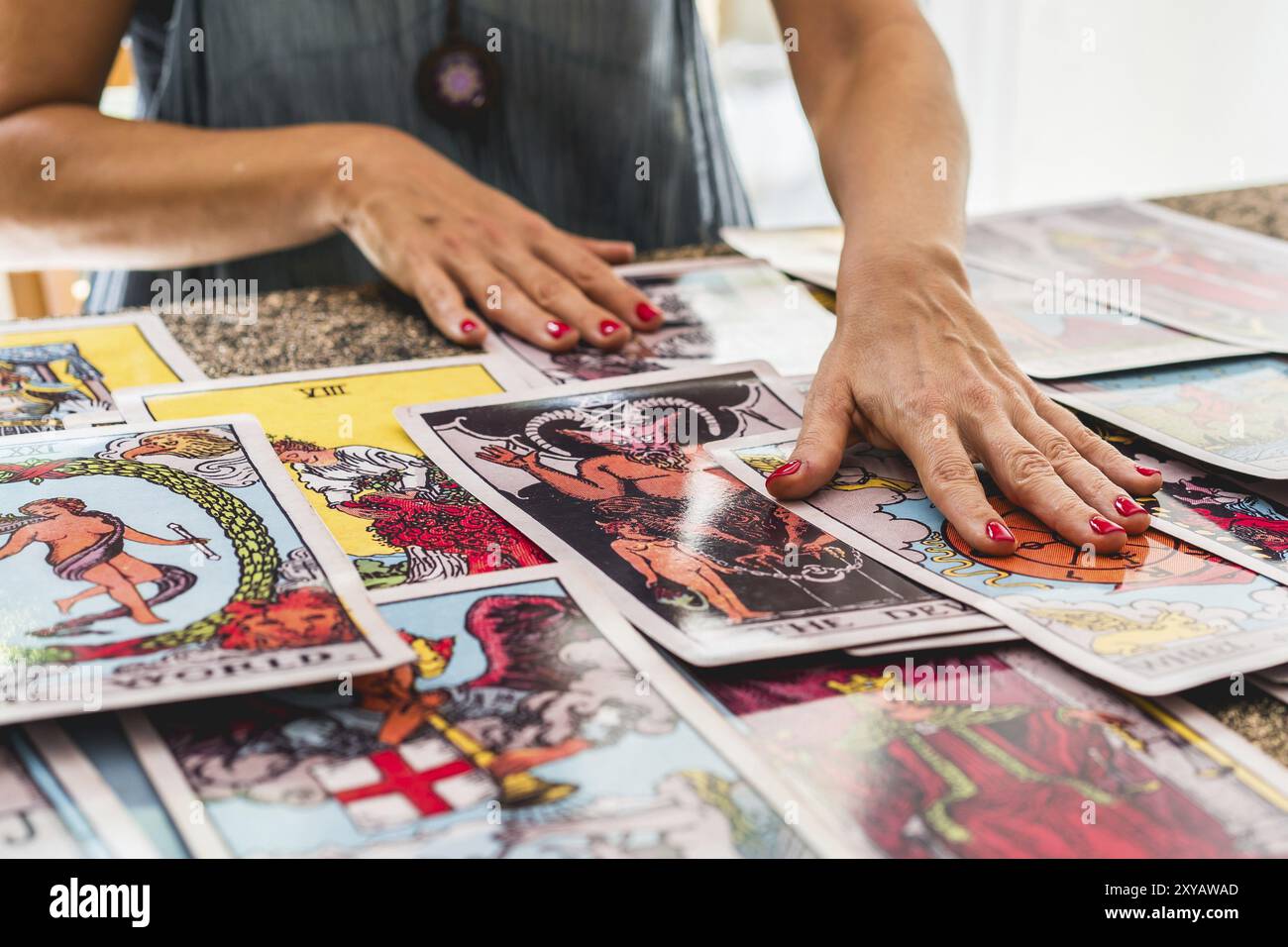
2. Complementary Cards (Synergy and Flow)
When two cards from the same suit or with similar themes appear together, they often amplify each other’s energy. For instance, the Three of Cups (celebration) paired with the Six of Cups (nostalgia) might suggest reconnecting with joyful memories to inspire current celebrations. These combinations create a sense of flow and continuity, making the reading feel cohesive and purposeful.
3. Sequential Cards (Cause and Effect)
If cards are drawn in a specific order (e.g., past and present), their relationship can reveal a cause-and-effect dynamic. The Eight of Wands (fast movement) followed by the Four of Swords (rest) might indicate a period of rapid progress (Eight of Wands) that now requires pause (Four of Swords) to integrate the changes. This approach helps the querent understand the natural progression of their situation.
Advanced Techniques for Multi-Card Combinations
For readings with three or more cards, the interplay becomes more complex, but also more revealing. Here’s how to navigate these combinations:
1. Triads (Past-Present-Future)
In a three-card spread, each position offers a different lens. For example, the Ace of Pentacles (past) + The Empress (present) + The Ten of Cups (future) could suggest a journey from new opportunities (Ace of Pentacles) to nurturing growth (The Empress) leading to emotional fulfillment (Ten of Cups). Triads often reveal a clear narrative arc, making them ideal for storytelling in readings.
2. Thematic Clusters
When multiple cards share a theme (e.g., all Cups cards in a spread), they create a cluster that deepens the exploration of that theme. For instance, the Page of Cups, Queen of Cups, and Knight of Cups might indicate a period of emotional exploration, intuition, and romantic pursuits. Grouping cards this way helps the reader focus on the overarching message rather than isolated symbols.
3. The “Story” Approach
Treat multi-card combinations as a story with a beginning, middle, and end. For example, The Tower (sudden change) + The Star (hope) + The Six of Wands (victory) could narrate a tale of upheaval (The Tower) leading to renewed faith (The Star) and eventual success (Six of Wands). This method makes the reading more engaging and easier to relate to for the querent.
Common Pitfalls and How to Avoid Them
Even experienced readers can fall into traps when combining cards. Here’s how to steer clear of them:
- Overcomplicating the Reading: Avoid forcing connections between every card. Sometimes, a card stands alone with its own message. Trust your intuition to guide you.
- Ignoring Card Reversals: Reversed cards add another layer of meaning. A reversed card in combination might indicate blocked energy or internal resistance. Always consider the card’s orientation.
- Relying Too Heavily on Guidebooks: While guidebooks provide a starting point, they can limit your interpretation. Use them as a reference, but allow your intuition to fill in the gaps.
- Forcing a Narrative: Not every combination will tell a clear story. Some cards may simply highlight contrasting energies without a resolution. Embrace ambiguity—it’s part of the tarot’s magic.
Practical Exercises to Master Combinations
To build confidence in interpreting card combinations, try these exercises:
- Daily Two-Card Pulls: Draw two cards each day and journal about their interaction. How do they relate to your current experiences?
- Spread Experimentation: Use a simple three-card spread (past-present-future) and focus on how the cards flow together. Do they tell a cohesive story?
- Elemental Pairing: Pull two cards and analyze their elemental dignities. Do they harmonize, clash, or balance each other?
- Reverse Card Challenges: Draw a card, reverse it, and pair it with another card. How does the reversal shift the meaning of the combination?
Conclusion
Combining tarot cards is an art that transforms a static reading into a living dialogue between the cards and the querent. By understanding the principles of card interactions—whether through elemental dignities, numerology, or thematic connections—you can uncover deeper insights that promise a shift in perspective and spark curiosity. Whether you’re exploring two-card pulls or complex multi-card spreads, the key is to approach each combination with an open mind and a willingness to let the cards guide you. With practice, you’ll find that these combinations not only enrich your readings but also deepen your connection to the tarot’s wisdom.
FAQ
Why is it important to combine tarot cards?
Combining tarot cards allows for a deeper interpretation of readings, revealing layers of meaning that single-card pulls may miss.
What are the basic principles of combining tarot cards?
Key principles include understanding card positions, elemental dignities, numerology, and suits/themes.
How can I practice combining tarot cards?
Exercises like daily two-card pulls and spread experimentation can help build confidence in interpreting card combinations.
Leave a Reply