Short Answer
In this comprehensive guide, you will explore the profound symbolism of Clock & Circle Tarot Symbols, uncovering their connections to time cycles, destiny, and spiritual growth. Whether you’re a seasoned tarot reader or a curious beginner, this article will deepen your understanding of how these motifs reflect life’s rhythms, karmic patterns, and the cyclical nature of existence. You’ll learn about the historical significance of clocks and circles in tarot, their interpretations in major arcana cards, and practical ways to apply this knowledge in readings. By the end, you’ll see how these symbols serve as powerful tools for self-reflection and divine timing.
The Historical & Spiritual Significance of Clocks in Tarot
Clocks in tarot are more than mere timekeeping devices—they symbolize the inevitability of time, the passage of life, and the concept of divine timing. Historically, clocks represent order, structure, and the cyclical nature of existence, mirroring the tarot’s own cyclical journey through the Major Arcana. In esoteric traditions, time is not linear but a series of repeating patterns, much like the seasons or the phases of the moon. The clock’s hands—hour, minute, and second—can reflect different layers of time: the hour hand for long-term cycles (like a lifetime), the minute hand for mid-term phases (such as a year or a project), and the second hand for fleeting moments (decisions or opportunities).
In tarot, clocks often appear in cards like The Wheel of Fortune, where the cyclical movement of time suggests that what goes around comes around. This reinforces the idea that our actions and choices are part of a larger, predetermined cosmic order. A clock may also appear in The Hanged Man, symbolizing a pause in time—a moment of suspension where growth occurs before a breakthrough. Understanding this symbolism helps readers recognize that time is not an enemy but a collaborator in their spiritual and personal evolution.

The Circle as a Symbol of Wholeness & Destiny
The circle is one of the most ubiquitous and powerful symbols in tarot, representing infinity, unity, and the eternal cycle of life. Unlike the clock, which measures time, the circle embodies the timeless nature of existence—a reminder that beginnings and endings are interconnected. In tarot, circles appear in various forms: as the Ouroboros (a serpent eating its own tail, symbolizing self-reflection and renewal), the wreaths in The Sun card, or the halos around divine figures like The Magician or The High Priestess. Each iteration reinforces the idea of completeness and the cyclical nature of destiny.
In the context of destiny, the circle suggests that life’s events are not random but part of a grand design. For example, in The World card, the dancer is enclosed within a circular wreath, symbolizing the completion of a major life cycle and the attainment of wholeness. Similarly, the Hermetic axiom “As above, so below” is visually represented through circular patterns, where the macrocosm (the universe) mirrors the microcosm (the individual). This symbolism encourages readers to trust in the natural flow of life, even when faced with uncertainty.
Circles also appear in practical tarot elements, such as the circular spread used in readings, where positions represent different life areas (past, present, future, challenges, etc.). This spread reinforces the idea that all aspects of life are interconnected, and decisions in one area ripple outward in a circular fashion. By meditating on the circle’s symbolism, readers can gain clarity on how their choices shape their destiny.
Clock & Circle Symbolism in Major Arcana Cards
The Major Arcana is rich with clock and circle symbolism, each card offering unique insights into time, cycles, and fate. Below are some of the most significant cards where these symbols appear:
The Wheel of Fortune
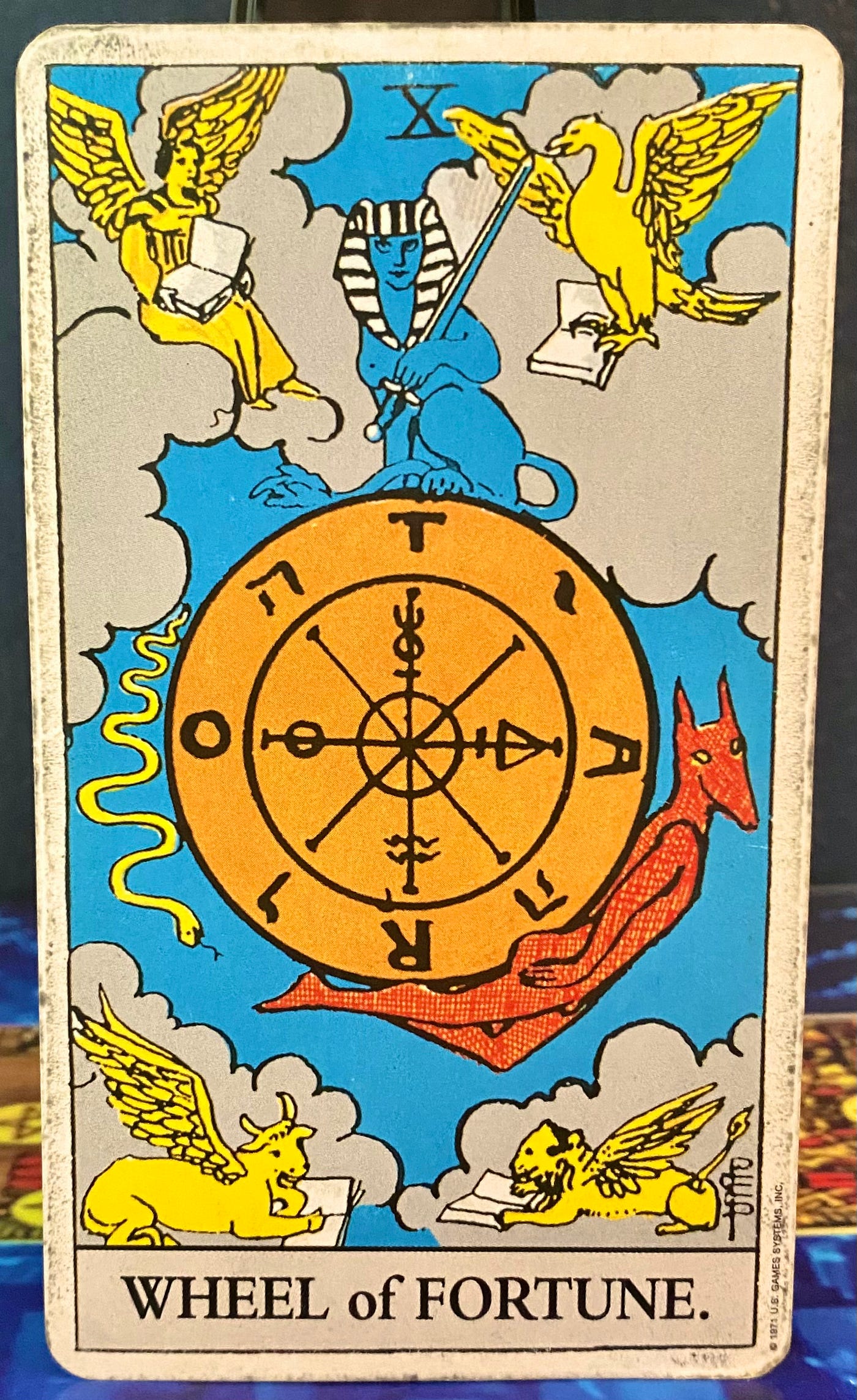
The Wheel of Fortune is the quintessential card for clock and circle symbolism. The wheel itself is a circle, representing the cyclical nature of luck, karma, and life’s ups and downs. The four Hebrew letters on the wheel (YHVH, representing the divine name) suggest that fate is divinely ordained. The sphinx at the top of the wheel symbolizes wisdom and the need to rise above circumstances, while the snake at the bottom represents the inevitability of change. This card teaches that time moves in cycles, and what seems like a setback may be a setup for a greater opportunity.
The Hanged Man
The Hanged Man features a figure suspended upside down, creating a sense of suspended time. The halo around his head forms a circle, symbolizing enlightenment through stillness. This card represents a pause—a moment to reflect before taking action. The clock’s hands are absent, emphasizing that time is not the enemy but a teacher. The Hanged Man reminds us that sometimes, the best way to move forward is to surrender to the natural rhythm of life, even if it feels like we’re standing still.
The Sun
The Sun card often depicts a child riding a white horse beneath a radiant sun, with a wreath encircling the horse’s head. The wreath is a circle, symbolizing victory, completion, and the joy of living in the present moment. The sun itself represents the eternal cycle of dawn and dusk, reinforcing the idea that light always follows darkness. This card encourages readers to embrace the present, trust in divine timing, and celebrate life’s simple pleasures.
The World
The World card is the final Major Arcana card, depicting a dancer enclosed within a circular wreath. The wreath, a universal symbol of completion, represents the end of a major life cycle and the attainment of wholeness. The four figures in the corners (representing the four elements or the four corners of the earth) further emphasize the interconnectedness of all things. This card is a powerful reminder that every ending is a new beginning, and time is a gift to be savored.
Practical Applications: Using Clock & Circle Symbolism in Readings
Incorporating clock and circle symbolism into tarot readings can provide profound insights into timing, destiny, and personal growth. Here are some practical ways to apply this knowledge:
Timing Questions
When a querent asks about timing (e.g., “When will I find love?” or “When will I get a promotion?”), look for clock symbols in the spread. A clock in the present position may indicate that the timing is already aligned, while a clock in the future position suggests patience is needed. The position of the clock’s hands can also offer clues: an hour hand pointing to a specific time may indicate a long-term cycle, while a minute hand suggests a shorter timeframe.
Cyclical Patterns
If a spread reveals a circle or a repeating pattern (e.g., multiple cards from the same suit or Major Arcana), it may indicate that the querent is in a cycle that will repeat until a lesson is learned. For example, a series of cards like The Wheel of Fortune, The Hanged Man, and The World could suggest a major life cycle nearing completion, with a new one on the horizon.
Destiny & Free Will
Clocks and circles can also highlight the interplay between destiny and free will. A card like The Wheel of Fortune may show that certain events are fated, but the querent’s choices (represented by their actions in the spread) will determine how they navigate those events. Similarly, a circle in a reading may suggest that the querent is part of a larger cosmic plan, but their free will allows them to shape their journey within that plan.
Common Misconceptions & Clarifications
While clock and circle symbolism is powerful, it’s easy to misinterpret their meanings. Here are some common pitfalls to avoid:
Assuming Clocks Always Mean “Wait”
Not all clocks in tarot indicate a need for patience. A clock in a positive position (e.g., The Sun or The Star) may suggest that time is on the querent’s side, while a clock in a challenging position (e.g., The Tower) could indicate a sudden change in timing. Always consider the card’s overall message before drawing conclusions.
Overlooking the Circle’s Dual Nature
The circle can represent both completion and eternal recurrence. In some contexts, it may signal the end of a cycle (as in The World), while in others, it may suggest that history is repeating itself (as in The Wheel of Fortune). Pay attention to the surrounding cards to determine which interpretation applies.
Ignoring Personal Intuition
While symbolism provides a framework, personal intuition is key. A clock or circle may hold a unique meaning for the querent based on their life experiences. Always encourage the querent to reflect on how these symbols resonate with them personally.
Conclusion
Clock and circle symbols in tarot are gateways to understanding the deeper rhythms of life—time as a teacher, cycles as teachers, and destiny as a collaborative journey. By exploring their historical roots, interpreting their appearances in Major Arcana cards, and applying their wisdom to readings, you can unlock profound insights into timing, personal growth, and the interconnectedness of all things. Whether you’re seeking clarity on a specific question or simply deepening your tarot practice, these symbols remind you that life is not a straight line but a spiral, where each turn brings new wisdom and each cycle prepares you for the next. Embrace the clock’s ticking as a reminder to live mindfully, and the circle’s embrace as a promise of wholeness and renewal.
FAQ
What do clocks symbolize in tarot cards?
Clocks represent time's passage, divine timing, and cyclical life patterns, helping readers understand timing and phases in a querent's journey.
How is the circle symbol used in tarot?
The circle stands for infinity, unity, and the eternal cycle of life, reminding readers of interconnectedness and the flow of destiny.
Which tarot cards feature clock and circle symbols?
The Wheel of Fortune, The Hanged Man, The Sun, and The World prominently display these symbols to convey themes of time and completion.
How can clock and circle symbolism aid tarot readings?
They help interpret timing questions, reveal repeating life cycles, and explore the balance between fate and free will.
Leave a Reply