Short Answer
The fascination with demonology and tarot cards—particularly in the context of fear or hidden knowledge—stems from humanity’s enduring curiosity about the unknown. This guide explores the duality of demonic imagery in tarot, its psychological and cultural underpinnings, and why these symbols continue to captivate modern audiences. By examining historical roots, symbolic interpretations, and contemporary applications, readers will gain a deeper understanding of why demonic tarot resonates as both a tool for divination and a mirror to the subconscious.
The Historical Roots of Demonic Tarot
Tarot cards trace their origins to 15th-century Europe, where they were initially used as playing cards before evolving into divination tools. The inclusion of demonic imagery, such as the Devil card in the Major Arcana, reflects the era’s religious and cultural anxieties. During the Renaissance, occultists like the Hermetic Order of the Golden Dawn reinterpreted tarot through esoteric traditions, blending Christian demonology with Kabbalistic and alchemical symbolism. The Devil card, for instance, often depicts chained figures beneath a horned figure, symbolizing bondage to material desires or primal instincts. This historical layer adds depth to modern interpretations, where the card may represent addiction, toxic relationships, or the shadow self.
The association of tarot with the occult was further solidified in the 18th and 19th centuries, as figures like Éliphas Lévi and Arthur Edward Waite infused tarot with mystical significance. Lévi’s work linked tarot to ceremonial magic, while Waite’s Rider-Waite-Smith deck introduced detailed, narrative-driven imagery that emphasized moral and spiritual lessons. The demonic elements in these decks were not merely decorative but served as cautionary tales, warning against the perils of unchecked desire or hubris.
Demonic Symbolism in Tarot: Fear vs. Hidden Knowledge
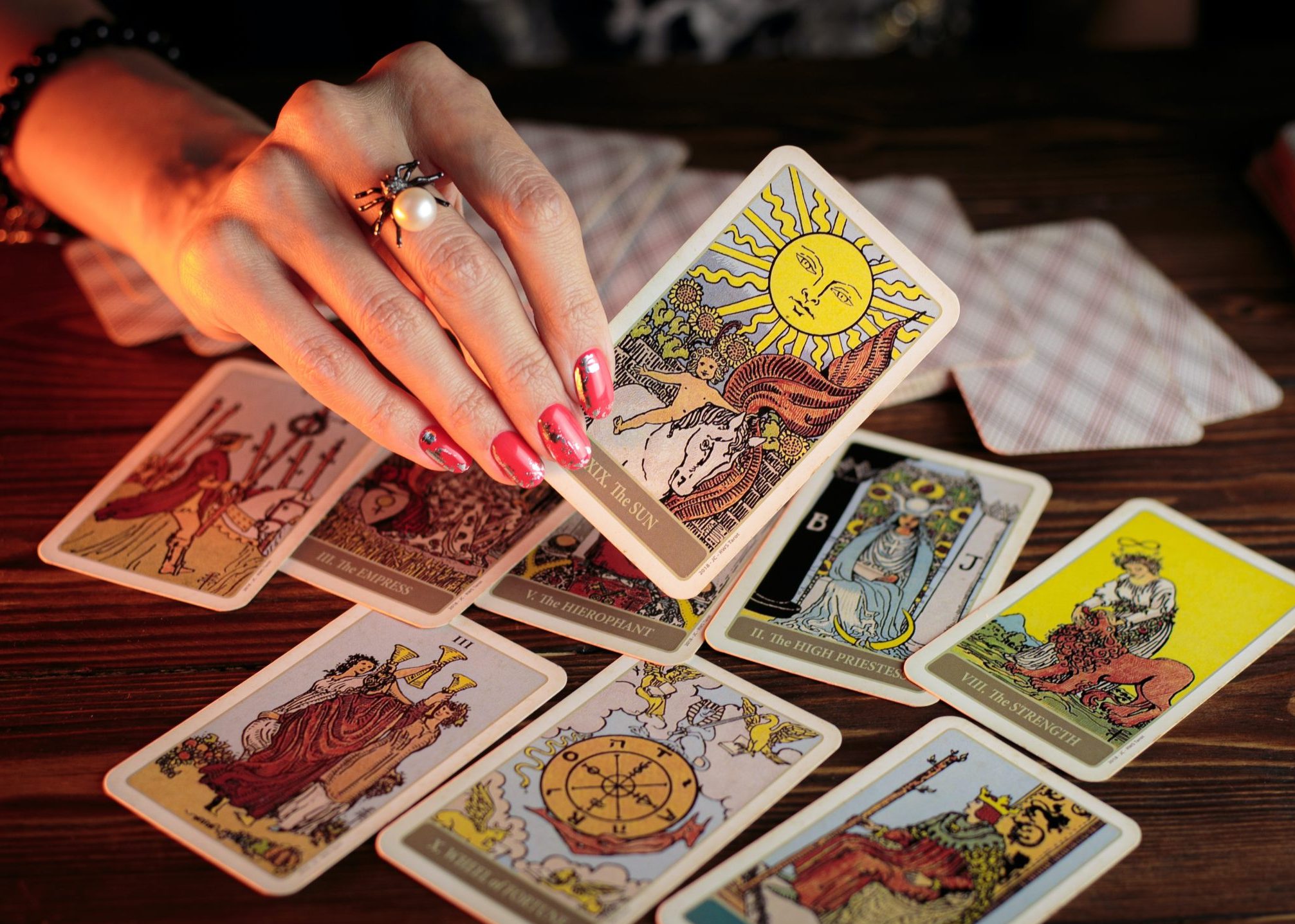
The duality of demonic tarot lies in its ability to evoke both fear and enlightenment. Cards like the Devil, Tower, and Three of Swords often carry ominous connotations, tapping into primal fears of damnation, chaos, or emotional pain. However, these same cards can also be read as invitations to confront hidden truths. For example, the Tower card’s imagery of a crumbling structure represents sudden upheaval, but it also signifies liberation from illusions that no longer serve us. Similarly, the Devil card may highlight toxic patterns, but its presence in a reading can prompt the querent to acknowledge and break free from self-destructive behaviors.
Psychologically, demonic tarot resonates because it externalizes internal struggles. Carl Jung’s concept of the shadow self—the repressed, darker aspects of the psyche—finds a visual language in these cards. The horned figure in the Devil card, for instance, can symbolize the unacknowledged desires or fears that drive human behavior. By engaging with these symbols, individuals may gain insight into their motivations, fears, and unresolved conflicts. This dual role as both a harbinger of fear and a tool for self-discovery explains why demonic tarot remains a popular subject in both occult and psychological circles.
The Role of Demonology in Modern Tarot Practice
In contemporary tarot, demonic imagery is often recontextualized to address modern anxieties. Games like Demonologist have popularized tarot-inspired mechanics, blending occult aesthetics with interactive storytelling. These games often frame tarot cards as conduits for summoning or battling supernatural entities, reflecting a cultural shift where esoteric traditions are gamified for entertainment. However, the underlying themes remain the same: the tension between control and surrender, knowledge and ignorance, fear and empowerment.
For practitioners, demonic tarot can serve as a meditative tool. Drawing a card like the Moon, with its eerie imagery of a crayfish emerging from water, may prompt reflection on intuition, illusion, or the subconscious. The key is to approach these cards with intention, using them to explore rather than to predict. This modern reinterpretation aligns with the original purpose of tarot: to facilitate self-examination and personal growth, regardless of the symbols used.
The resurgence of interest in demonic tarot also reflects broader cultural trends. In an era marked by uncertainty—whether due to global crises, technological disruption, or societal upheaval—people turn to esoteric practices for meaning and control. Tarot, with its blend of structure and mystery, offers a sense of agency in the face of the unknown. The demonic elements, far from being mere superstition, become a way to confront and integrate the darker aspects of existence.
Cultural and Ethical Considerations
While demonic tarot can be a powerful tool for introspection, it is not without controversy. Religious groups often view tarot as taboo, associating it with occult practices that conflict with their beliefs. Others critique the commercialization of tarot, where mass-produced decks dilute the depth of traditional symbolism. Ethical practitioners emphasize the importance of respecting the origins of these symbols and using them responsibly, avoiding sensationalism or exploitation.
Moreover, the line between cultural appreciation and appropriation can be thin. Many modern tarot decks draw from diverse traditions, including Haitian Vodou, European grimoires, and Middle Eastern mysticism. Practitioners must be mindful of the cultural contexts from which these symbols emerge, ensuring that their use is informed and respectful. This awareness adds another layer to the practice, transforming tarot from a mere divination tool into a bridge between cultures and histories.
Conclusion
Demon and Demonologist tarot cards occupy a unique space in the world of divination and self-exploration. They are at once a reflection of humanity’s deepest fears and a gateway to hidden knowledge. Whether approached as a psychological tool, a spiritual guide, or a narrative device in games, these cards challenge us to confront the unknown—both within ourselves and in the world around us. Their enduring appeal lies in their ability to adapt to changing times while retaining a core that speaks to universal truths: the struggle between light and dark, control and surrender, fear and understanding. By engaging with demonic tarot thoughtfully, individuals can harness its power not as a source of dread, but as a catalyst for growth and enlightenment.
FAQ
What are the main themes of demonic tarot?
Demonic tarot explores the duality of fear and hidden knowledge, using symbols to confront internal struggles and encourage self-discovery.
How does demonology influence modern tarot practices?
Demonology in modern tarot often reflects contemporary anxieties, with symbols recontextualized for personal growth and introspection.
FAQ
What are the main themes of demonic tarot?
Demonic tarot explores the duality of fear and hidden knowledge, using symbols to confront internal struggles and encourage self-discovery.
How does demonology influence modern tarot practices?
Demonology in modern tarot often reflects contemporary anxieties, with symbols recontextualized for personal growth and introspection.
Leave a Reply