Short Answer
Are you holding onto something so tightly that it’s draining your energy? The Four of Pentacles in tarot often symbolizes attachment, control, and the fear of loss—but it also promises a shift in perspective that can liberate you. In this guide, you’ll explore the deeper meanings behind this card, uncover its warnings, and discover how to embrace change without fear. Whether you’re facing financial worries, emotional clinging, or rigid routines, the Four of Pentacles invites you to reflect on what truly serves your growth. By the end, you’ll see how this card isn’t just about restriction; it’s a catalyst for transformation.
The Four of Pentacles: A Card of Attachment and Control
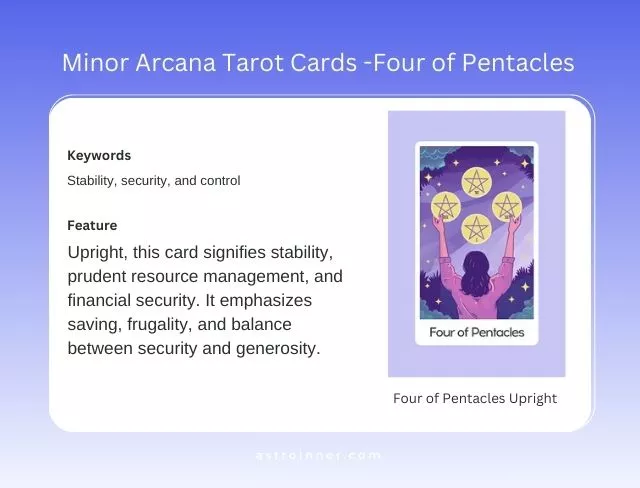
The Four of Pentacles is part of the Minor Arcana and represents a state of holding on—whether to money, relationships, or ideas. The imagery typically shows a figure clutching four pentacles, symbolizing a tight grip on stability, security, or past achievements. This card often appears when you’re resisting change, whether out of fear of the unknown or a desire to maintain control. While stability is important, the Four of Pentacles warns against stagnation. It highlights the paradox of clinging so tightly to what you have that you prevent new opportunities from flowing into your life.
In readings, this card may suggest financial anxiety, emotional possessiveness, or a reluctance to let go of outdated beliefs. For example, if you’re holding onto a job that drains you because it’s familiar, or a relationship that no longer serves you out of fear of being alone, the Four of Pentacles is a mirror. It asks: What are you afraid to lose, and is that fear keeping you from what you truly need?
Upright Meaning: The Weight of Holding On
When the Four of Pentacles appears upright, it often reflects a period where you’re prioritizing security over growth. This could manifest as:
- Financial Caution: You might be saving aggressively, avoiding risks, or feeling anxious about spending even on necessities. While prudence is wise, this card suggests your fear could be limiting your potential.
- Emotional Clinging: You may be holding onto a past relationship, friendship, or even a version of yourself that no longer aligns with who you are today. The fear of loss keeps you from moving forward.
- Rigid Routines: Your daily habits or beliefs might feel like they’re set in stone, making it hard to adapt to new circumstances. This rigidity can lead to burnout or missed opportunities.
The upright Four of Pentacles isn’t inherently negative—it’s a call to examine your attachments. Ask yourself: Am I holding on because I truly need this, or because I’m afraid of what might replace it? Recognizing this pattern is the first step toward a healthier balance between security and openness.
Reversed Meaning: The Shift Toward Letting Go
When the Four of Pentacles appears reversed, it signals a breakthrough. You’re starting to release your grip, whether consciously or subconsciously. This could mean:
- Financial Flexibility: You’re becoming more open to spending on experiences, investments, or self-care that align with your long-term goals. You recognize that money is a tool, not just a safety net.
- Emotional Release: You’re letting go of relationships, grudges, or identities that no longer serve you. This might feel scary, but it’s essential for your well-being.
- Adaptability: You’re embracing change, whether it’s a new job, a move, or a shift in perspective. Your rigidity is softening, allowing new energy to flow into your life.
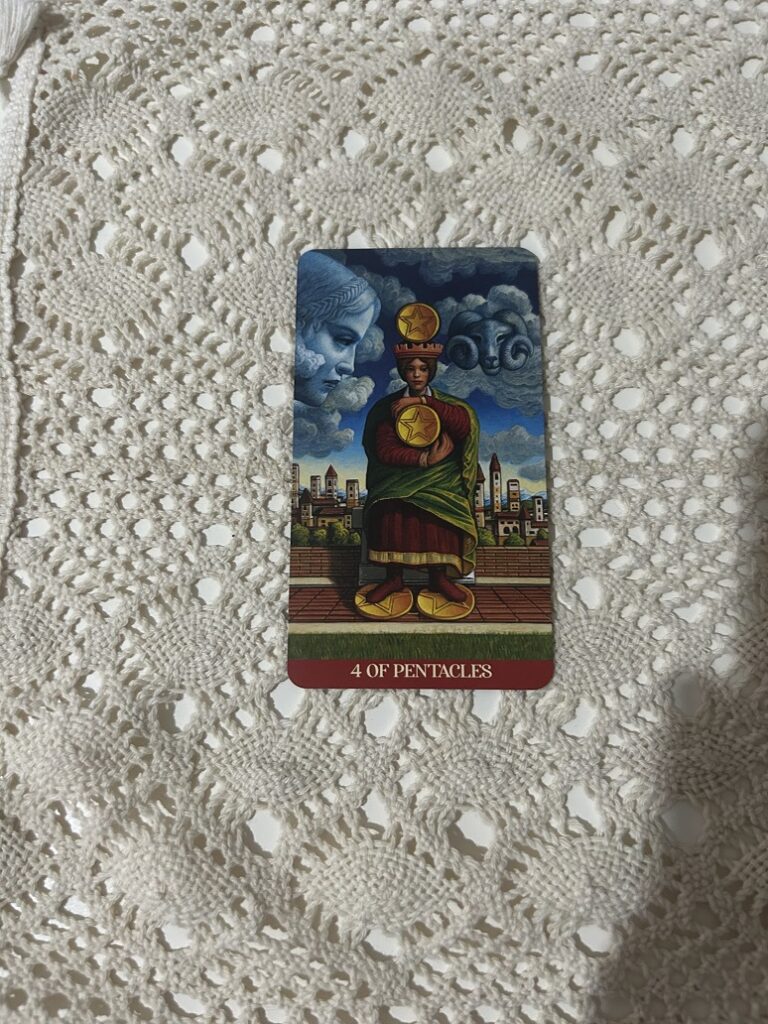
The reversed Four of Pentacles is a powerful invitation to trust the process of change. It’s okay to hold on sometimes, but it’s equally important to know when to release. This card reversed reminds you that true security comes from within, not from external control.
How to Work with the Four of Pentacles Energy
Whether the Four of Pentacles appears upright or reversed, you can harness its energy to create positive change. Here’s how:
For the Upright Four of Pentacles:
- Identify Your Attachments: Write down what you’re holding onto tightly—money, relationships, beliefs—and ask why. Is it serving you, or are you afraid of the alternative?
- Practice Gratitude Without Clinging: Appreciate what you have, but don’t let fear of losing it dictate your decisions. Balance security with openness.
- Take Small Risks: Start with minor changes, like trying a new hobby or spending a little more on something that brings you joy. This builds confidence in your ability to adapt.
For the Reversed Four of Pentacles:
- Release What No Longer Serves You: Let go of one thing that’s weighing you down—a toxic habit, a draining relationship, or a limiting belief. Trust that space will be filled with something better.
- Embrace Impermanence: Recognize that change is a natural part of life. Instead of resisting it, ask yourself how you can flow with it rather than against it.
- Celebrate Your Progress: Acknowledge the shifts you’ve already made. Even small steps toward letting go are victories worth celebrating.
Common Misconceptions About the Four of Pentacles
Many people associate the Four of Pentacles solely with greed or stinginess, but its message is more nuanced. It’s not about being selfish—it’s about recognizing when your need for control is holding you back. Another misconception is that this card always warns of financial ruin. In reality, it’s more about the emotional and psychological weight of holding on. The Four of Pentacles isn’t a punishment; it’s a nudge to reassess what truly matters to you.
Conclusion: The Freedom in Letting Go
The Four of Pentacles teaches that holding on too tightly can create more struggle than security. Whether you’re clinging to money, relationships, or old patterns, this card asks you to examine the cost of your attachments. The good news? The Four of Pentacles also promises a shift in perspective. By recognizing your fears and embracing change, you open the door to growth, abundance, and a lighter sense of being. The next time this card appears in your reading, ask yourself: What am I afraid to lose, and what might I gain by letting go? The answer could be the key to your next chapter.
FAQ
What does the Four of Pentacles mean in tarot?
The Four of Pentacles symbolizes attachment, control, and fear of loss, urging reflection on what we hold tightly and the potential for growth through letting go.
How should I interpret the Four of Pentacles in a reading?
In a reading, the Four of Pentacles may suggest financial anxiety, emotional clinging, or reluctance to let go of outdated beliefs. It invites a reassessment of attachments.
Leave a Reply