Short Answer
Have you ever stared at a tarot deck, feeling overwhelmed by the images, symbols, and meanings? You’re not alone. Many people feel confused when they first encounter tarot cards. The good news is that understanding tarot doesn’t require memorizing a rigid set of rules. Instead, it’s about learning how to interpret the cards intuitively while recognizing the deeper patterns they reveal. In this guide, you’ll discover a practical approach to reading tarot cards—even if you’re a complete beginner. By the end, you’ll feel more confident in your ability to connect with the cards and uncover meaningful insights.
Why Tarot Feels Confusing (And Why That’s Okay)
Tarot cards are rich with symbolism, from ancient archetypes to modern interpretations. This complexity can make the deck feel intimidating, especially when you’re just starting. Many beginners expect to memorize every card’s meaning right away, only to feel frustrated when they can’t recall them during a reading. The truth is, tarot isn’t about rigid memorization—it’s about developing a personal relationship with the cards. Each deck has its own energy, and your intuition plays a key role in understanding them. Instead of forcing yourself to remember every detail, focus on recognizing the themes and emotions the cards evoke. Over time, this approach will feel more natural and less overwhelming.
Start with the Basics: Understanding the Structure of Tarot
Before diving into readings, it’s helpful to understand the two main parts of a tarot deck: the Major Arcana and the Minor Arcana. The Major Arcana consists of 22 cards, each representing significant life events or spiritual lessons. These cards often carry deep, universal themes, like The Fool’s journey or The Lovers’ union. The Minor Arcana, on the other hand, has 56 cards divided into four suits—Cups, Pentacles, Swords, and Wands—each relating to different aspects of daily life. Cups deal with emotions, Pentacles with finances, Swords with thoughts, and Wands with creativity. By familiarizing yourself with these suits, you’ll begin to see how tarot reflects the complexities of human experience.
Learn to Read Cards Intuitively (Without Relying on Guidebooks)
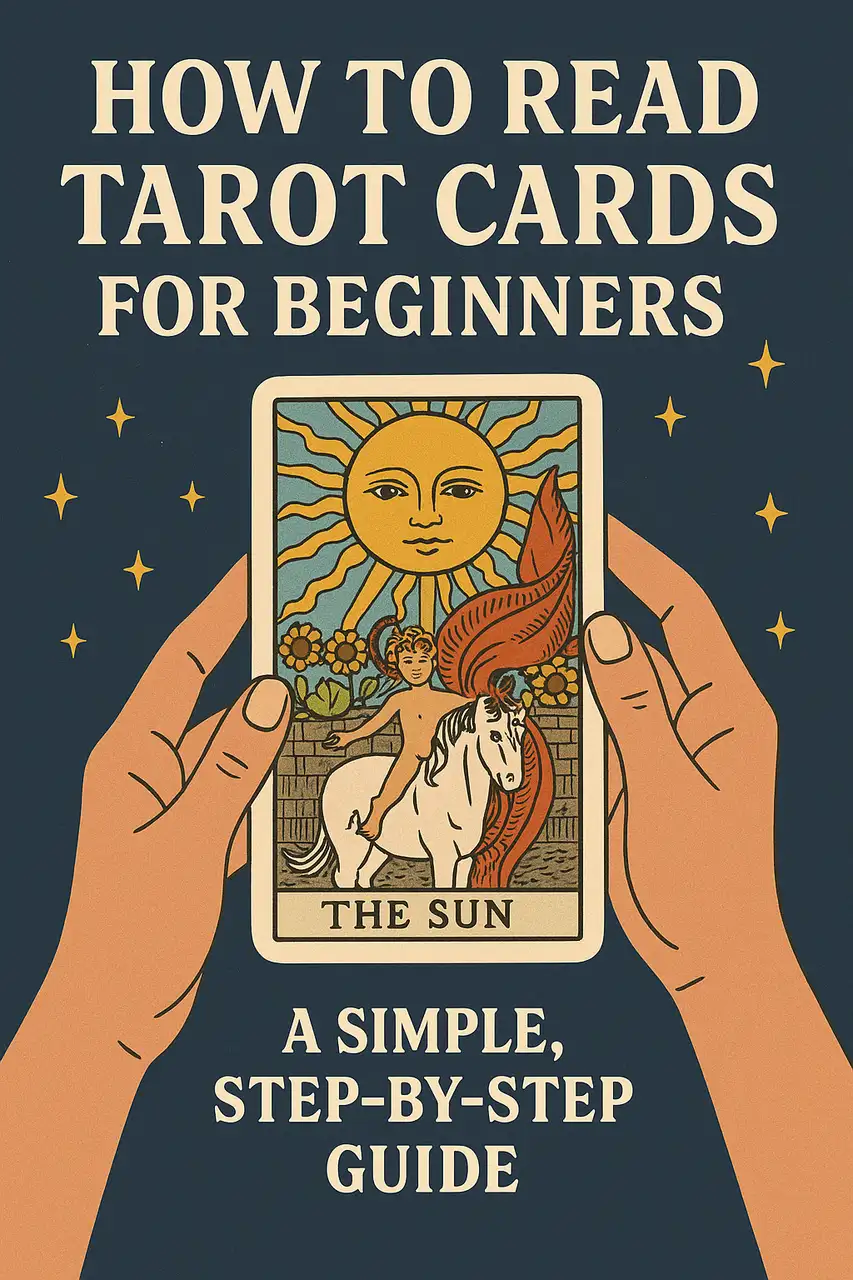
One of the biggest misconceptions about tarot is that you need to memorize guidebook meanings to read accurately. While guidebooks can be helpful, they shouldn’t be your only source of interpretation. Instead, try this exercise: shuffle your deck and pull one card at random. Before looking at the guidebook, ask yourself what the card’s imagery suggests to you. Does it feel positive or challenging? Does it remind you of a person or situation in your life? Trusting your first impression is a powerful way to develop your intuition. Over time, you’ll notice that your interpretations become more nuanced and personal, making your readings far more meaningful.
Focus on Card Combinations and Context
A single tarot card can have multiple meanings, but its true significance often emerges when combined with other cards in a spread. For example, The Tower (a card of sudden change) next to The Star (a card of hope) might suggest that a difficult event will lead to a positive transformation. To practice this, try simple three-card spreads: past, present, and future. As you lay out the cards, observe how they interact with one another. Do they tell a cohesive story, or do they seem to contradict each other? This exercise will sharpen your ability to see the bigger picture in any reading.
Use Simple Spreads to Build Confidence
Complex spreads can be overwhelming for beginners, so start with straightforward layouts. A one-card pull is perfect for daily guidance, while a three-card spread (past, present, future) helps you track progress over time. As you grow more comfortable, you can experiment with spreads like the Celtic Cross, which offers deeper insights into challenges and opportunities. Remember, the goal isn’t to create a perfect spread—it’s to explore the cards’ messages in a way that resonates with you. The more you practice, the more intuitive your readings will become.
Pay Attention to Card Imagery and Symbols
Tarot cards are filled with symbols that carry universal meanings, from the colors used to the objects depicted. For instance, a card with a cup overflowing might suggest abundance, while a sword pointing downward could indicate a need for reflection. Take time to study the imagery in your deck. What stands out to you? Do certain symbols repeat across cards? These observations will deepen your understanding and help you connect with the cards on a personal level. Over time, you’ll develop your own interpretations based on what resonates with you.
Practice Regularly to Strengthen Your Skills
Like any skill, tarot reading improves with practice. Set aside a few minutes each day to pull a card and reflect on its message. Keep a journal to track your interpretations and notice patterns over time. You can also ask the cards specific questions, such as “What do I need to focus on today?” or “What lesson is this situation teaching me?” The more you engage with the cards, the more natural reading them will feel. Don’t worry about making mistakes—every misstep is an opportunity to learn and grow.
Conclusion
Understanding tarot cards doesn’t have to be a daunting task. By approaching the deck with curiosity and an open mind, you’ll gradually uncover its wisdom without the pressure of memorization. Start with the basics, trust your intuition, and practice regularly. Over time, you’ll find that tarot becomes a valuable tool for self-reflection and guidance. Whether you’re seeking clarity on a specific issue or simply exploring the cards’ deeper meanings, remember that tarot is a journey—one that’s meant to be enjoyed at your own pace.
FAQ
What are the two main parts of a tarot deck?
The two main parts of a tarot deck are the Major Arcana, which consists of 22 cards representing significant life events, and the Minor Arcana, which contains 56 cards divided into four suits: Cups, Pentacles, Swords, and Wands.
How can I interpret tarot cards without a guidebook?
You can interpret tarot cards intuitively by focusing on the imagery and personal associations each card evokes, rather than relying solely on guidebook meanings.
What is a simple tarot spread for beginners?
A one-card pull is a great simple spread for daily guidance, while a three-card spread can help you explore past, present, and future insights.
FAQ
What are the two main parts of a tarot deck?
The two main parts of a tarot deck are the Major Arcana, which consists of 22 cards representing significant life events, and the Minor Arcana, which contains 56 cards divided into four suits: Cups, Pentacles, Swords, and Wands.
How can I interpret tarot cards without a guidebook?
You can interpret tarot cards intuitively by focusing on the imagery and personal associations each card evokes, rather than relying solely on guidebook meanings.
What is a simple tarot spread for beginners?
A one-card pull is a great simple spread for daily guidance, while a three-card spread can help you explore past, present, and future insights.
Leave a Reply