Short Answer
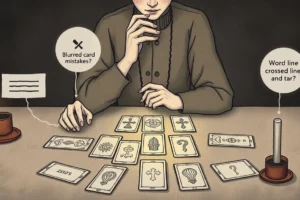
Have you ever pulled a tarot card and felt like it just didn’t resonate with your question? Maybe the imagery seemed off, the message felt vague, or the energy felt flat—like the cards were playing a trick on you. If so, you’re not alone. Tarot readings can sometimes feel “wrong,” but that doesn’t mean the cards are broken or the universe is against you. It might just mean you’re seeing the reading through a skewed lens. In this guide, we’ll explore the concept of Perception Tarot—where the cards are right in front of you, but your interpretation is playing a little game of hide-and-seek. You’ll learn how to reframe your questions, challenge your assumptions, and uncover the deeper truths hidden in plain sight. By the end, you’ll see that “wrong” readings are often the most revealing ones.
What Is Perception Tarot? Understanding the Illusion of “Wrong” Readings
Perception Tarot is the idea that tarot cards themselves aren’t inherently “wrong”—it’s how we perceive and interpret them that shapes the outcome. A card that feels off, confusing, or even contradictory might be highlighting a blind spot in your question, your energy, or your expectations. For example, pulling the Five of Swords when you’re hoping for good news might feel discouraging, but it could be pointing to a situation where competition or conflict is present—even if you haven’t acknowledged it yet. The key is to ask: Is the card wrong, or is my perception of it wrong?
This concept isn’t about dismissing your feelings. If a reading feels “off,” it’s worth exploring why. Are you asking the wrong question? Are you in a headspace that’s clouding your intuition? Or is the card itself acting as a mirror, reflecting something you’ve been avoiding? Perception Tarot encourages you to question the narrative you’re creating around the cards, rather than assuming the cards are flawed.
The Playful Question: Why Are You Assuming the Cards Are Wrong?
Let’s start with a lighthearted challenge: What if the cards aren’t wrong—you just asked the wrong question? Tarot thrives on curiosity, but sometimes our questions are loaded with bias, fear, or impatience. For instance, asking, “Will I get the job?” sets up a binary answer (yes/no), which leaves no room for nuance. A more open-ended question like, “What do I need to know about my job search right now?” invites the cards to reveal deeper insights, like hidden opportunities or internal blocks. The “wrong” feeling might stem from the cards responding to a question that was too narrow to begin with.
Another playful angle: What if the cards are trolling you? Tarot has a mischievous side, especially when you’re taking it too seriously. The Three of Cups reversed in a love reading might feel like a slap in the face, but it could be a nudge to examine your social circle or emotional attachments. Instead of resisting the “wrong” vibe, lean into the absurdity. Ask the cards, “What’s the joke here?” and see what they reveal. Sometimes, the most “off” cards are the ones that make you laugh—and that laughter can break through mental blocks.
Common Pitfalls: How Your Mind Plays Tricks on You
Our brains are wired to fill in gaps, jump to conclusions, and project our fears onto neutral stimuli. In tarot, this can manifest in several ways:
- Confirmation Bias: You pull a card and immediately think, “This confirms what I already believe.” But what if the card is showing you the opposite? For example, the Ten of Pentacles might feel like a sign of financial stability, but reversed, it could be warning you about family dynamics or materialism.
- Emotional Projection: If you’re feeling anxious, every card might seem ominous. The Sun could feel like a warning instead of a blessing because you’re bracing for bad news. Try grounding yourself before a reading to separate your emotions from the cards.
- Over-Reliance on Guidebooks: Guidebooks are helpful, but they can also limit your interpretation. The Knight of Wands might be described as “impulsive,” but in your context, it could represent a burst of creative energy you’ve been ignoring. Use guidebooks as a starting point, not a rulebook.
To combat these pitfalls, try freeform journaling after a reading. Write down the first words that come to mind when you see a card, without referencing any meanings. Then, compare your impressions to traditional interpretations. You might discover that your gut reaction was more accurate than you thought.
Reframing the Challenge: What the Cards Are Really Saying
When a reading feels “wrong,” it’s often a sign that the cards are challenging you to dig deeper. Here’s how to reframe the narrative:
- Look for the Hidden Message: The Page of Swords in a career reading might feel like a sign of gossip or drama, but it could be highlighting a need to communicate more clearly or seek new information. Ask yourself: What’s the underlying lesson here?
- Consider the Timing: A card that feels “off” now might make perfect sense in a few weeks. The Eight of Cups can feel like abandonment, but it’s also about walking away from what no longer serves you. Trust that the timing of the message is part of the lesson.
- Check Your Energy: If you’re feeling drained or distracted, your energy might be coloring the reading. Try cleansing your space, meditating, or shuffling the cards again to reset your connection.
Another technique is to flip the script. If a card feels negative, ask: How could this be a positive? The Five of Cups is often seen as a card of loss, but it’s also about acknowledging grief so you can move forward. The “wrong” feeling might be the first step toward healing.
Practical Exercises to Shift Your Perception
Ready to put Perception Tarot into action? Try these exercises to challenge your assumptions and deepen your connection to the cards:
- The “What If?” Game: Take a card that felt “wrong” and ask, “What if this card is actually a blessing in disguise?” Write down 3 possible positive interpretations. For example, the Hanged Man might feel like stagnation, but it could also represent a new perspective or a moment of surrender that leads to growth.
- Reverse the Question: Instead of asking, “What’s wrong with this reading?” ask, “What is the reading trying to teach me?” This shifts your focus from judgment to curiosity.
- Draw a Clarifier Card: After a reading that feels off, pull one additional card and ask, “What am I missing here?” The clarifier might reveal a hidden influence or a different angle on the situation.
- Use a Different Deck: Sometimes, the energy of a deck can clash with your current mood. Try a different deck and see if the same card feels different. This can help you separate the card’s meaning from your personal associations.
Conclusion: The Cards Are Right—You’re Just Not Seeing It Yet
Perception Tarot isn’t about fixing “wrong” readings—it’s about expanding your perspective. The next time a tarot spread feels off, pause and ask yourself: What am I not seeing? The cards are rarely wrong; they’re just waiting for you to meet them halfway. Whether it’s a playful question, a hidden message, or a shift in energy, the “wrong” readings often hold the most valuable lessons. So the next time the cards feel like they’re playing tricks on you, lean in. The joke might be on you—but in the best possible way.
FAQ
What is Perception Tarot?
Perception Tarot is the idea that tarot cards themselves aren’t incorrect; instead, the way we interpret and perceive them influences the meaning of the reading.
Why might a tarot reading feel wrong?
A reading might feel wrong due to biased questions, emotional states, or preconceived notions that cloud interpretation.
How can I correct a tarot reading that feels off?
You can reframe your questions, draw clarifier cards, journal your impressions, or try a different deck to gain new insights.
Are tarot cards ever wrong?
Tarot cards are symbolic tools and are not inherently wrong; perceived errors usually come from the reader’s perspective or question framing.
Leave a Reply