Short Answer
This guide invites you on a journey into the enigmatic world of the Russian Tarot of St. Petersburg, a deck that marries imperial grandeur with esoteric depth. Here, you will uncover the historical roots, artistic brilliance, and symbolic richness that make this tarot deck a masterpiece of divination and art. From its striking visuals to its profound metaphors, discover why this deck resonates with seekers of wisdom, mysticism, and Russian heritage. Whether you’re a seasoned tarot reader or a curious newcomer, this exploration will illuminate the deck’s unique allure and how it can enrich your spiritual practice.
The Historical Legacy of the Russian Tarot of St. Petersburg
The Russian Tarot of St. Petersburg is more than a deck of cards—it is a testament to Russia’s rich cultural and spiritual history. Originating in the imperial era, this tarot deck draws inspiration from the opulence of St. Petersburg, a city synonymous with art, power, and mysticism. The deck’s imagery reflects the grandeur of the Russian Empire, blending traditional tarot symbolism with motifs from Russian folklore, Orthodox iconography, and aristocratic aesthetics. Each card is a window into a bygone era, where emperors, saints, and mythical creatures coexisted in a world of divine intrigue.
The deck’s creation is often attributed to the vision of Yury Shakov, a renowned Russian artist whose work bridges the gap between classical painting and esoteric symbolism. Shakov’s illustrations are meticulously crafted, evoking the precision of Renaissance masters while infusing each card with a sense of mystery. The result is a tarot that feels both timeless and distinctly Russian, offering a fresh perspective on the universal language of archetypes.
Artistic Brilliance: A Visual Feast of Imperial Imagery
The visual appeal of the Russian Tarot of St. Petersburg is undeniable. The deck features a 78-card structure, with each card rendered in a style reminiscent of 19th-century Russian art. The Major Arcana, in particular, is a sight to behold, with cards like The Emperor depicted as a stern yet benevolent tsar, draped in regal robes and surrounded by symbols of power. The The Empress card, on the other hand, portrays a noblewoman in flowing attire, embodying both nurturing energy and unyielding authority.
The Minor Arcana is equally captivating, with suits that echo the four elements—Cups, Swords, Coins, and Wands—each illustrated with scenes from Russian life. For instance, the Three of Cups might depict a traditional Russian folk celebration, complete with dancers in colorful costumes and a table laden with bread, salt, and mead. The attention to detail is extraordinary, with every element—from the architecture in the background to the expressions on the characters’ faces—inviting the viewer to immerse themselves in the scene.
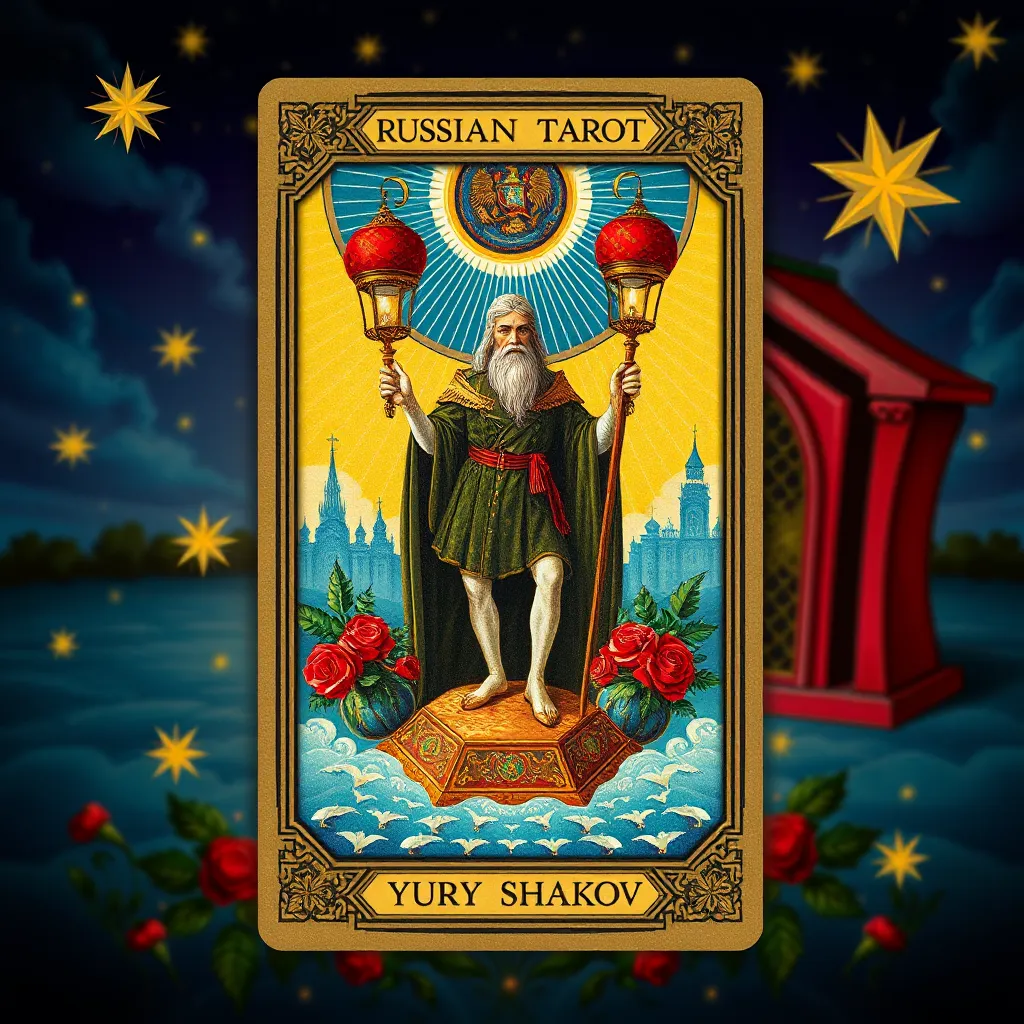
The color palette is rich and evocative, with deep blues, golds, and crimsons dominating the Major Arcana, while the Minor Arcana employs softer hues to convey emotion and atmosphere. This artistic choice not only enhances the deck’s aesthetic appeal but also deepens its symbolic resonance, making it a joy to study and a powerful tool for divination.
Symbolism and Metaphor: Decoding the Russian Soul
At its core, the Russian Tarot of St. Petersburg is a tapestry of symbols, each card weaving a narrative that speaks to the Russian psyche. The deck’s symbolism is deeply rooted in Russian culture, blending esoteric traditions with national identity. For example, The Fool is not merely a carefree wanderer but a figure who embodies the Russian spirit of resilience and adaptability, often depicted with a bundle of belongings and a loyal dog by his side—a nod to the archetypal Russian traveler.
The Hermit card is another standout, portraying a solitary figure in a snowy landscape, holding a lantern that illuminates the path forward. This card resonates strongly in Russian culture, where solitude and introspection are often seen as pathways to enlightenment. Similarly, Death is not depicted as a grim reaper but as a gentle figure overseeing a cycle of rebirth, reflecting the Russian belief in the eternal nature of life and death.
The deck also incorporates Christian symbolism, particularly Orthodox motifs, which add a layer of spiritual depth. For instance, The Hierophant may be represented as a bishop in traditional vestments, while The High Priestess could be depicted as a wise woman in a monastery, surrounded by sacred texts. These elements make the deck particularly appealing to those drawn to the intersection of tarot and spirituality.
Unique Features: What Sets This Deck Apart
One of the most distinctive aspects of the Russian Tarot of St. Petersburg is its dual-language approach. Many cards feature inscriptions in both Russian and English, making the deck accessible to a global audience while preserving its cultural authenticity. This feature is especially valuable for those learning Russian or seeking to deepen their connection to the deck’s origins.
Another unique feature is the deck’s narrative structure. Unlike traditional tarot decks, which rely heavily on standard interpretations, the Russian Tarot of St. Petersburg encourages readers to explore the stories behind each card. For example, the Ten of Swords might be illustrated with a scene from a Russian folktale, inviting the reader to uncover the deeper meaning behind the card’s imagery. This approach transforms the tarot into a tool for storytelling and self-discovery, rather than just a divination aid.
The deck also includes guidebook-style interpretations, which provide insights into the cultural and historical context of each card. These interpretations are invaluable for those looking to understand the deck’s symbolism on a deeper level, bridging the gap between esoteric practice and Russian heritage.
How to Use the Russian Tarot of St. Petersburg
Whether you’re using the deck for divination, meditation, or creative inspiration, the Russian Tarot of St. Petersburg offers a wealth of possibilities. For divination, the deck’s rich symbolism can provide nuanced readings that go beyond traditional interpretations. For example, pulling The Tower might not just signal sudden change but could also reflect the upheavals of Russian history, from revolutions to cultural shifts.
Meditation with this deck is equally powerful. The intricate illustrations and deep symbolism make it an excellent tool for visualization and introspection. You might focus on a card like The Star, imagining yourself as a traveler under the vast Russian sky, seeking guidance and hope. The deck’s visual and emotional depth makes it ideal for journaling, art, or even as a source of inspiration for writers and poets.
For those new to tarot, the Russian Tarot of St. Petersburg can serve as an engaging entry point. Its familiar structure—78 cards divided into Major and Minor Arcana—makes it easy to learn, while its unique cultural perspective offers fresh insights. Beginners can start by studying the Major Arcana to grasp the deck’s overarching themes, then gradually explore the Minor Arcana to deepen their understanding.
Conclusion
The Russian Tarot of St. Petersburg is a masterpiece that transcends the boundaries of traditional tarot. It is a celebration of Russian culture, art, and spirituality, offering a unique lens through which to explore the human experience. Whether you’re drawn to its historical depth, artistic brilliance, or symbolic richness, this deck has something to offer every seeker. It invites you to step into a world where imperial power and mystical wisdom intertwine, where each card is a story waiting to be told.
For those who choose to work with this deck, the rewards are manifold. It is not merely a tool for divination but a gateway to a deeper understanding of self and culture. The Russian Tarot of St. Petersburg challenges us to see beyond the surface, to embrace the complexities of life with courage and curiosity. In a world where tarot decks often blend into one another, this deck stands out as a true original—a testament to the enduring power of art and symbolism.
FAQ
What is the Russian Tarot of St. Petersburg?
The Russian Tarot of St. Petersburg is a tarot deck that blends traditional tarot symbolism with Russian cultural and artistic elements, offering a unique perspective on divination.
How is the deck structured?
The deck consists of 78 cards divided into Major and Minor Arcana, each illustrated with rich imagery reflecting Russian history and folklore.
Can beginners use this deck?
Yes, the Russian Tarot of St. Petersburg is suitable for beginners due to its familiar structure and engaging cultural narratives.
Leave a Reply