Short Answer
Have you ever wondered why tarot cards, despite their mystical reputation, continue to captivate millions around the world? Whether you’re a skeptic or a believer, the question of tarot accuracy lingers in the minds of many. In this comprehensive guide, we’ll explore the reliability of tarot readings, the science and psychology behind them, and why they hold such enduring fascination. By the end, you’ll have a clearer understanding of how tarot works, its limitations, and the deeper reasons behind its widespread appeal.
What Are Tarot Cards and How Do They Work?
Tarot cards are a deck of 78 symbolic cards used for divination and self-reflection. Traditionally, they consist of two main groups: the Major Arcana (22 cards representing significant life themes) and the Minor Arcana (56 cards divided into four suits—Cups, Pentacles, Swords, and Wands—each reflecting everyday experiences).
At their core, tarot readings are not about predicting the future with absolute certainty but rather about providing guidance, insights, and perspectives. The cards act as a mirror, reflecting subconscious thoughts, emotions, and potential outcomes based on the querent’s (the person seeking the reading) current situation and mindset. The imagery, symbols, and archetypes in the cards resonate with universal human experiences, making them a powerful tool for introspection.
The Science Behind Tarot Accuracy: Fact or Fiction?
Skeptics often dismiss tarot as mere superstition, but the accuracy of tarot readings can be examined through psychological and cognitive lenses. One key concept is the Barnum Effect (or Forer Effect), where vague statements are perceived as highly accurate because they apply to almost anyone. Tarot readers often phrase interpretations in broad, relatable terms, which can make the readings feel eerily personal.
Another factor is cold reading, a technique where the reader makes high-probability guesses based on the querent’s appearance, body language, or responses. While not intentional deception, this method can create an illusion of accuracy. Additionally, the confirmation bias plays a role—people tend to remember the “hits” (accurate predictions) and forget the “misses,” reinforcing their belief in the cards’ reliability.
Neuroscience offers another perspective. Studies using fMRI scans have shown that tarot readings can activate the brain’s default mode network, the region associated with self-reflection, memory, and imagination. This suggests that tarot may serve as a tool for accessing subconscious thoughts, making the experience feel meaningful and insightful.
Psychological Benefits: Why Do People Find Tarot Reliable?
Beyond the debate of accuracy, tarot readings offer tangible psychological benefits. For many, the process of shuffling the cards and focusing on a question creates a meditative state, reducing stress and promoting clarity. The act of interpreting the cards encourages self-awareness, helping individuals identify patterns in their thoughts and behaviors.
Tarot also provides a sense of control in uncertain situations. By laying out the cards, the querent gains a structured way to process emotions, confront fears, and explore potential outcomes. This can be particularly empowering for those facing life transitions, relationship challenges, or career dilemmas. The cards serve as a catalyst for introspection, prompting deeper questions like, “What am I avoiding?” or “What steps can I take to improve my situation?”
The Role of Intuition and the Reader’s Influence
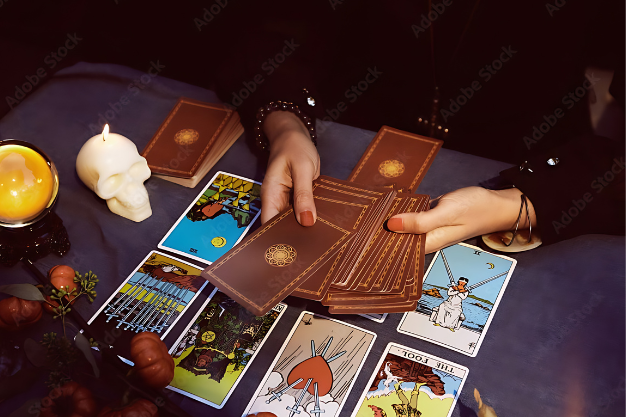
The accuracy of a tarot reading is not solely dependent on the cards themselves but also on the reader’s intuition and skill. A skilled reader combines their knowledge of traditional card meanings with their ability to tune into the querent’s energy and subconscious cues. This intuitive element is what makes each reading unique—no two readers will interpret the same spread identically.
However, this subjectivity also introduces variability. A reading’s accuracy can be influenced by the reader’s biases, emotional state, or even their relationship with the querent. For instance, a reader who is overly optimistic may interpret challenging cards (like the Tower or Ten of Swords) in a less dire light, while a pessimistic reader might amplify their negative connotations. This is why it’s essential to approach tarot with an open mind and recognize that the cards are a tool, not an infallible oracle.
Ethical readers emphasize that tarot should empower, not dictate. They encourage querents to use the insights as a starting point for reflection rather than a fixed prediction. This balanced approach fosters a healthier relationship with the cards, where accuracy is measured not by the precision of future events but by the clarity and guidance they provide.
Common Misconceptions About Tarot Accuracy
One of the most pervasive myths is that tarot cards can predict the future with absolute certainty. In reality, tarot is better suited for exploring probabilities and potential outcomes based on current energies and choices. The future is not set in stone; it is shaped by free will, and tarot readings are most accurate when viewed as a snapshot of the present moment rather than a definitive forecast.
Another misconception is that tarot is purely magical or supernatural. While cultural and historical traditions play a role in tarot’s symbolism, the effectiveness of a reading often boils down to psychology, symbolism, and the human capacity for pattern recognition. The cards act as a visual language, tapping into archetypes that resonate across cultures and time periods.
Lastly, some believe that tarot is only for the “gifted” or “psychic.” In truth, anyone can learn to read tarot with practice and study. While intuition certainly enhances the experience, the foundational meanings of the cards are accessible to all. Many beginners start with simple spreads and gradually build their skills over time.
How to Get the Most Accurate Tarot Readings
If you’re seeking a tarot reading—whether for yourself or from a professional—there are ways to enhance its accuracy and meaningfulness. First, approach the reading with a clear and focused question. Vague queries like “What will happen in my life?” yield vague answers, whereas specific questions like “What should I focus on to improve my career?” provide more actionable insights.
Be open to the messages the cards convey, even if they challenge your expectations. Tarot often highlights blind spots or areas needing attention, which can be uncomfortable but ultimately beneficial. Journaling your readings can also help track patterns over time, allowing you to see how your circumstances and decisions align with the cards’ guidance.
If you’re reading for yourself, create a quiet, distraction-free environment. Lighting a candle, using crystals, or playing soft music can set the mood and deepen your connection to the cards. Trust your first impressions when interpreting the cards—your initial reaction is often the most intuitive.
Conclusion
Tarot cards occupy a unique space in the realm of divination—neither purely scientific nor entirely mystical, but deeply human. Their accuracy is not about predicting the future with precision but about offering insights, fostering self-awareness, and providing a structured way to explore life’s complexities. Whether you view tarot as a psychological tool, a spiritual guide, or a creative exercise, its enduring appeal lies in its ability to connect with the universal human experience of seeking meaning and direction.
Ultimately, the reliability of tarot depends on how you engage with it. Approach the cards with curiosity, an open mind, and a willingness to reflect, and you may find that their true power lies not in their ability to foretell the future, but in their capacity to illuminate the present.
FAQ
How accurate are tarot readings?
Tarot readings can provide insights and guidance, but their accuracy varies and is influenced by the reader’s intuition and the querent’s openness.
Can anyone learn to read tarot cards?
Yes, anyone can learn to read tarot cards through practice and study, regardless of whether they believe they have a special gift.
Leave a Reply