Short Answer
Embarking on a journey to master the 78 tarot cards can feel like stepping into a mystical library where each card is a book waiting to be opened. Whether you’re a seasoned reader or a curious beginner, tarot flashcards offer a powerful tool to internalize the meanings, symbols, and messages of the deck. In just seven days, you can transform confusion into clarity, memorize the cards effortlessly, and unlock the language of the tarot. This guide will walk you through a structured approach to learning the 78 cards, blending traditional meanings with vivid metaphors, interactive techniques, and creative associations. By the end, you’ll not only recognize each card at a glance but also understand its deeper significance in readings.
The Power of Tarot Flashcards: Why They Work
Tarot flashcards are more than just study aids—they’re bridges between the abstract and the tangible. The human brain thrives on visual and associative learning, and tarot cards are inherently rich with imagery, archetypes, and stories. Flashcards leverage this by condensing complex meanings into bite-sized, memorable snippets. Unlike passive reading, flashcards engage your memory through repetition, active recall, and creative connections. They turn the daunting task of memorizing 78 cards into a dynamic, almost playful challenge. Think of them as your personal tarot deck’s cheat sheet, but one that evolves with you as you deepen your understanding.
Setting Up Your Tarot Flashcard System
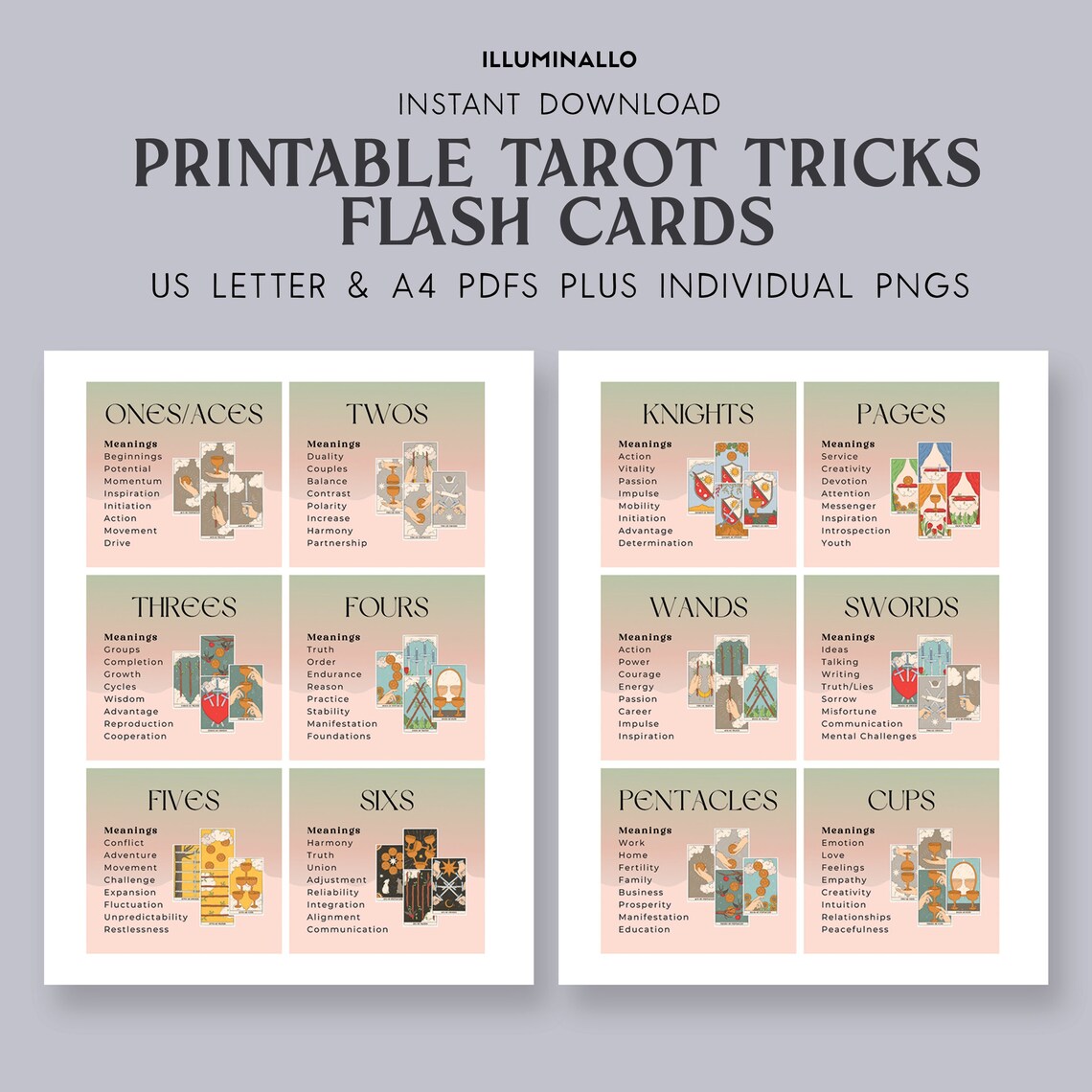
Before diving into memorization, organize your flashcards for maximum efficiency. Start by categorizing the deck into manageable sections: the Major Arcana (22 cards), the Wands suit (14 cards), Cups (14), Swords (14), and Pentacles (14). This breakdown aligns with the natural structure of the tarot and makes the learning process less overwhelming. Use high-quality images for your flashcards—whether you print them, use digital apps, or create handmade versions. The key is consistency: each card should have a front (the image) and a back (its core meaning, keywords, and a brief story or metaphor).

Mastering the Major Arcana: The Hero’s Journey in 22 Steps
The Major Arcana represents life’s grand themes, from innocence to enlightenment. To memorize these cards, weave them into a narrative—a hero’s journey. Start with The Fool (0), the card of new beginnings, and progress through each card as a stage in the journey. For example, The Magician (I) is the hero’s toolkit, filled with potential, while The High Priestess (II) is the hidden wisdom waiting to be discovered. Use metaphors like “The Tower” (XVI) as a lightning bolt that shatters illusions, or “The Star” (XVII) as a guiding light in the dark. Assign each card a keyword (e.g., “Strength” for VIII) and a short phrase that encapsulates its essence. Practice shuffling the Major Arcana and reciting their meanings in order until the sequence feels as natural as the alphabet.
Suit by Suit: Unlocking the Minor Arcana’s Secrets
The Minor Arcana’s four suits—Wands, Cups, Swords, and Pentacles—each govern a different facet of life. To memorize them, personify each suit as a character or element:
- Wands (Fire): The suit of passion, creativity, and ambition. Imagine a wand as a spark that ignites action. For example, the Three of Wands is a visionary looking out at the horizon, while the Ten of Wands is a burdened traveler carrying too much.
- Cups (Water): The suit of emotions, relationships, and intuition. Picture a cup overflowing with feelings or a river flowing with love. The Ace of Cups is a fountain of new emotional beginnings, while the Five of Cups is a figure staring at spilled water, symbolizing loss.
- Swords (Air): The suit of intellect, conflict, and clarity. Think of a sword as a double-edged tool—it can cut through confusion or wound with words. The Page of Swords is a curious messenger, while the King of Swords is a stern judge wielding truth.
- Pentacles (Earth)
: The suit of material world, finances, and practicality. Envision pentacles as coins, crops, or tangible rewards. The Two of Pentacles is a juggler balancing life’s demands, while the Five of Pentacles is a scene of scarcity and hardship.
Create flashcards for each suit’s Ace through Ten, focusing on the card’s number, element, and a memorable keyword (e.g., “Ace of Cups = New Love”). Use mnemonic devices, like associating the number 8 with infinity (for the Eight of Cups, a journey of letting go) or the number 3 with growth (for the Three of Pentacles, teamwork and craftsmanship).
Creative Techniques to Accelerate Learning
Memorization thrives on creativity. Try these techniques to make the tarot cards stick:
- Color Coding: Assign a color to each suit (e.g., red for Wands, blue for Cups) and use colored pens or sticky notes to reinforce associations.
- Storytelling: Craft a short story using the cards in sequence. For example, “The Fool meets The Magician, who teaches him The High Priestess’s secrets, but then The Tower strikes—what happens next?”
- Flashcard Games: Play memory match with pairs of cards, or quiz yourself by drawing a card and explaining its meaning aloud. Use apps like Anki for spaced repetition.
- Artistic Interpretation: Draw your own versions of the cards or collage images that resonate with their meanings. The act of creating deepens your connection to the symbols.
- Tarot Journaling: Write a daily one-card pull and reflect on how its meaning applies to your life. Over time, this builds intuition and reinforces memorization.
Common Pitfalls and How to Avoid Them
Even the most dedicated learners hit roadblocks. Here’s how to navigate them:
- Overwhelm with 78 Cards: Break the deck into smaller chunks (e.g., 10 cards per day) and focus on one suit or group at a time.
- Confusing Similar Cards: Highlight differences with vivid metaphors. For example, contrast the Three of Cups (celebration with friends) with the Three of Pentacles (collaboration on a project).
- Passive Memorization: Avoid simply staring at flashcards. Engage actively by teaching someone else, drawing the cards, or using them in mock readings.
- Ignoring Reversals: While this guide focuses on upright meanings, note that reversed cards often represent blocked or internalized energy. Keep a separate set of flashcards for reversals.
Putting It All Together: A 7-Day Memorization Plan
Follow this structured plan to internalize the tarot in a week:
- Day 1-2: Major Arcana – Focus on the Fool through Justice (cards 0-XI). Use the hero’s journey narrative and recite the sequence daily.
- Day 3: Major Arcana Continued – Learn the remaining cards (XII-XXI) and practice shuffling the entire Major Arcana while naming each card.
- Day 4: Wands Suit – Memorize the Ace through Ten of Wands, using fire metaphors and keywords like “creativity” or “conflict.”
- Day 5: Cups Suit – Associate each card with emotional themes (love, loss, intuition) and practice pairing them with Major Arcana cards for context.
- Day 6: Swords and Pentacles – Use air and earth imagery to differentiate the suits. For Swords, think of clarity vs. confusion; for Pentacles, focus on abundance vs. lack.
- Day 7: Review and Integration – Shuffle the entire deck and pull 5-10 cards at random, explaining their meanings aloud. Identify any weak spots and revisit them.
Conclusion
Memorizing the 78 tarot cards in a week isn’t about rote learning—it’s about forging a deep, intuitive relationship with the deck. By leveraging flashcards, storytelling, and creative associations, you transform abstract symbols into living, breathing guides. The tarot becomes less a puzzle to solve and more a language to speak fluently. As you internalize the cards, you’ll find that readings flow naturally, and your interpretations gain depth and nuance. Remember, the goal isn’t perfection but progress. Each card you master is a step closer to unlocking the tarot’s magic, one flashcard at a time.
FAQ
How can I memorize tarot card meanings quickly?
Using tarot flashcards, storytelling techniques, and mnemonic devices can significantly enhance your memorization process.
What is the benefit of using flashcards for learning tarot?
Flashcards promote active recall and engagement, making the learning process more dynamic and effective.
Leave a Reply